
Infrastructure – Delhi-Mumbai Expressway Link Road Nears Opening for Commuters
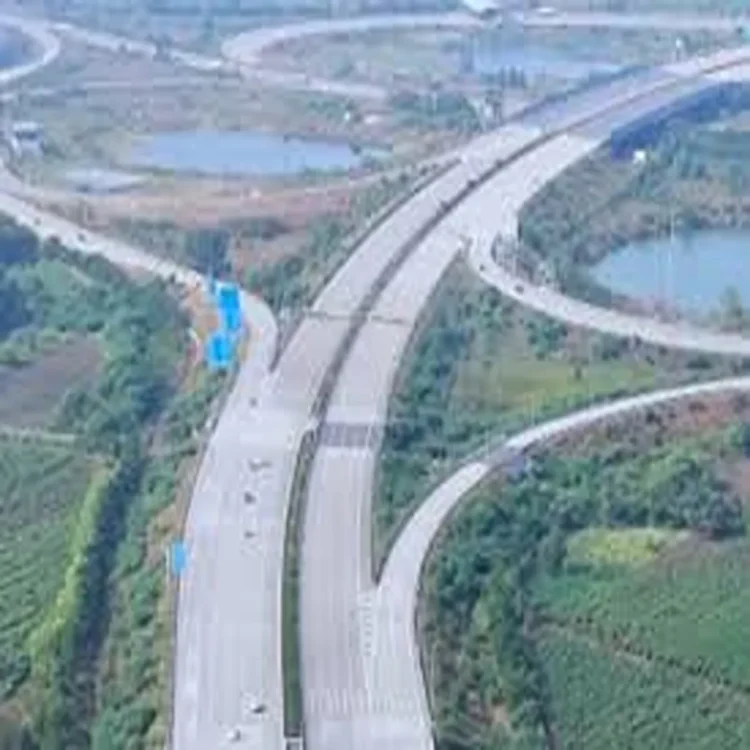
Infrastructure – The long-awaited six-lane access-controlled highway connecting the Ring Road at Maharani Bagh to the Delhi-Mumbai Expressway is now in the final phase of construction and is expected to open to traffic shortly. Officials associated with the project said finishing work is nearly complete, and the route may soon be formally inaugurated after a final review by senior leaders.
Union Minister for Road Transport and Highways Nitin Gadkari is scheduled to inspect the corridor on Tuesday along with Nayab Singh Saini and Rekha Gupta. Authorities familiar with the development stated that the inspection will assess the readiness of the stretch before opening it to the public.
Key Route Expected to Ease Regional Traffic
The upcoming corridor is expected to play a major role in reducing travel time across several parts of Delhi and the National Capital Region. The approximately 60-kilometre-long highway has been designed as a controlled-access route to support smoother traffic movement between Delhi, Haryana, and parts of Uttar Pradesh.
The road alignment begins from the DND Flyway near Maharani Bagh and continues through the Kalindi Bypass as well as the Faridabad-Ballabgarh Bypass before connecting with the Delhi-Mumbai Expressway and the Kundli-Manesar-Palwal Expressway. Officials believe the route will particularly benefit commuters travelling between east and north Delhi and nearby cities such as Noida and Ghaziabad.
Improved Connectivity Across Major Corridors
Transport planners expect the project to strengthen links between several important highways and expressways in the region. The new route will provide easier access to the Delhi-Meerut Expressway and National Highway-2, which connects Delhi with Agra. It is also expected to improve road connectivity to the upcoming Jewar International Airport, which is under development in Uttar Pradesh.
Officials involved in the project said the highway has been designed to support high-speed travel while reducing congestion at critical choke points. The corridor includes multiple engineering features aimed at ensuring uninterrupted movement of vehicles across urban and suburban stretches.
Elevated Sections and Interchanges Added
According to project details, the corridor contains nearly seven kilometres of elevated road sections. The construction also includes two-level crossings at four points where Metro lines intersect with the highway. In addition, 18 underpasses and nine interchanges have been developed to improve traffic dispersal and reduce bottlenecks at junctions.
Authorities have also incorporated landscape improvements as part of the project. Vertical gardens are planned along the piers across the route to enhance the visual appearance of the corridor while also contributing to environmental improvement measures in densely populated areas.
Project Aimed at Reducing Congestion and Pollution
Government officials stated that the new highway is expected to significantly reduce traffic pressure on the Ashram-Badarpur-Faridabad-Ballabgarh corridor, which witnesses heavy congestion on most days. Reduced travel delays may also contribute to lower fuel consumption and vehicular emissions in the region.
Urban mobility experts have repeatedly highlighted the need for faster alternate routes connecting Delhi with adjoining cities, especially as vehicle numbers continue to increase across NCR. With this project nearing completion, commuters are expected to benefit from quicker and more efficient intercity travel in the coming months.