
Politics – Starmer Faces Growing Pressure After Labour Suffers Heavy Election Setbacks
Politics – Britain’s Prime Minister Keir Starmer is facing one of the toughest moments of his leadership after major election losses triggered widespread criticism within his own party. Several Labour lawmakers have openly questioned his ability to remain in office, deepening tensions just months after the party’s historic national election victory.
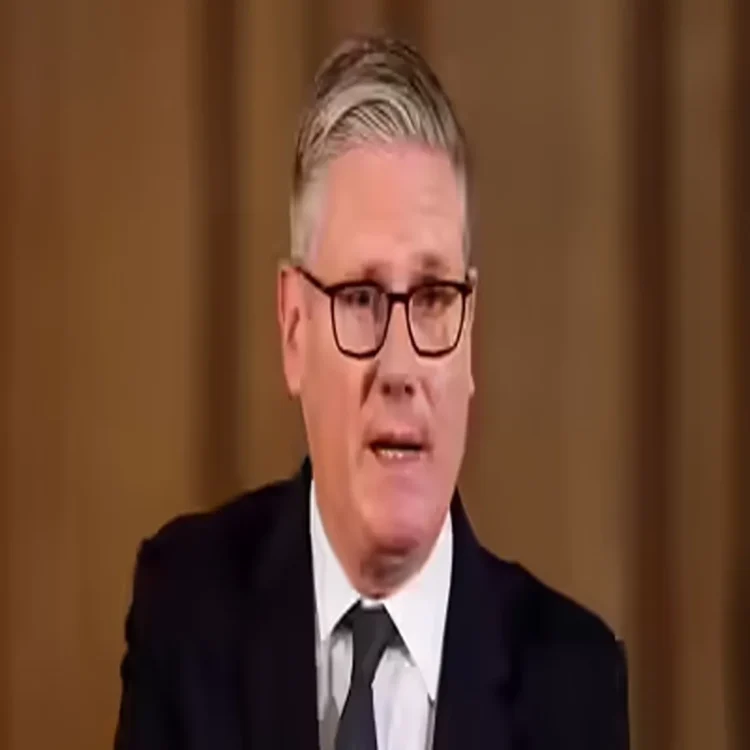
Labour MPs Raise Concerns Over Leadership
Pressure on Starmer intensified after disappointing results in local and regional elections across the United Kingdom. The Labour Party lost significant support to both the right-wing Reform UK party and the Green Party, while also struggling in Scotland and Wales.
More than 50 Labour members of parliament reportedly urged the prime minister to step aside. Among them were several junior government aides who resigned from their positions, arguing that Starmer had lost the confidence of voters and many within the party itself.
Joe Morris, who previously served as an aide to Health Secretary Wes Streeting, publicly stated that Starmer no longer appeared capable of delivering the political change promised to voters. Another former aide, Tom Rutland, claimed the prime minister had lost authority among Labour MPs and would find it difficult to recover.
Under Labour Party rules, any formal leadership challenge would require support from at least 81 MPs. While that threshold has not yet been reached, growing dissatisfaction has created uncertainty around Starmer’s future.
Election Results Deepen Political Problems
The backlash follows Labour’s poor showing in several key elections last week. Reform UK made notable gains, capitalising on frustration over living costs and economic pressures. The Greens also attracted support from voters unhappy with Labour’s direction.
In Wales, Labour lost control of the devolved parliament to Plaid Cymru for the first time since the institution was established in 1999. In Scotland, the party also failed to make major progress against the Scottish National Party.
The results were widely viewed as a warning sign for Starmer’s government, which came to power in July 2024 after ending 14 years of Conservative rule.
Starmer Promises Stronger Action
Speaking in London on Monday, Starmer acknowledged public frustration and accepted that many voters expected faster improvements. He insisted he would continue leading the government and promised more ambitious policies instead of gradual reforms.
The prime minister said Britain needed stronger economic growth, better cooperation with European partners and wider energy reforms. He also confirmed plans to fully nationalise British Steel.
In one of his strongest criticisms of Brexit since taking office, Starmer argued that Britain’s departure from the European Union had weakened the country economically and politically. He accused Reform UK leader Nigel Farage of misleading the public during the Brexit campaign and warned that political extremism could push the country in a dangerous direction.
Internal Rivals Begin To Emerge
Despite Starmer’s efforts to reassure lawmakers, questions about possible successors are growing. Health Secretary Wes Streeting and former deputy prime minister Angela Rayner are both being discussed as potential leadership contenders, although neither currently commands full support across the party.
Rayner, while avoiding direct calls for Starmer’s resignation, admitted during a separate speech that Labour’s current political strategy was failing and needed urgent changes.
Meanwhile, Catherine West, another Labour MP critical of Starmer, said she was gathering support among MPs for a timetable to elect a new leader later this year instead of launching an immediate challenge.
Andy Burnham, the mayor of Greater Manchester, has also been mentioned as a possible future leader. However, he cannot contest the leadership at present because he does not hold a seat in parliament.
Future Of Government Remains Uncertain
Although criticism inside Labour has become increasingly public, Starmer still benefits from the absence of a clear replacement candidate. Some party members fear that forcing another leadership contest could create divisions similar to the political instability seen during recent Conservative governments.
Starmer warned Labour lawmakers that voters would not forgive another period of internal political chaos. He is expected to present more detailed government plans during the upcoming King’s Speech later this week, a moment that could prove critical for his political survival.