
DefenseAlliance – Seoul and Washington Deepen Talks on Military Coordination
DefenseAlliance – South Korea and the United States have reaffirmed their commitment to expanding defense cooperation as both countries continue discussions on regional security, military readiness, and the future structure of their long-standing alliance. The agreement was reached during high-level talks held at the Pentagon between South Korean Defense Minister Ahn Gyu-back and US Defense Secretary Pete Hegseth.
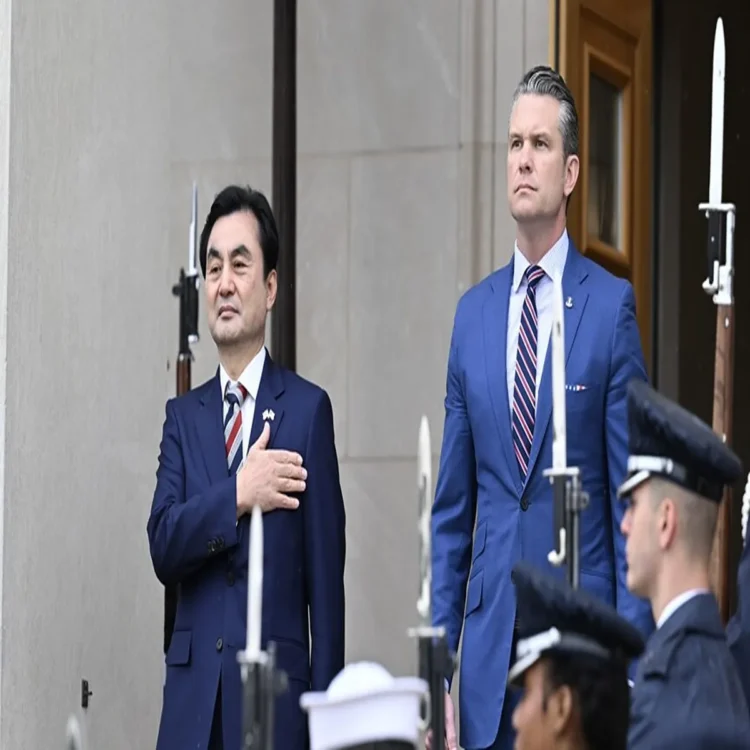
The meeting focused heavily on issues tied to wartime operational control, commonly known as OPCON, along with broader plans aimed at modernizing military cooperation between the two allies. Seoul has been pursuing the transfer of wartime command authority from Washington for several years as part of efforts to strengthen its independent defense capabilities.
Focus on Wartime Command Transition
According to a joint statement released after the talks, both sides agreed to maintain close communication and continue coordination on matters linked to shared security concerns. Officials also emphasized the importance of advancing discussions surrounding the transfer of wartime operational control.
The OPCON issue has remained one of the most significant topics in the alliance for years. South Korea currently relies on the United States for wartime military command under a long-standing bilateral arrangement dating back decades. Seoul’s leadership, however, has repeatedly expressed interest in taking fuller responsibility for national defense operations.
Differences over the timeline for the transfer appear to remain. Recent remarks from US Forces Korea Commander Gen. Xavier Brunson suggested that the allies are aiming to satisfy transfer conditions by early 2029. Reports from Seoul, however, indicate that South Korea hopes to complete the transition by 2028 while both current presidents remain in office.
Alliance Modernisation Remains a Priority
The two defense chiefs also highlighted the role of the Korea-US Integrated Defense Dialogue, a major bilateral consultation mechanism overseeing security coordination and operational planning. The next round of the biennial talks is expected to take place in Washington later this week.
South Korea used the meeting to outline its ongoing efforts to expand defense spending and improve military readiness. Officials said Seoul is working to secure advanced defense capabilities while increasing its leadership role in protecting the Korean Peninsula.
The Pentagon statement noted that the United States supports efforts to modernize the alliance structure while maintaining a practical approach to deterring regional threats. Washington has increasingly encouraged allies to assume greater responsibility for their own security as part of a broader strategic shift under President Donald Trump’s administration.
Discussion on Regional Security Concerns
The talks also came amid growing concerns over security developments beyond the Korean Peninsula. During opening remarks, Hegseth urged allies, including South Korea, to remain aligned with the United States during periods of international conflict and instability.
His comments followed a recent incident involving a South Korean-operated cargo vessel in the Strait of Hormuz. Seoul announced earlier that an explosion and fire aboard the ship were linked to an attack involving unidentified airborne objects.
The incident has raised concerns over maritime security in one of the world’s most strategically important shipping routes. Analysts believe the attack could influence South Korea’s future involvement in regional security efforts connected to Middle East tensions.
South Korea’s presidential office strongly condemned the attack and stated that the country would continue participating in international initiatives aimed at protecting commercial vessels and ensuring safe navigation for global shipping.
Broader Military Cooperation Under Review
While the joint statement did not disclose whether the Strait of Hormuz situation was formally discussed during the Pentagon meeting, observers believe the issue likely formed part of broader security consultations.
Attention has also turned toward Seoul’s reported interest in developing nuclear-powered submarines. Discussions on the project gained momentum after previous summit talks between President Donald Trump and South Korean President Lee Jae Myung last year, though progress since then has remained limited.
Minister Ahn is currently visiting the United States on a five-day diplomatic and defense schedule. In addition to Pentagon meetings, he is expected to hold talks with senior US Navy officials and members of the Senate Armed Services Committee as both nations continue efforts to strengthen strategic coordination.