
Elections – BJP Secures Landmark Victory in West Bengal Assembly Polls
Elections – The Bharatiya Janata Party’s sweeping performance in the West Bengal Assembly elections has sparked strong political reactions, with leaders calling it a turning point for the state’s governance and democratic future.
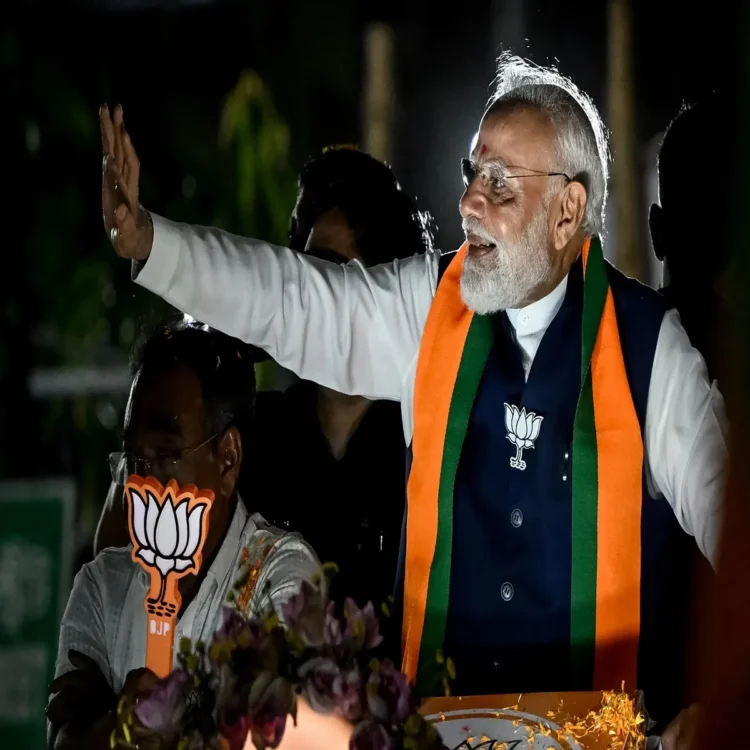
Delhi Chief Minister Applauds Outcome
Delhi Chief Minister Rekha Gupta welcomed the BJP’s decisive win, describing it as a clear endorsement of democratic values. Speaking after the results, she said the people of West Bengal had come together against what she characterised as years of alleged misrule and misconduct under the Trinamool Congress. According to her, the verdict reflects a collective desire for change and a more secure future for the state.
She further credited the victory to a combination of leadership and organisational strength, highlighting the roles of Prime Minister Narendra Modi, Home Minister Amit Shah, and party leaders at the state level. Gupta maintained that the electorate had moved beyond fear and chosen a path focused on development and stability.
Mamata Banerjee Questions Electoral Process
Outgoing Chief Minister Mamata Banerjee strongly contested the outcome, raising concerns about the integrity of the electoral process. She alleged that a significant number of seats had been unfairly influenced and criticised the functioning of the Election Commission.
Banerjee described the result as unjust, claiming that the role of central agencies and forces had compromised the fairness of the election. She stated that her party had formally raised complaints but received no satisfactory response. Despite the setback, Banerjee expressed confidence that her party would recover politically in the future.
A Major Shift in State Politics
The BJP’s performance marks a significant development in West Bengal’s political landscape. Historically, the party has struggled to gain a strong foothold in the state, which has long been dominated first by the Congress and Left Front, and later by the Trinamool Congress.
In this election, the BJP secured 206 seats, a substantial increase from its previous tally of 77 seats in the 2021 Assembly elections. The Trinamool Congress, which had earlier achieved a commanding majority with over 200 seats, saw a sharp decline, finishing with 80 seats.
Political observers note that this shift reflects changing voter priorities and a growing appetite for alternative leadership in the state.
Prime Minister Calls Result Historic
Prime Minister Narendra Modi described the outcome as a landmark moment, linking it to the long-standing vision of Dr. Syama Prasad Mookerjee. He said the victory represents not just electoral success but also the fulfilment of a broader ideological and developmental goal for West Bengal.
Modi emphasised that the result was driven by grassroots efforts and the dedication of party workers over several years. He referred to the verdict as a reflection of public trust in the party’s governance model and its commitment to progress.
Historical Context and Party Legacy
The BJP has often traced its ideological roots in West Bengal to Dr. Mookerjee, who played a key role during India’s partition era. He opposed the idea of a unified Bengal under a different political framework and later founded the Bharatiya Jana Sangh in 1951, which eventually evolved into the BJP.
The current electoral success is being seen by party leaders as a continuation of that legacy, reinforcing their long-term political objectives in the region.
Looking Ahead
While the BJP celebrates a major political breakthrough, the election outcome has also intensified debate over electoral transparency and governance. The coming months are expected to test how effectively the new administration addresses public expectations while navigating opposition criticism.
The results have undeniably reshaped West Bengal’s political narrative, setting the stage for a new phase in the state’s governance.