
Politics – BJP Claims Major Breakthrough as West Bengal Election Trends Shift
Politics – Maharashtra Deputy Chief Minister Eknath Shinde has described the latest election trends as a defining moment for the Bharatiya Janata Party (BJP), pointing to what he called a significant advance in West Bengal’s political landscape. According to Shinde, early results indicate a strong voter response against the ruling administration, suggesting a potential shift in power dynamics within the state.
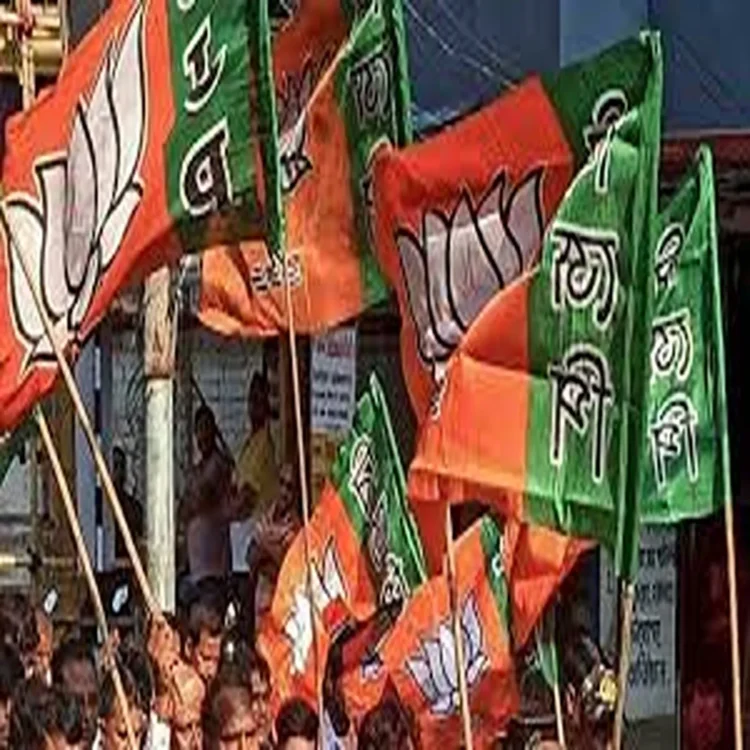
Shift in Voter Sentiment
Shinde stated that the emerging trends reflect a clear message from the electorate. He argued that voters in West Bengal had chosen governance priorities such as stability, development, and democratic values over issues like corruption and political unrest. He credited the BJP’s leadership, particularly Prime Minister Narendra Modi, for steering the party to what he termed a decisive political gain in a state long dominated by the Trinamool Congress.
He further emphasized that the outcome carried symbolic importance, noting that it coincided with the centenary year of the Rashtriya Swayamsevak Sangh and held particular relevance given West Bengal’s historical political roots. In his view, the development marked not only an electoral achievement but also a broader ideological milestone for the party.
BJP Leadership Praised for Strategy
As counting continued across multiple states and bypolls, Shinde highlighted the BJP’s growing presence in West Bengal. In a message shared publicly, he extended congratulations to Prime Minister Modi and Union Home Minister Amit Shah for the party’s performance.
He credited Shah’s sustained political efforts over the past decade for gradually strengthening the BJP’s position in the region. Describing Shah as a key strategist, Shinde also acknowledged the role of party workers who, he said, remained committed despite facing challenges during the campaign. He added that voters appeared to have responded firmly through the electoral process to criticism directed at BJP leaders.
Development Agenda Highlighted
Looking ahead, Shinde said the BJP would focus on accelerating development in West Bengal if the trends translate into a change in government. He referred to the concept of a “double-engine government,” where alignment between the central and state administrations could drive faster progress.
According to him, infrastructure expansion and economic growth would be central to the party’s plans. He expressed confidence that the state could witness rapid transformation, drawing comparisons to high-speed development models. Shinde also made cultural references, saying the party’s success reflected broader public support and goodwill.
Assam Results Reinforce Party Confidence
In addition to West Bengal, Shinde pointed to the BJP’s performance in Assam, where the party is set to return to power for a third consecutive term. He described the outcome as an indication of continued public trust in the leadership of Prime Minister Modi, Amit Shah, and Chief Minister Himanta Biswa Sarma.
He noted that governance initiatives and development policies in Assam had played a key role in securing voter confidence, reinforcing the party’s broader political narrative across states.
Baramati Bypoll Outcome in Focus
Reacting to developments in Maharashtra, Shinde also addressed the Baramati bypoll results. He congratulated Deputy Chief Minister Sunetra Pawar for what he described as a decisive victory, achieved with a substantial margin.
He said the outcome reflected strong public backing and viewed it as an endorsement of the leadership associated with the Pawar family in the region. Shinde expressed confidence that Sunetra Pawar would continue to prioritize development initiatives in Baramati.
Political Implications for Maharashtra Alliance
Shinde further remarked that the bypoll result demonstrated continued support for the Mahayuti alliance in Maharashtra. He suggested that the mandate strengthened the alliance’s position and indicated public approval of its governance approach.
Overall, the election trends across states have added momentum to the BJP’s political narrative, with party leaders presenting the outcomes as a sign of shifting voter preferences and expanding influence in key regions.