
Election – Kapil Sibal Questions Poll Process During West Bengal Voting Phase
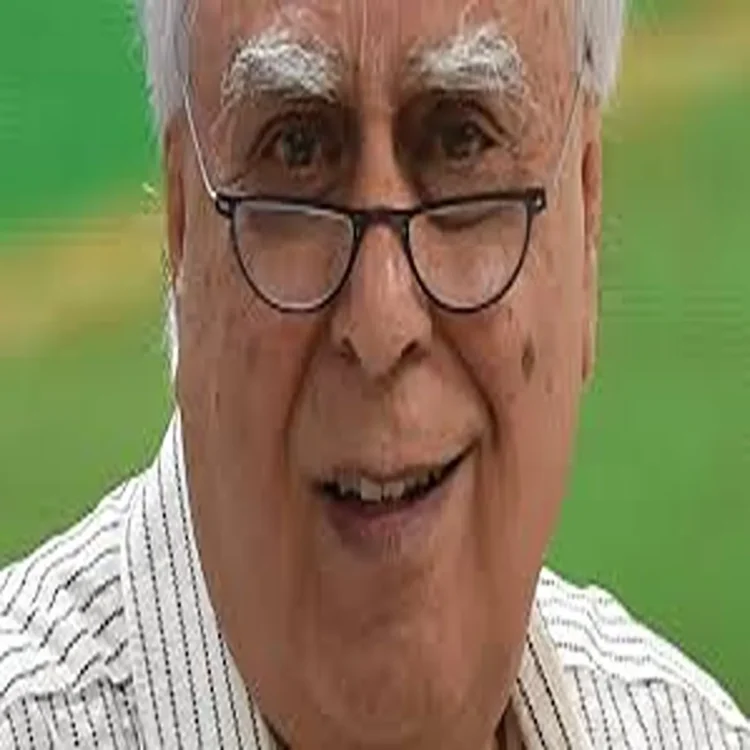
Election – Former Union law minister and Rajya Sabha member Kapil Sibal on Thursday sharply criticised the Election Commission, alleging irregularities in the ongoing West Bengal elections and raising concerns about voter participation.
Concerns Raised Over Voter Inclusion
Sibal accused the poll body of effectively limiting voter participation in West Bengal, describing the situation as an “experiment in disenfranchisement.” He questioned the very purpose of conducting elections if, according to him, voters are being excluded through administrative processes.
In a post on social media platform X, he took a dig at the functioning of the Commission and its leadership, suggesting that such actions undermine democratic values. He also made a pointed remark about the Chief Election Commissioner, implying that his role in the process deserved scrutiny rather than recognition.
Political Climate During Voting Phase
The first phase of polling in West Bengal began on Thursday, taking place in a politically charged environment. The contest has increasingly shifted focus from traditional issues like employment and governance to debates around identity, citizenship, and allegations related to electoral roll revisions.
Reports of deleted names from voter lists have added to the tension, with opposition voices claiming that such measures could influence the outcome. The Election Commission, however, has maintained that due procedures are being followed to ensure accuracy in the rolls.
Allegations of Bias and Administrative Decisions
A day earlier, Sibal had accused the Chief Election Commissioner of acting in alignment with the ruling party at the Centre, alleging that the objective was to influence the election outcome in its favour. He described the situation as deeply concerning for the country’s democratic framework.
He also criticised the central government and the Election Commission over the deployment of a large number of security personnel in the state. According to him, the scale of deployment raised questions about intent and necessity.
Dispute Over “Logical Discrepancy” Criteria
One of the key issues highlighted by Sibal was the use of what he described as a “logical discrepancy” standard to identify and remove names from electoral rolls. He argued that this method was being applied inconsistently.
Explaining his concern, Sibal said that voters were reportedly being removed if there was less than a 15-year age gap between them and their parents, or if the gap exceeded 50 years. He also claimed that such decisions were being influenced by artificial intelligence tools.
He questioned why similar criteria were not applied in elections held in other states such as Maharashtra and Haryana, suggesting selective implementation.
Strong Remarks on Election Authorities
During a press interaction, Sibal used strong language to criticise the top election official, stating that the issue lay not with voters but with the decision-making at the highest level. He expressed dissatisfaction with the functioning of the Commission and said the situation reflected poorly on institutional accountability.
He further remarked that the lack of corrective action from other authorities added to the seriousness of the matter, calling it a concerning moment for the country’s democratic institutions.
Details of the Election Phases
The West Bengal election is being conducted in two phases. The first phase includes voting in 152 out of the state’s 294 assembly constituencies. These cover all 54 seats in north Bengal’s eight districts, along with several constituencies in regions such as Murshidabad, Nadia, Birbhum, and Hooghly.
The second phase is scheduled for April 29, while the counting of votes will take place on May 4.
As polling progresses, the debate over electoral processes and voter inclusion is expected to remain a key issue in the political discourse.