
Elections – Bengal New Year Celebrations Spark Political Debate on Culture
Elections – As West Bengal marked the Bengali New Year, also known as Poila Boisakh, festive celebrations across the state coincided with a sharp exchange of words between leaders of the Trinamool Congress (TMC) and the Bharatiya Janata Party (BJP). The cultural occasion became a backdrop for political messaging, with both sides seeking to connect with voters ahead of the upcoming assembly elections.
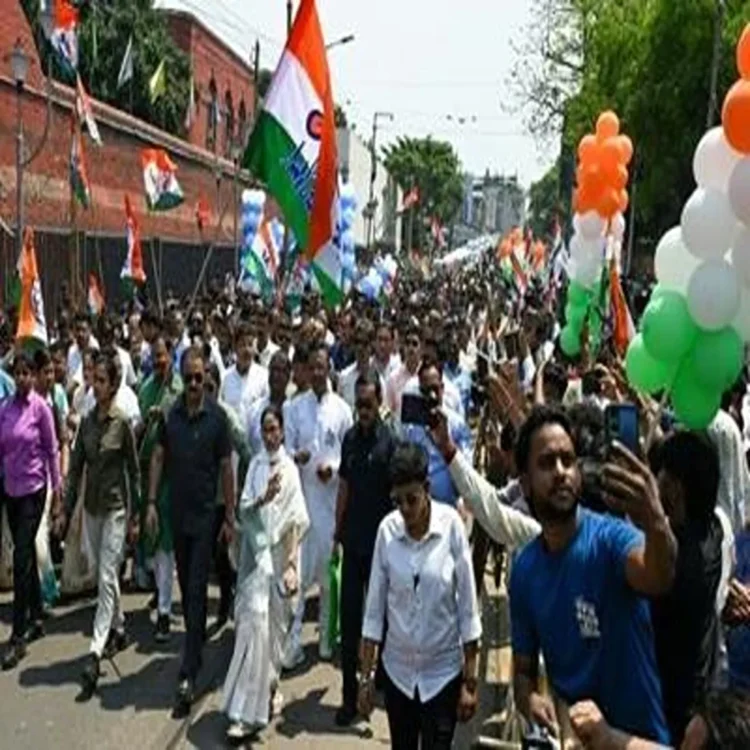
Procession Highlights Cultural Identity
In south Kolkata’s Garia Bramhapur area, state minister and senior TMC leader Aroop Biswas led a colourful procession built around the theme of traditional Bengali food habits. The rally emphasised the cultural importance of fish and rice, often considered central to Bengali identity. Participants added to the festive atmosphere by wearing traditional attire, including white sarees with red borders, while others dressed in themed clothing. Decorative elements such as tiger and owl masks reflected local artistic traditions.
During the event, Biswas raised concerns about what he described as potential restrictions under a BJP-led administration. He claimed that food habits could come under pressure, suggesting that cultural practices tied to cuisine might be affected. According to him, protecting these traditions was a key part of the political message being conveyed during the celebrations.
BJP Counters Allegations on Food Practices
The BJP strongly rejected these claims, with party leaders calling them misleading. Barrackpore candidate Kaustav Bagchi took a symbolic approach during his campaign, holding a fish while addressing voters. His gesture was intended to counter the narrative that the BJP would interfere with local food customs, and he emphasized that cultural practices would remain unaffected.
Party spokesperson Debjit Sarkar also dismissed the accusations, stating that there are no restrictions on fish or meat consumption in states governed by the BJP. He argued that such claims were part of political messaging rather than factual concerns. Sarkar further added that consumption patterns in several BJP-ruled regions have remained diverse and unchanged.
Debate Over Fisheries and Economic Concerns
Beyond cultural arguments, the BJP shifted focus to economic issues related to the fisheries sector. Sarkar alleged that poor governance had led to a decline in local fish production in West Bengal. He pointed to the conversion of water bodies into real estate projects as a contributing factor, claiming that this has increased the state’s reliance on fish imports from other regions.
According to BJP leaders, strengthening local industries, including fisheries, should be a priority for long-term development. They argued that addressing these issues would benefit both producers and consumers, while also preserving traditional food practices in a sustainable manner.
High-Stakes Campaigning in Key Constituencies
Meanwhile, campaigning intensified in several constituencies, including the high-profile Bhabanipur seat. Leader of Opposition Suvendu Adhikari, contesting against Chief Minister Mamata Banerjee, appealed to voters to consider a change in leadership. He highlighted the long tenures of previous governments, noting that the Left Front ruled for over three decades, followed by more than a decade of TMC governance.
Adhikari urged the electorate to give the BJP an opportunity to govern the state, promising administrative changes and development initiatives. His campaign also included participation in religious and cultural events, such as offering prayers at a well-known Kolkata temple and joining New Year processions.
Elections Scheduled in Two Phases
The West Bengal assembly elections for all 294 seats are set to take place in two phases later this month, with voting scheduled on April 23 and April 29. The counting of votes will be held on May 4. As the campaign continues, cultural themes and local traditions are likely to remain central to political outreach, reflecting their deep connection with the state’s social fabric.