
Diplomacy – Iran Delegation Signals Minab Tragedy Ahead of Key Talks
Diplomacy – The flight carrying Iran’s senior delegation to Islamabad has become a focal point of attention, as symbolic gestures on board underscored the emotional and political weight surrounding upcoming discussions with the United States.
Symbolic tribute during the journey
In a move that drew widespread notice, Iran’s parliamentary speaker Mohammad Bagher Ghalibaf transformed part of the aircraft cabin into a tribute space. Several empty seats were carefully arranged with photographs and personal items representing victims of the Minab school incident, including children who lost their lives.
By doing so, the delegation sought to highlight the human cost of the conflict ahead of the scheduled negotiations. Ghalibaf later shared an image from inside the aircraft on social media, describing the victims as his “companions” on the journey and referencing them collectively as Minab168.
Minab incident remains central to Iran’s position
The February 28, 2026 strike on an elementary school in Minab has become a defining issue in Iran’s diplomatic messaging. Iranian authorities maintain that at least 165 people were killed in the attack, placing responsibility on what they describe as a joint US-Israeli operation.
To reinforce the significance of the tragedy, the Iranian delegation traveling to Pakistan has reportedly adopted the name “Minab 168,” symbolizing remembrance of those who died. Iranian embassies across different countries have also amplified the message, reiterating that the victims will not be forgotten.
Disputed claims and international response
The United States has consistently denied any involvement in targeting the school. Officials have rejected Iran’s accusations, maintaining that US forces did not carry out such an attack.
Earlier remarks by former President Donald Trump suggested that Iranian weapons systems may lack precision, raising the possibility of misidentification regarding the source of the strike. However, reporting cited by The New York Times indicated that a Tomahawk missile could have been involved due to a potential targeting error, adding complexity to the narrative. The US remains the only country in the conflict known to deploy such missiles.
High-level delegations gather in Islamabad
Against this tense backdrop, representatives from both nations are set to meet in Islamabad for discussions centered on a proposed 10-point ceasefire framework. The talks are being viewed as a significant opportunity to reduce hostilities and establish a pathway toward stability.
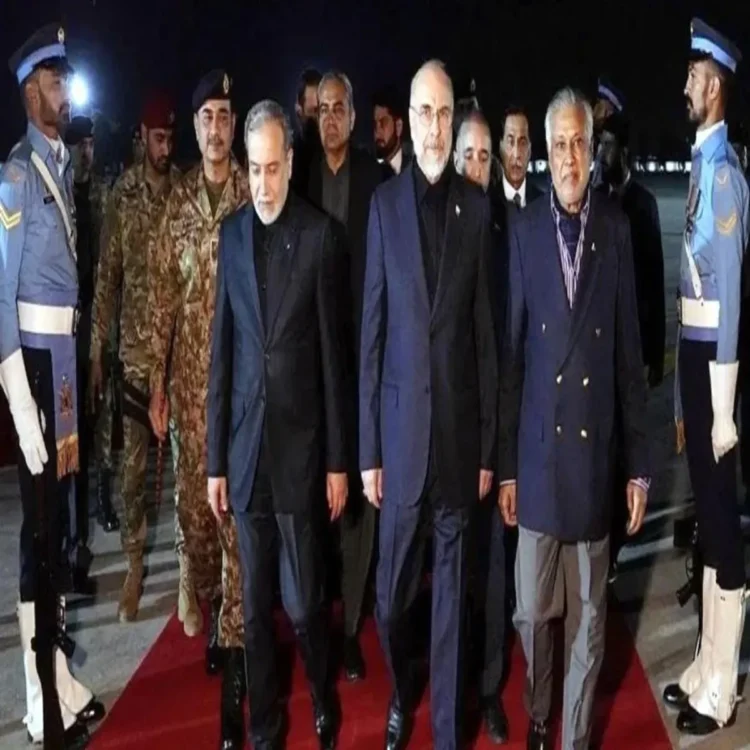
The Iranian delegation is being led by Ghalibaf, accompanied by Foreign Minister Hossein Amir-Abdollahian Araghchi and other senior officials. Their arrival in Pakistan on Saturday was met with formal استقبال from top Pakistani authorities, including Foreign Minister Ishaq Dar and members of the country’s military leadership.
US participation and diplomatic stakes
On the American side, Vice President JD Vance is expected to take part in the discussions, joined by special envoy Steve Witkoff and adviser Jared Kushner. Their presence signals the importance Washington attaches to the talks, which come amid fragile ceasefire conditions and ongoing regional uncertainty.
Observers note that the negotiations are likely to be influenced not only by strategic considerations but also by the emotional and political narratives each side brings to the table. Iran’s decision to foreground the Minab incident suggests that humanitarian concerns will play a prominent role in its approach.
A delicate moment for regional diplomacy
As both sides prepare to engage, the atmosphere remains cautious. While the symbolic actions taken by the Iranian delegation have intensified attention on the Minab tragedy, they also reflect the broader challenges facing diplomacy in a deeply polarized environment.
The Islamabad talks are expected to test whether both nations can move beyond accusations and counterclaims toward meaningful dialogue. With regional stability at stake, the outcome of these discussions could have lasting implications for the wider geopolitical landscape.