
Politics – AAP Faces Internal Rift After Rajya Sabha Leadership Change
Politics – The removal of Aam Aadmi Party MP Raghav Chadha from his role as deputy leader in the Rajya Sabha has sparked a fresh round of internal debate within the party, with senior leaders offering differing perspectives on the development.
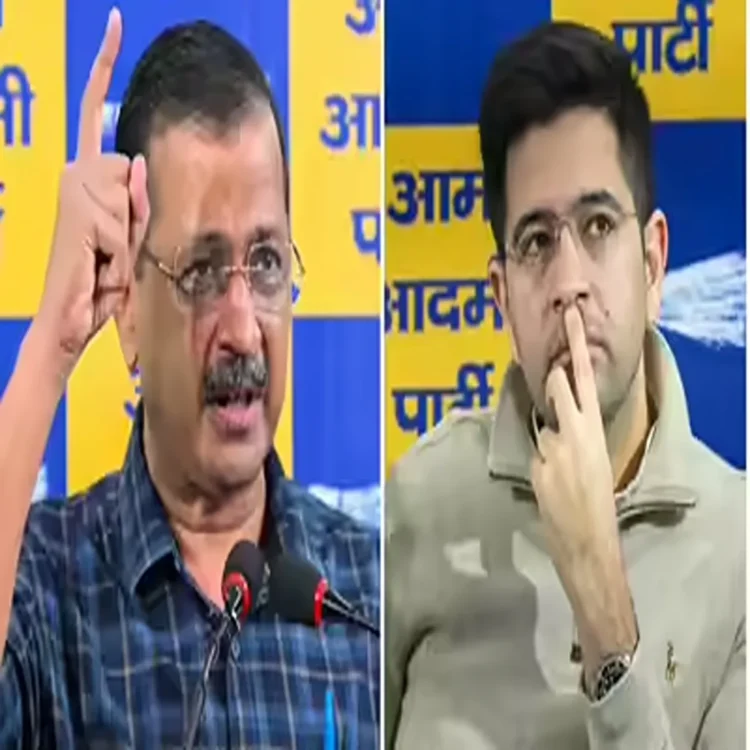
Party Leadership Calls It Routine Decision
Punjab Chief Minister Bhagwant Mann described the change as part of normal party functioning, emphasizing that such decisions are not unusual in political organizations. He noted that maintaining party discipline remains important and added that members who step outside agreed positions may face consequences.
Mann, however, refrained from directly criticizing Chadha, stating that individuals are free to express their views but must remain aligned with the party’s broader direction. His remarks suggested an attempt to balance internal accountability with public restraint.
Sharp Response From Party Leaders
The issue gained further attention after AAP leader Anurag Dhanda publicly criticized Chadha. In a social media post, Dhanda alleged that Chadha had avoided taking strong positions on key national issues in recent years, particularly in relation to Prime Minister Narendra Modi.
Dhanda also questioned Chadha’s priorities, arguing that limited speaking opportunities in Parliament should be used to address pressing national concerns rather than less critical matters. He further claimed that Chadha declined to support certain party initiatives, including a proposal concerning the Chief Election Commissioner.
Chadha Defends His Parliamentary Role
Responding to the developments, Raghav Chadha expressed concern over what he described as restrictions on his ability to speak in Parliament. He maintained that his contributions have consistently focused on issues affecting ordinary citizens and questioned whether raising such topics could be considered inappropriate.
Chadha stated that his silence should not be interpreted as weakness, adding that he remains committed to public service. He used a metaphor to suggest that his voice would become stronger at the right time, indicating that he may continue to assert his position despite the setback.
Focus on Public Issues Highlighted
In his remarks, Chadha outlined several concerns he has raised in Parliament, including high prices at airports, working conditions of delivery personnel, food safety, toll charges, banking fees, and taxation policies affecting content creators. He also pointed to telecom practices, such as frequent recharge requirements and lack of data rollover, as areas needing attention.
According to Chadha, these are everyday issues that directly impact citizens, and he argued that addressing them aligns with the party’s commitment to governance focused on public welfare.
Leadership Change in Rajya Sabha
The party has officially appointed Ashok Kumar Mittal as the new deputy leader in the Rajya Sabha, replacing Chadha. The decision was communicated to the Rajya Sabha Secretariat through a formal letter.
Mittal’s appointment marks a shift in the party’s parliamentary leadership, though no detailed explanation has been provided regarding the timing of the change.
Broader Context of Chadha’s Work
Raghav Chadha, who has been serving as a Member of Parliament since April 2022, has frequently drawn attention for raising governance-related concerns. In recent months, he highlighted the issue of proxy leadership in local bodies, where elected women representatives are often overshadowed by male relatives.
He urged authorities to ensure that women elected under reservation policies are able to exercise their powers independently, in line with constitutional provisions.
Internal Dynamics Under Scrutiny
The episode has brought the party’s internal dynamics into focus, with observers noting the contrast between official statements describing routine functioning and the sharp exchanges among leaders. While the leadership has sought to downplay tensions, the public nature of the responses suggests underlying differences in approach.
As the situation evolves, it remains to be seen how the party manages internal dissent while maintaining its public image and parliamentary strategy.