
Politics – Akhilesh Yadav Steps Up Criticism of BJP Leadership
Politics – Samajwadi Party president Akhilesh Yadav has sharpened his criticism of the Bharatiya Janata Party, stating that even harsh descriptions of the ruling party fall short of capturing his concerns. Referring to remarks earlier made by West Bengal Chief Minister Mamata Banerjee, Yadav said the BJP had not only failed on governance but had also let down religious sentiments by not delivering on its commitment to clean the Ganges.
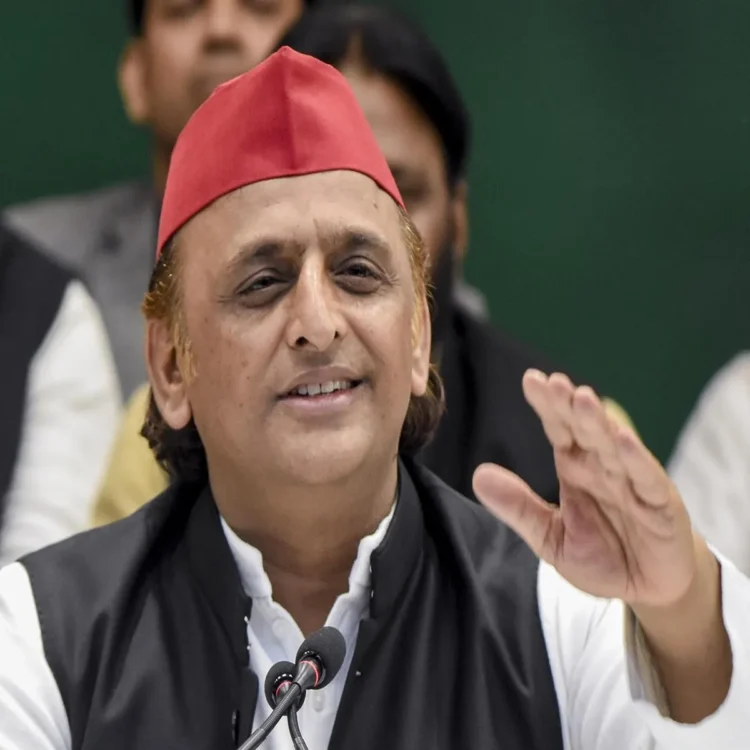
Questions Raised Over Ganga Cleaning Efforts
Yadav questioned the utilization of funds earmarked for the Ganga cleaning initiative, asking how substantial financial allocations were spent without visible outcomes. He also brought up the demolition work at Manikarnika Ghat in Varanasi, suggesting that such actions reflect misplaced priorities rather than genuine efforts to preserve heritage and improve river conditions.
The Ganga cleaning mission has been one of the central government’s flagship promises, but opposition leaders have repeatedly demanded greater transparency and measurable results. Yadav’s remarks add to ongoing debates about the effectiveness of these programs.
Support for Mamata Banerjee’s Leadership
Highlighting his confidence in Mamata Banerjee, Yadav said she has the political strength to secure victory in West Bengal even without alliances. His statement signals continued alignment between opposition leaders as they seek to consolidate their position against the BJP in different states.
Banerjee has remained a prominent voice among regional leaders challenging the central government, and Yadav’s endorsement underscores the broader effort to build a united opposition front, particularly ahead of upcoming electoral battles.
Allegations Regarding Administrative Influence in Uttar Pradesh
Turning his focus to Uttar Pradesh, Yadav alleged that the BJP benefited from the backing of certain administrative officials during elections. According to him, such support played a role in influencing electoral outcomes. He contrasted this with earlier political transitions, claiming that officials were not removed when the BJP assumed power, raising questions about institutional neutrality.
These allegations reflect a recurring concern voiced by opposition parties about the role of administrative machinery during elections. However, the ruling party has consistently denied such claims.
Cabinet Expansion Dismissed as Political Strategy
Commenting on speculation around a possible cabinet expansion in Uttar Pradesh, Yadav described it as a political exercise with little real impact. He suggested that such moves are intended to create a perception of activity rather than address core governance issues.
Yadav reiterated that the Samajwadi Party is preparing for the 2027 state elections with the aim of challenging the BJP’s hold on power. He expressed confidence that public dissatisfaction would play a decisive role in the future political landscape.
Mamata Banerjee’s Strong Remarks at Eid Gathering
At a public event marking Eid in Kolkata, Mamata Banerjee also delivered a strong critique of the central government. She accused it of attempting to undermine democratic rights, particularly in relation to the Special Intensive Revision issue. Banerjee said her administration would continue to resist any measures that she believes threaten the interests of the people.
She further alleged that there were attempts to impose President’s Rule in West Bengal but asserted that her government would not be pressured. Emphasizing unity, Banerjee urged citizens not to be divided along social or political lines.
Call for Unity and Continued Political Contest
Banerjee reiterated her criticism of the BJP, using strong language to describe the party and warning against efforts to fragment the electorate. She maintained that her political struggle is focused on safeguarding public rights and maintaining social harmony.
Together, the statements from both leaders reflect an intensifying political contest as opposition parties continue to raise questions about governance, institutional functioning, and electoral practices. With major elections on the horizon, such exchanges are expected to shape the broader national narrative in the coming months.