
EnergyCrisis – Missile Strikes Disrupt Qatar LNG Output, Impact Global Supply
EnergyCrisis – Missile strikes targeting Qatar’s Ras Laffan Industrial City have caused a significant setback to the country’s liquefied natural gas (LNG) sector, raising concerns across global energy markets. The attacks, carried out on March 18 and early March 19, 2026, have reduced Qatar’s LNG export capacity by approximately 17 percent, according to an official statement from QatarEnergy.
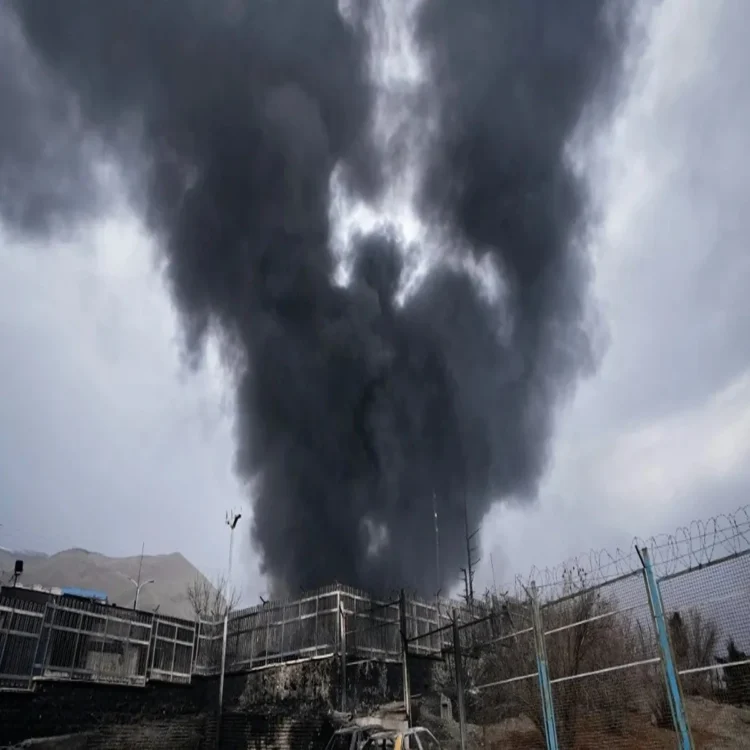
Extensive Damage to Key LNG Facilities
QatarEnergy confirmed that the strikes severely affected critical production infrastructure, resulting in an estimated annual revenue loss of around USD 20 billion. The damage is substantial enough that full restoration of operations could take between three and five years.
Saad Sherida Al-Kaabi, Minister of State for Energy Affairs and President and CEO of QatarEnergy, stated that the extent of destruction would require long-term repair efforts. He also indicated that the company may be forced to declare force majeure on certain long-term LNG supply agreements due to the prolonged disruption.
Impact on Production Capacity
The attacks specifically hit LNG production units known as Train 4 and Train 6, which together account for 12.8 million tonnes per annum of output. This represents nearly 17 percent of Qatar’s total LNG export capacity.
Train 4 operates as a joint venture between QatarEnergy and ExxonMobil, with QatarEnergy holding a majority stake. Similarly, Train 6 is also jointly managed by the same companies with QatarEnergy as the dominant partner. Damage to these units has directly reduced export volumes, affecting multiple international buyers.
Ripple Effects on Global Energy Markets
The disruption is expected to have far-reaching consequences beyond Qatar. Countries heavily dependent on LNG imports, including China, South Korea, Italy, and Belgium, are likely to feel the immediate impact. Reduced supply could lead to tighter markets and upward pressure on global gas prices.
Industry experts suggest that prolonged outages at one of the world’s largest LNG hubs may force importing nations to seek alternative suppliers, potentially at higher costs.
India Faces Increased Energy Vulnerability
India, which relies significantly on Qatar for its LNG requirements, is among the countries most exposed to the disruption. Official data indicates that nearly half of India’s LNG imports originate from Qatar.
In 2024, India imported around 27.8 million metric tonnes of LNG, with Qatar supplying 11.30 million metric tonnes valued at USD 6.40 billion. This accounted for roughly 47 percent of India’s total LNG imports. Recent data for the 2025–26 period confirms that Qatar continues to be India’s leading gas supplier.
With supply now constrained, India may face challenges related to availability and pricing in the domestic gas market, especially amid ongoing geopolitical tensions.
Additional Damage to Pearl GTL Facility
Apart from LNG production units, the missile strikes also targeted the Pearl Gas-to-Liquids (GTL) facility, operated under a production-sharing agreement by Shell. This facility plays a key role in converting natural gas into cleaner fuels, base oils, and other high-value petroleum products.
Preliminary assessments indicate that one of the two processing units at Pearl GTL has been significantly affected and could remain non-operational for at least a year. Further evaluation is underway to determine the full extent of the damage.
Long-Term Supply Uncertainty
With repair timelines stretching up to five years and force majeure likely to be declared on certain contracts, the incident introduces long-term uncertainty into global LNG supply chains. Energy-importing nations may need to reassess sourcing strategies and strengthen supply diversification to mitigate risks.
The situation continues to evolve, and further updates are expected as damage assessments and recovery efforts progress.