
Pentagon – US Deploys Marines and Warships Amid Rising Strait of Hormuz Tensions
Pentagon – The United States is moving additional Marines and naval assets toward the Middle East as security concerns intensify around the Strait of Hormuz following recent incidents linked to Iran. According to multiple media reports citing US officials, the Pentagon has ordered the deployment to strengthen the American military presence in a region considered vital for global shipping and energy supplies.
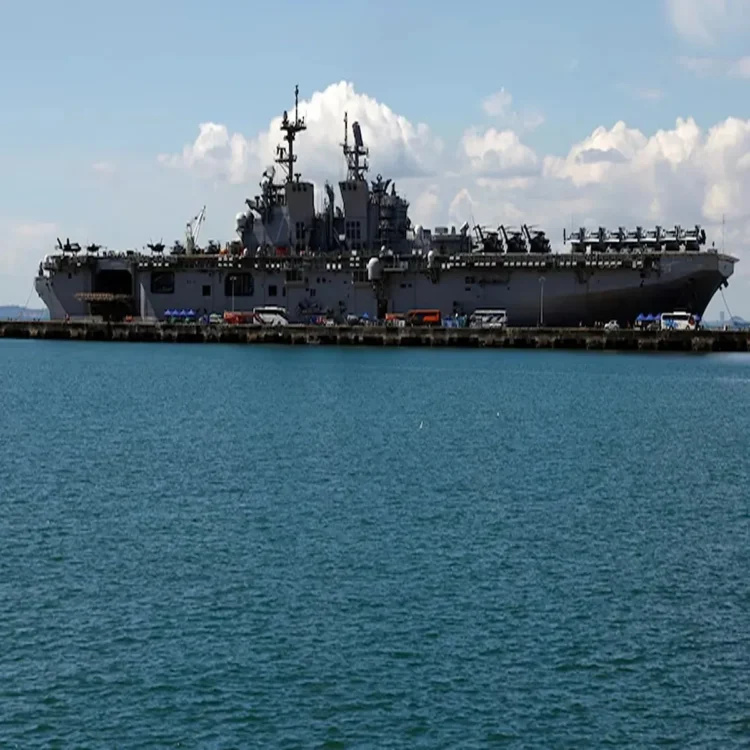
Deployment of Marines and Naval Forces
Reports indicate that the amphibious assault ship USS Tripoli will be part of the deployment, accompanied by a Marine Amphibious Ready Group and the 31st Marine Expeditionary Unit. These forces are designed to respond quickly to crises, conduct security operations, and support maritime stability.
Approximately 2,500 Marines and a similar number of sailors are expected to participate in the mission. Officials familiar with the plan say the deployment aims to reinforce existing US military capabilities already positioned in the Middle East.
The USS Tripoli is currently based in Japan. Military officials estimate that the ship and its accompanying forces may take one to two weeks to arrive in the region, where they will integrate with other US naval and military units.
Growing Security Concerns in the Strait of Hormuz
The latest move comes at a time when tensions have increased around the Strait of Hormuz, a narrow but strategically critical waterway connecting the Persian Gulf with the Arabian Sea. Recent reports of Iranian actions targeting maritime routes and regional locations have heightened concerns among Western governments and shipping operators.
Security analysts note that the area has long been sensitive to geopolitical tensions due to its central role in global energy transportation. Any escalation or disruption in this corridor could affect shipping routes used by oil tankers and commercial vessels.
Reinforcement of Existing US Military Presence
According to reports, the Marines being deployed from the Indo-Pacific region will join a substantial American military presence already stationed across the Middle East. Estimates suggest that more than 50,000 US service members are currently positioned in various bases and operations throughout the region.
The additional forces are expected to enhance readiness and provide flexibility for potential missions related to maritime security, crisis response, and regional deterrence. However, officials have not publicly detailed the specific operational roles the newly deployed units will perform once they arrive.
Pentagon Maintains Operational Silence
When asked about the reports, a Pentagon spokesperson declined to discuss details regarding troop movements or operational planning. The official cited security considerations as the reason for limited public information.
Military officials commonly avoid confirming future deployments or mission specifics in order to maintain operational security and protect ongoing planning.
Strategic Importance of the Waterway
The Strait of Hormuz remains one of the most critical maritime passages in the world. The narrow channel serves as a primary route for oil exports from several Gulf countries to international markets.
Industry estimates widely cited by energy analysts suggest that roughly one-fifth of the global oil supply moves through the strait each day aboard large tanker vessels. Because of this heavy reliance, even temporary disruptions to traffic in the waterway can quickly influence global energy prices and financial markets.
Possible Naval Escort Operations
US officials have also indicated that the Navy could provide escorts for commercial vessels traveling through the strait if attacks on shipping escalate further. Such measures have precedent; similar escort missions were conducted during heightened tensions with Iran in the late 1980s to protect tanker traffic.
While no formal announcement of escort operations has been made, the option remains part of the broader strategy to maintain freedom of navigation and safeguard commercial shipping in one of the world’s most heavily used maritime corridors.