
Elections – Hastinapur Seat Draws Attention Ahead of UP Polls
Elections – As Uttar Pradesh gears up for the next assembly elections scheduled early next year, political activity has intensified across several constituencies. Among them, the Hastinapur assembly seat in western Uttar Pradesh has emerged as a focal point following indications that Chandrashekhar, the Member of Parliament from Nagina and leader of the Azad Samaj Party, may consider entering the fray from this constituency.
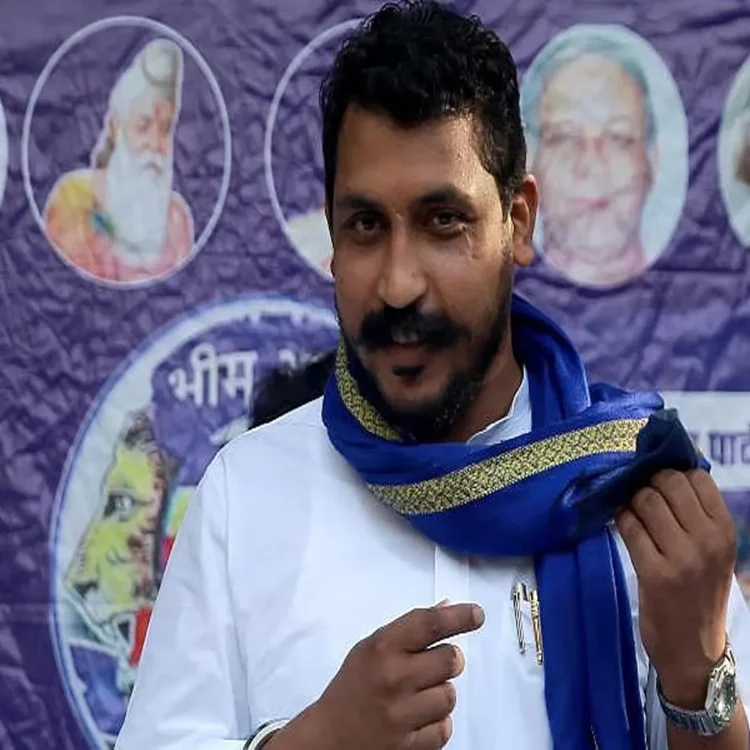
Speculation Around Chandrashekhar’s Possible Candidacy
Though no formal announcement has been made, discussions within political circles suggest that Chandrashekhar’s name is being seriously considered for Hastinapur. The seat, reserved for Scheduled Castes, holds strategic importance in the region. His potential candidature is being viewed as part of a broader effort to expand his party’s footprint in western Uttar Pradesh, where social equations and caste dynamics often play a decisive role in electoral outcomes.
When approached for comment, Chandrashekhar maintained that decisions regarding candidates and constituencies would be taken collectively by the party leadership. He reiterated that the Azad Samaj Party intends to contest all 403 assembly seats in the state, signaling an ambitious electoral strategy.
BJP’s Position and Khatik’s Earlier Remarks
The renewed attention on Hastinapur also follows earlier remarks by sitting BJP MLA Dinesh Khatik. Months ago, Khatik publicly stated that he was not inclined to contest again from the constituency, describing the seat as “cursed.” His statement had sparked debate at the time and led to speculation about the ruling party’s internal calculations in the area.
While the BJP has not officially announced its candidate for the seat, local party workers have reportedly begun preliminary groundwork. Political analysts believe that any change in candidate selection could influence voter sentiment, especially in a constituency where electoral margins have historically been significant.
A Seat With a Notable Electoral Pattern
Hastinapur’s electoral record adds another layer of interest. Results from the last four assembly elections indicate a pattern: the party that secured victory in this seat subsequently formed the government in Uttar Pradesh. Although such trends do not determine future outcomes, they contribute to the perception of the constituency as symbolically important.
This track record has prompted both major and emerging political parties to closely monitor developments in the area. Analysts suggest that symbolic seats often receive heightened attention during campaigns, as victories there can carry psychological weight beyond the constituency itself.
Western UP Strategy in Focus
For the Azad Samaj Party, expanding its influence in western Uttar Pradesh appears to be a central objective. Chandrashekhar, who has built his political base around Dalit issues and grassroots mobilization, is seen by observers as seeking to consolidate support among marginalized communities while broadening the party’s appeal.
Western Uttar Pradesh has traditionally witnessed multi-cornered contests involving national and regional parties. The entry of a high-profile candidate can significantly alter local dynamics, particularly in reserved constituencies where community outreach and ground-level organization are critical.
Preparations Gather Momentum
Across Uttar Pradesh, political parties have begun strengthening booth-level networks, holding community meetings, and assessing caste equations ahead of the polls. Hastinapur is no exception. Local leaders from various parties are engaging with voters, addressing civic concerns, and refining campaign strategies.
While speculation continues regarding Chandrashekhar’s final decision, party insiders indicate that formal announcements may come closer to the election schedule. Until then, the constituency is likely to remain at the center of political discussions in the region.
As the countdown to the Uttar Pradesh assembly elections continues, Hastinapur’s evolving political narrative underscores how individual candidacies and past electoral patterns can shape broader campaign strategies across the state.