
Gaganyaan – DRDO Validates Drogue Parachute in Key Test
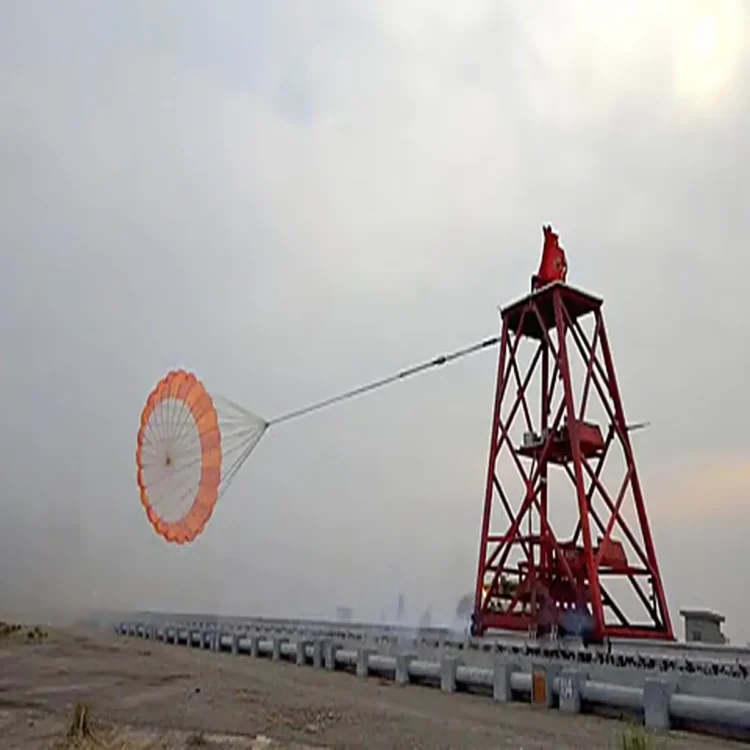
Gaganyaan – The Defence Research and Development Organisation (DRDO) has successfully completed a crucial qualification-level load test of the drogue parachute system designed for India’s upcoming Gaganyaan mission. The trial was carried out on Wednesday at the Rail Track Rocket Sled facility in Chandigarh, marking another step forward in preparations for the country’s first human spaceflight programme.
High-Load Test Conducted in Chandigarh
According to an official statement released on Thursday, the dynamic test subjected the drogue parachute to forces exceeding the maximum loads it is expected to encounter during an actual mission. Engineers deliberately simulated extreme stress conditions to assess structural integrity and validate safety margins.
The results confirmed that the parachute system can withstand demanding flight conditions, reinforcing confidence in its reliability during the mission’s recovery phase. Officials noted that the test demonstrates India’s growing capability in designing and manufacturing high-strength ribbon parachutes tailored for human spaceflight requirements.
The Rail Track Rocket Sled facility, where the trial was conducted, is specifically equipped to recreate high-speed and high-load environments necessary for validating critical aerospace components.
Role of the Parachute System in Recovery
The parachute sequence plays a decisive role in ensuring astronaut safety after atmospheric re-entry. As the crew module descends toward Earth, drogue parachutes are first deployed to stabilise and slow the spacecraft. Once the module’s velocity is sufficiently reduced, the main parachutes are released to further decelerate it before splashdown in the sea.
Experts involved in the programme explain that each stage of deployment must operate with precision. Any failure in timing or structural performance could compromise the safe return of the crew module. For this reason, qualification-level testing under higher-than-expected loads is considered essential before final certification.
Gaganyaan Mission Objectives
The Gaganyaan mission, led by the Indian Space Research Organisation, aims to send a crew of three astronauts into a low-Earth orbit approximately 400 kilometres above the planet. The planned duration of the mission is about three days, after which the crew module will re-enter the atmosphere and land in the sea for recovery.
The programme represents India’s first attempt at independent human spaceflight and involves the development of multiple advanced systems. These include a human-rated launch vehicle, a crew module and service module, life-support mechanisms, a crew escape system, and a coordinated recovery architecture.
Each subsystem undergoes rigorous testing to meet safety standards required for carrying astronauts. The drogue parachute qualification forms part of this broader validation effort.
Astronaut Team and Preparations
Four Indian Air Force officers have been selected for the mission: Group Captain Shubhanshu Shukla, Group Captain Prashanth Balakrishnan Nair, Group Captain Ajit Krishnan, and Group Captain Angad Pratap. They have been undergoing specialised training as part of the human spaceflight programme.
Although only three astronauts will fly on the initial mission, preparations include training backup crew members to ensure mission continuity.
Series of Validation Trials
The recent test adds to a series of evaluations already completed by DRDO. Previous trials have included deployment tests of drogue and pilot parachutes, integrated parachute system drop experiments, and high-load simulations conducted at the same facility in Chandigarh.
Officials emphasise that repeated validation under varied conditions is necessary to confirm performance consistency. With each successful trial, the mission advances closer to operational readiness.
The qualification of critical recovery systems, including the parachute assembly, is regarded as one of the final technical steps before a crewed launch can be scheduled. As development milestones continue to be met, India’s human spaceflight ambitions move steadily toward realisation.