
USPakistanRelations – Symbolism Dominates Washington-Islamabad Engagement
USPakistanRelations – Despite a year marked by warmer optics and renewed diplomatic contact, the core dynamics of relations between the United States and Pakistan appear largely unchanged. Analysts suggest that while public gestures and high-level visits signal improved engagement, concrete economic or military outcomes for Islamabad remain limited.
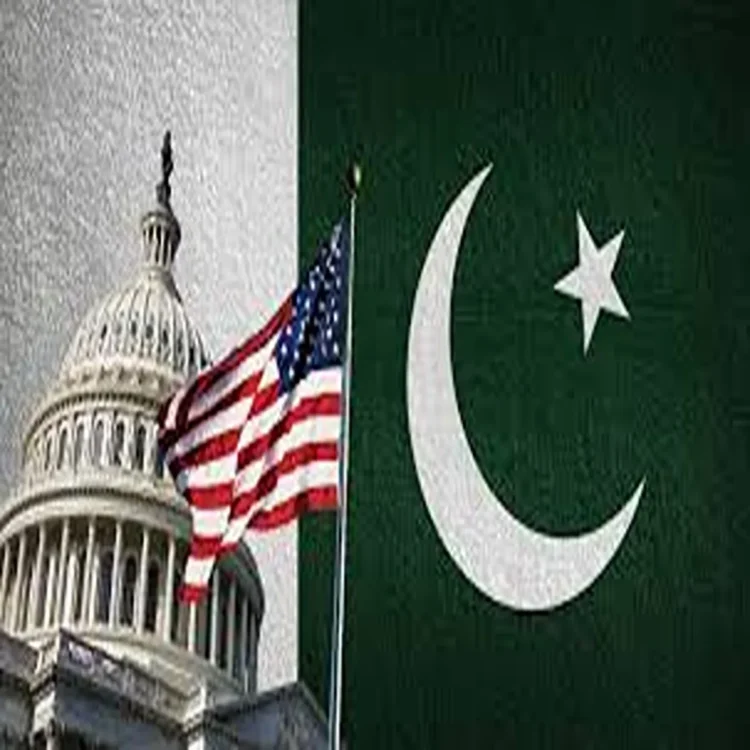
Visit to Washington Seen as Diplomatic Signal
Prime Minister Shehbaz Sharif is set to travel to Washington this week to attend the inaugural Board of Peace meeting, convened by US President Donald Trump. The visit is being presented by officials in Islamabad as evidence of strengthening ties and renewed cooperation between the two countries.
According to South Asia specialist Aparna Pande of the Hudson Institute, the trip is primarily focused on participation in the multilateral forum rather than a major bilateral breakthrough. She noted that Pakistani officials are likely to highlight what they describe as improved personal rapport between the country’s leadership — including the prime minister and army chief — and the US administration.
Islamabad is also expected to underscore trade discussions and may seek a one-on-one meeting on the sidelines of the event. Whether such a bilateral engagement materializes remains uncertain.
Symbolic Warmth, Limited Structural Change
Observers say the overall tone of the relationship has become more positive over the past year. Diplomatic exchanges have increased, and both sides have emphasized cooperation in regional matters. However, experts caution that symbolism has not yet translated into significant structural change.
Pande noted that while public messaging suggests progress, domestic conditions within Pakistan and longstanding policy differences have not shifted in ways that would fundamentally redefine the partnership. As a result, expectations of major economic packages or defense agreements may be premature.
Pakistan’s Interest in Gaza and Peacekeeping Role
Pakistan’s participation in discussions related to Gaza reflects its longstanding desire to play a visible role in issues concerning Muslim-majority regions. Engagement in the Board of Peace forum could be welcomed domestically, particularly if it enhances Pakistan’s diplomatic profile in the Islamic world.
However, analysts stress that any potential deployment of Pakistani forces would be carefully scrutinized at home. A strictly peacekeeping mandate, limited to stabilization and humanitarian support, would likely receive broader acceptance. Direct involvement in combat operations or actions perceived as targeting local Palestinian groups could generate public backlash.
Clarity over the mandate of any international stabilization force would therefore be essential. Public perception, especially regarding neutrality in the Israel-Palestine conflict, remains a sensitive factor in Pakistan’s domestic politics.
Limited Focus on Domestic Political Issues
While members of the US Congress may raise questions about Pakistan’s internal political developments, analysts suggest the current US administration is unlikely to prioritize such concerns. Strategic considerations tied to regional security, Iran, and developments in Gaza appear to dominate Washington’s policy calculations.
Pakistan, for its part, has sought to position itself as strategically useful in addressing US interests across South Asia and the Middle East. Its geographic location and historical security ties remain important factors in the bilateral equation.
Economic and Security Constraints Persist
Despite renewed engagement, tangible gains have been modest. Announcements of potential investment — particularly in critical minerals — have yet to translate into large-scale projects. Security concerns in resource-rich areas such as Balochistan continue to deter some foreign investors, who cite instability and insurgent activity as major risks.
On defense cooperation, expectations remain measured. Analysts argue that the current US administration is unlikely to extend high-end military equipment without commercial arrangements. Given Pakistan’s economic constraints, large-scale defense acquisitions would require significant financial backing, potentially from third-party partners.
Frustration within Pakistan over the pace and depth of benefits has surfaced periodically in public discourse. While diplomatic channels appear more active, experts suggest that meaningful transformation in US-Pakistan relations will depend on sustained economic reform, improved security conditions, and clearer strategic alignment.
For now, the relationship appears characterized by improved optics and cautious engagement, with substantive outcomes still evolving.