
Lithuania – Prime Minister Calls Taiwan Move Strategic Error, Debate Follows
Lithuania – Lithuania’s prime minister has publicly acknowledged that her government miscalculated when it took a bold stance on Taiwan, a remark that has sparked intense discussion across Chinese social media platforms. While many online users in China welcomed the unusually candid assessment, others questioned whether the statement carried any real weight without accompanying policy changes.
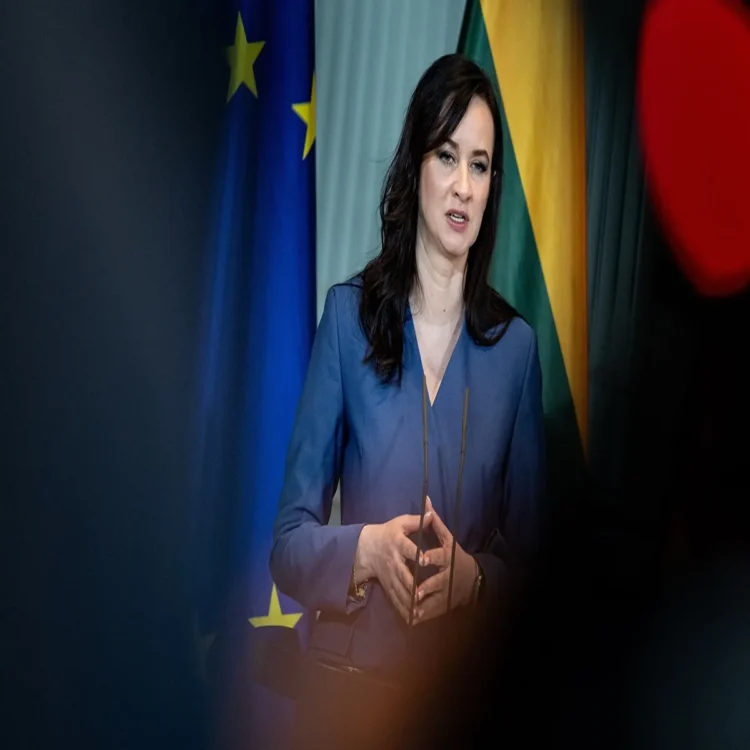
Admission Revisits a Controversial Diplomatic Decision
In a recent interview with Baltic News Service, Prime Minister Ingrida Šimonytė reflected on Lithuania’s 2021 decision to permit the establishment of a Taiwanese representative office in Vilnius. The move, which departed from common European diplomatic practice, triggered immediate friction with Beijing. Looking back, Šimonytė described the decision as a strategic error, using a vivid comparison to illustrate the political cost her country paid as a result.
Her remarks marked one of the clearest acknowledgements to date by a senior Lithuanian official that the policy choice had consequences that outweighed its intended benefits. The comments quickly circulated beyond Europe, drawing particular attention in China, where the Taiwan issue is viewed as a core national interest.
Chinese Social Media Reacts With Mixed Views
The interview excerpts were widely shared on Sina Weibo, one of China’s largest social media platforms, where the topic climbed to the top of trending lists within hours. According to platform metrics, related posts amassed tens of millions of views, reflecting strong public interest in the prime minister’s comments.
Many users praised the straightforward tone of the admission, noting that it is rare for foreign leaders to openly concede misjudgments on sensitive diplomatic matters. Others, however, were less impressed, arguing that the statement amounted to little more than words. For these commentators, the continued operation of the Taiwanese office in Vilnius undermined the credibility of the acknowledgement.
Skepticism Over Lack of Concrete Follow-Through
A recurring theme among online reactions was frustration over what users described as an absence of corrective action. Several posts pointed out that despite recognizing the mistake, Lithuania has not announced plans to rename, relocate, or otherwise alter the status of the representative office.
One widely shared comment suggested that admitting an error without addressing its root cause offered no practical value. Similar views emphasized that meaningful change, rather than rhetorical reflection, would be the true measure of policy adjustment. This sentiment echoed a broader belief among Chinese commentators that actions carry greater significance than public statements, especially on issues tied to sovereignty.
Broader Context of Strained Bilateral Relations
Relations between Lithuania and China have remained strained since the office was established. Beijing has consistently maintained that the move contradicts the One-China principle, which holds that Taiwan is an inseparable part of Chinese territory. Chinese officials have argued that allowing the office to operate under its current name challenges established diplomatic norms and infringes on China’s territorial integrity.
In response to the 2021 decision, China implemented a series of countermeasures, including reducing the level of diplomatic engagement with Lithuania. These steps have had lasting effects on bilateral ties, influencing trade, political dialogue, and Lithuania’s position within broader regional discussions on China policy.
Ongoing Debate Over Policy Direction
Šimonytė’s remarks have reopened debate over whether Lithuania might recalibrate its approach in the future. While no formal policy shift has been announced, the public acknowledgment of error suggests internal reflection within the Lithuanian government about the costs and benefits of its earlier stance.
For now, observers note that the situation remains unchanged on the ground, leaving questions about whether the admission will translate into concrete diplomatic adjustments. As discussions continue online and among policymakers, the episode underscores how decisions by smaller states can carry outsized implications in the complex landscape of international relations.