
Aavin milk: Farmers in Tennessee seek prompt government action as subsidies are delayed
Aavin milk: Due to the fact that incentive payments promised by the state government have not been paid for the last four months, approximately four lakh dairy farmers who provide milk to Aavin are becoming more frustrated.
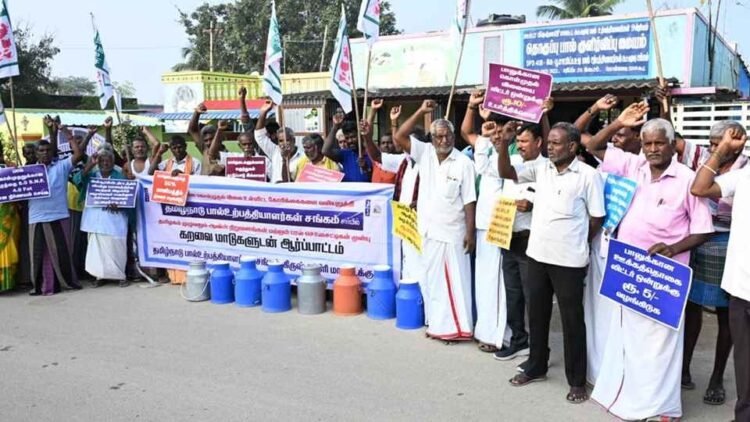
Farmer organizations have urged the government to immediately discharge over Rs 200 crore in outstanding debts, claiming that the protracted wait has negatively impacted livelihoods.
Concerns about the declining financial stability of primary milk producers’ cooperative organizations at the village level have also been voiced by farmers.
They claim that low procurement prices and incentive payment delays have left many groups running at a loss. Since May 2021, when the retail price of milk was lowered by Rs 3 per litre, they have asked that the government reimburse Aavin for the yearly loss of about Rs 550 crore.
Farmers’ representatives noted that the government often pays transportation companies for running buses without changing fares, drawing a contrast with state-run transportation enterprises. On the other hand, they said that Aavin has been compelled to bear ongoing losses without direct financial assistance.
The government allowed Aavin to use internal resources from the milk cooperative federation and profit-making district-level cooperative unions to settle incentive arrears a few months ago in response to growing pressure from farmers.
These money would be returned at a later time, the government had promised. Incentives were paid for the months of June through August in accordance with this regulation. The cooperative’s finances are further strained by the unpaid bills over the following months.
The cooperative must strike a careful balance between protecting the interests of milk farmers and guaranteeing affordability for customers, especially in metropolitan areas like Chennai, according to Aavin Managing Director John Louis.
He pointed out that all parties involved, including the district and federation unions, are required to carry out price reductions when the government announces them. Additionally, he said that more than 90% of primary cooperative societies are profitable and promised that the outstanding incentive dues will be paid shortly.
However, producers denied this assertion, arguing that removing money from district unions that made money has decreased the yearly payouts that primary societies are entitled to, causing some of them to lose money.
“Low procurement prices are causing financial difficulties for an increasing number of unions and village-level cooperatives,” said R. Kannan, general secretary of the Tamil Nadu Milk Producers’ Welfare Association.
Beginning on December 18, 2023, the government implemented a Rs 3 per litre incentive to allay agricultural worries. After that, buffalo milk is now purchased for Rs 47 per litre, whereas cow milk is now purchased for Rs 38 per litre.
Farmers caution that the cooperative milk ecosystem may experience more severe problems if the government does not intervene with prompt financial assistance and resolve outstanding incentives, which might have an impact on both producers and consumers across the state.