
RenaissanceArt – Botticelli Masterpiece Strengthens Cultural Ties Between India and Italy
RenaissanceArt – Art enthusiasts in India have been given a rare opportunity to view one of the celebrated creations of Renaissance painter Sandro Botticelli. His renowned work, “Madonna and Child,” has recently arrived in New Delhi and is currently being exhibited at the Italian Embassy Cultural Centre. The display allows visitors to experience an original masterpiece that is more than five centuries old, offering a direct connection to one of Italy’s most influential artistic periods.
A Landmark Cultural Presentation
According to officials at the Italian Embassy Cultural Centre, the exhibition is intended to encourage deeper engagement with classical art at a time when digital imagery dominates everyday life. Organizers believe that viewing an authentic historical artwork in person provides a unique experience that cannot be replicated through screens or reproductions.
The exhibition also signals the beginning of a broader cultural initiative. The centre plans to introduce a significant artwork by a renowned Italian master to India every year. This effort follows the successful presentation of Caravaggio’s “Mary Magdalene in Ecstasy,” which was displayed in several Indian cities last year through a collaboration with cultural institutions.
The Story Behind the Painting
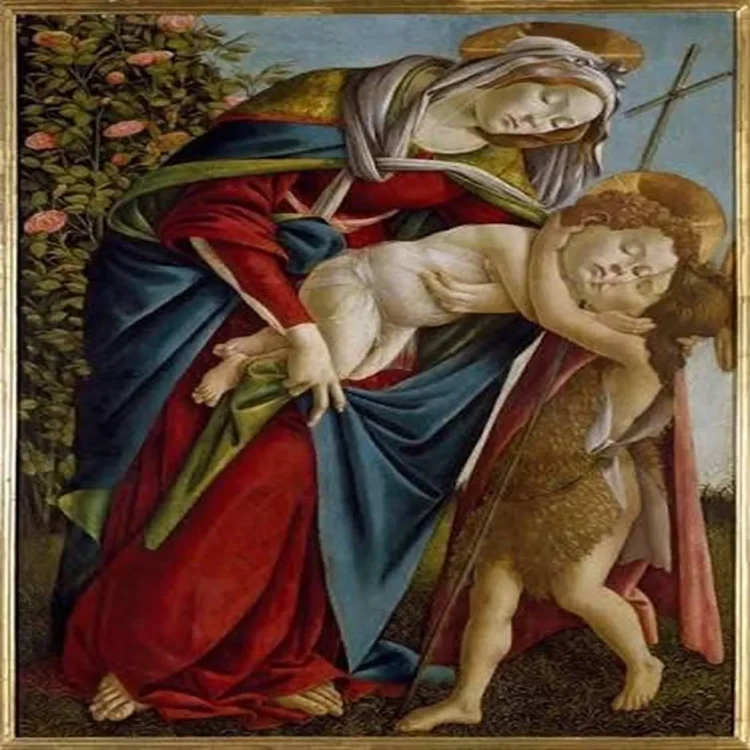
Created around 1500 using tempera on wood, “Madonna and Child” presents the Virgin Mary holding the infant Jesus. While the composition initially appears calm and traditional, closer observation reveals a more complex emotional narrative. Mary’s distant and reflective expression contrasts with the child’s serious gaze directed toward her, creating a subtle sense of separation despite their physical closeness.
Art experts note that Botticelli often portrayed religious subjects, but this particular work stands out because of its emotional depth. Rather than focusing on realistic anatomical detail, the artist emphasized symbolic expression. The elongated hands, graceful posture, and refined facial features serve to communicate feeling and meaning rather than strict realism.
A Commission with Personal Significance
Unlike many religious paintings commissioned by churches during the Renaissance period, this artwork was created for a private patron. That circumstance gave the painter greater freedom in composition and presentation.
Curators have highlighted an interesting aspect of the work: Mary’s downward and sideways gaze may have been intentionally designed to align with a particular location inside the patron’s residence. This detail adds a personal dimension to the painting and distinguishes it from more conventional devotional images of the era.
Complex Journey to India
Transporting a 500-year-old artwork across international borders required extensive planning and conservation measures. Because the painting is executed on a wooden panel rather than canvas, it is particularly sensitive to environmental changes.
Specialized climate-controlled packaging was used throughout the journey to maintain stable temperature and humidity levels. Experts from multiple institutions coordinated logistics, insurance arrangements, and preservation requirements to ensure the artwork arrived safely in India without risk to its condition.
Part of a Larger Conversation on Motherhood
The arrival of Botticelli’s masterpiece is linked to an upcoming exhibition titled “One Mother, Many Mother Tongues” at the Humayun’s Tomb Museum. The exhibition will examine representations of motherhood across different civilizations and historical periods.
Displayed alongside artifacts from Gandhara, Mohenjo-daro, and other important collections, “Madonna and Child” will contribute to a broader exploration of how societies across the world have interpreted maternal identity and care through art.
Botticelli’s Later Artistic Vision
Born in Florence in 1445, Botticelli became one of the defining artists of the Italian Renaissance. His early career produced celebrated mythological works such as “The Birth of Venus” and “Primavera.” However, social and political upheavals in Florence later influenced both his outlook and artistic direction.
The rise of religious reformer Girolamo Savonarola encouraged a shift toward spiritual themes. As a result, Botticelli increasingly focused on religious subjects marked by contemplation and emotional intensity. Scholars believe “Madonna and Child” reflects this later phase of his career, revealing a more introspective style and a deeper sense of reflection.
Building Cultural Understanding
Beyond showcasing a famous artwork, organizers view the exhibition as an opportunity to strengthen cultural connections between India and Italy. They hope that increased appreciation of each other’s artistic traditions will encourage broader understanding and dialogue between the two countries.
The exhibition demonstrates how historic works of art continue to create meaningful exchanges across borders, generations, and cultures, offering audiences new perspectives on both shared human experiences and distinct cultural identitie