
Parliament – Joint Panel Delays Report on Bill Linked to Detention of Top Leaders
Parliament – The parliamentary committee reviewing proposed changes related to the removal of the Prime Minister, Union Ministers, and Chief Ministers has postponed the adoption of its draft report after members agreed that wider consultations and additional discussions were necessary before reaching a final conclusion.
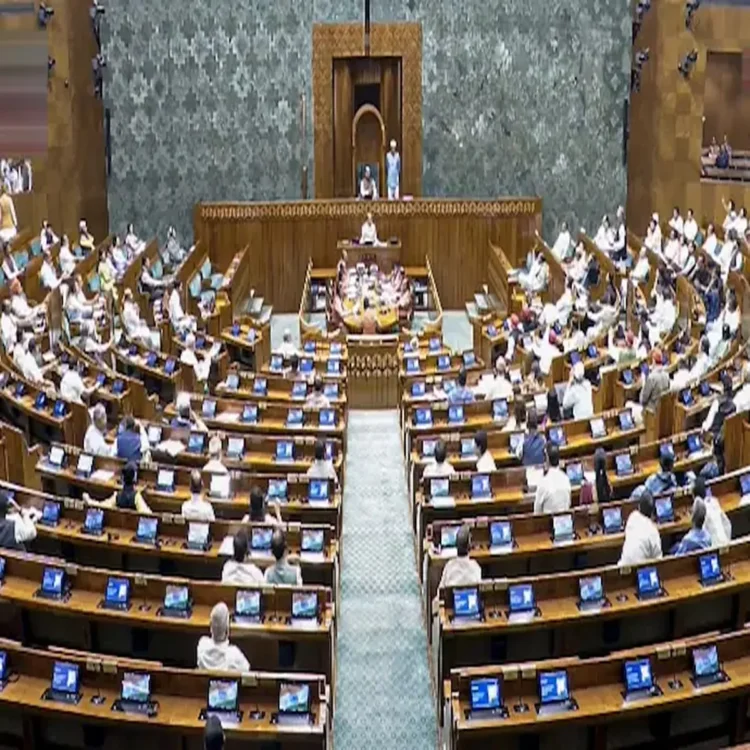
Committee Seeks More Discussions Before Final Decision
The Joint Committee of Parliament examining the Constitution (130th Amendment) Bill decided not to approve its draft report during its latest meeting. Instead, members unanimously agreed that the recommendations required further interaction with stakeholders and more deliberations within the panel before they could be finalized.
According to committee chairperson Aparajita Sarangi of the BJP, the decision reflected a collective view that additional consultation would strengthen the recommendations. She stated that the objective behind the proposed legislation was to address corruption and discourage the criminalisation of politics, adding that issues of national importance should ideally receive broad political support.
Voting Began Before Adoption Was Deferred
Sources present at the meeting said members had already voted on the first two recommendations, while discussion on the third proposal was in progress when the committee decided to postpone adoption of the report. Although the first two recommendations were approved by a majority, some members from the ruling alliance reportedly voted against them.
The committee’s draft report, which had recently been circulated among members, contains five key recommendations related to the proposed legislation.
Opposition Members Withdraw Dissent Notes
AIMIM leader Asaduddin Owaisi and NCP (SP) Member of Parliament Supriya Sule had initially submitted dissent notes on the draft report. However, after the committee decided to delay its adoption, both leaders withdrew their objections.
Several opposition parties had earlier chosen not to participate in the Joint Parliamentary Committee reviewing the bill, expressing concerns about the proposed legislation and its possible political implications.
Suspension Instead of Automatic Removal Recommended
One of the committee’s major recommendations suggests that the Prime Minister, Union Ministers, and Chief Ministers should face temporary suspension rather than permanent removal if they remain in detention for 30 consecutive days in connection with serious criminal charges. The suspension would remain subject to the outcome of judicial proceedings.
The panel also proposed an automatic restoration mechanism. Under this recommendation, an affected public office holder would regain the position if acquitted by the court or if the prosecution fails to move forward within a prescribed period.
Definition of Serious Criminal Offences Suggested
The draft report further recommends providing a clear legal definition of “serious criminal offences.” According to the proposal, the term should apply to offences that carry a maximum punishment of five years or more in prison.
The committee believes that a precise definition would reduce ambiguity while ensuring that the law is applied consistently in cases involving senior constitutional office holders.
Background of the Proposed Legislation
The Constitution (130th Amendment) Bill was introduced in Parliament last August. In its original form, the legislation proposes that if the Prime Minister, a Union Minister, or a Chief Minister remains in detention for 30 continuous days and does not voluntarily resign, the individual would automatically cease to hold office on the 31st day.
Opposition parties have argued that such provisions could potentially be misused to weaken or destabilise elected governments. Supporters of the bill, however, maintain that the proposal is intended to strengthen accountability in public office while reducing the influence of criminal elements in politics.