
YamunaRevival – Amit Shah Reviews Progress of Yamuna Restoration Drive
YamunaRevival – The Centre has intensified efforts to improve the condition of the Yamuna River, with Union Home Minister Amit Shah emphasizing the need for coordinated action among multiple agencies and state governments to achieve lasting environmental improvements.
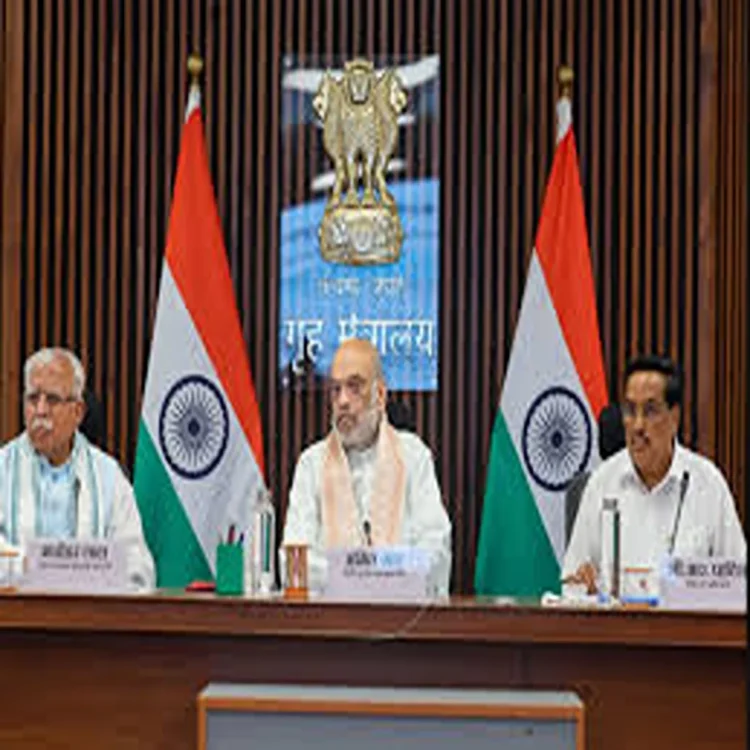
Union Home Minister Amit Shah on Monday chaired a high-level review meeting focused on the ongoing restoration of the Yamuna River. During the discussion, he described the river-cleaning mission as an important commitment being pursued under the leadership of Prime Minister Narendra Modi and stressed that all stakeholders must work collectively to accelerate progress.
Focus on Joint Action Across States
Shah called upon the governments of Delhi, Haryana and Uttar Pradesh, along with relevant ministries and departments, to adopt a unified strategy for improving the river’s health. He underlined the importance of cooperation among all agencies involved, saying that effective coordination would be essential for achieving visible outcomes within a reasonable timeframe.
The Home Minister also highlighted the need to maintain an adequate ecological flow in the Yamuna. According to him, the three neighbouring states must work together to ensure that sufficient water remains available in the river to support its natural ecosystem.
Dairy Waste Management Measures Planned
As part of the broader river-cleaning initiative, Shah announced that a Memorandum of Understanding would be signed between the Municipal Corporation of Delhi and the National Dairy Development Board. The agreement aims to prevent waste generated by dairy operations from reaching the river.
Under the proposed system, waste collected from dairies and cow shelters will be transported directly to facilities where it can be converted into biogas and organic manure. The approach is expected to reduce pollution while also creating useful by-products from agricultural and livestock waste.
Progress in Drain Cleaning Operations
The meeting also reviewed the status of desilting work in drains that discharge into the Yamuna. Officials informed the Home Minister that substantial progress has already been achieved.
Out of the targeted 28.57 lakh metric tonnes of accumulated silt scheduled for removal this year, approximately 97 percent has already been cleared. The remaining material is expected to be removed by June 15. Shah instructed authorities to ensure that the extracted silt is utilized in manufacturing and development projects so that it does not return to the river during the monsoon season.
Expansion of Treatment Infrastructure
Officials reported that 129 sewage treatment plants are currently operational across the Delhi-NCR region. In addition, another 59 facilities are planned and expected to be completed by 2027.
Shah directed agencies to strengthen supervision of sewage treatment plants, industrial waste disposal systems and drainage networks connected to the river. He stressed that infrastructure development should be accompanied by measurable improvements in water quality.
The Home Minister further advised authorities to prepare future-ready plans for common effluent treatment facilities as well as systems designed specifically for managing waste from dairy operations.
Continuous Monitoring and Accountability
To improve oversight, Shah instructed officials to maintain regular monitoring of critical water-quality indicators, including Biochemical Oxygen Demand, Chemical Oxygen Demand and Total Suspended Solids. These parameters are widely used to assess pollution levels in rivers and associated water bodies.
He also directed departments involved in the rejuvenation programme to establish clear deadlines for every project, ensure proper maintenance after completion and conduct progress assessments every 20 days. The objective, he said, is to ensure sustained improvements in the river’s condition through consistent monitoring and accountability.