
Wildlife – Wild buffalo return to Kanha after nearly a century
Wildlife – Nearly a hundred years after disappearing from the forests of Madhya Pradesh, the Asiatic wild water buffalo has made a carefully planned return to the region. The species has been reintroduced in the Supkhar forest area of Kanha Tiger Reserve, marking a significant step in restoring ecological balance in central India.
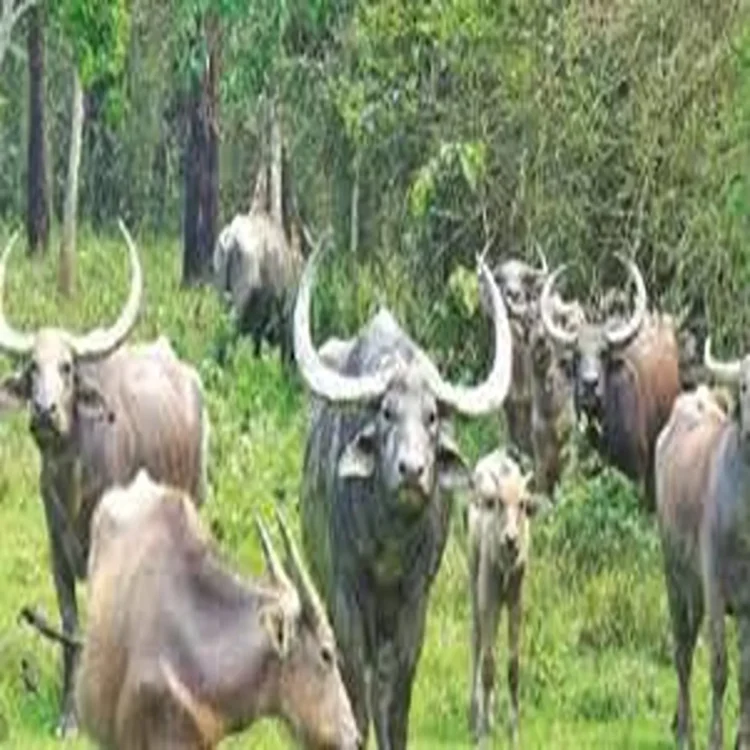
Reintroduction begins in Supkhar forest range
The reintroduction effort was formally launched by Chief Minister Dr Mohan Yadav, who released four wild buffaloes into a specially prepared enclosure known as a soft release boma. The event took place in the Supkhar Forest Range of Kanha Tiger Reserve, located in Balaghat district.
This particular forest zone had until recently been known for different reasons. It once served as a secure passage and shelter area for armed Naxal groups moving between states. Its transformation into a conservation site highlights a notable shift in the region’s landscape and purpose.
First batch arrives from Kaziranga
The four buffaloes released into the reserve are part of the first group of the endangered species brought from Kaziranga National Park in Assam. The animals began their journey on April 25 and completed a roughly 2,000-kilometre relocation before reaching Kanha earlier this week.
Their movement was part of a coordinated wildlife translocation program involving forest departments from both states. The animals were transported under close monitoring to ensure their safety and adaptation to the new habitat.
A boost to biodiversity and grassland ecosystems
Officials have described the initiative as a key milestone in the state’s conservation efforts. The return of the wild buffalo is expected to strengthen grassland ecosystems within the reserve. These animals play an important role in maintaining vegetation patterns, which in turn supports other wildlife species.
The chief minister noted that the project opens new possibilities for preserving biodiversity in Madhya Pradesh. By restoring a species that once thrived in the region, authorities aim to rebuild ecological processes that were disrupted decades ago.
Careful selection and monitoring process
Before the relocation, experts identified at least seven suitable sub-adult buffaloes from different ranges of Kaziranga between March 19 and April 10, 2026. These animals were chosen based on health, age, and adaptability to ensure a higher chance of successful integration into the new environment.
Veterinarians and wildlife specialists from both reserves supervised every stage of the operation. From capture and transport to release and post-arrival monitoring, the process followed strict scientific protocols.
More animals expected in second phase
The reintroduction program is not limited to the initial group. Authorities have confirmed that a second batch of four buffaloes, including three females and one male, is expected to arrive in Kanha by the end of April or early May.
This phased approach is designed to gradually establish a stable population in the reserve. By introducing animals in groups, experts hope to improve breeding prospects and ensure long-term survival of the species in the region.
Long-term conservation vision
The return of the Asiatic wild water buffalo is seen as more than just a symbolic achievement. It reflects a broader effort to restore lost species and strengthen ecosystems across protected areas in India.
If successful, the initiative could serve as a model for similar conservation projects in other parts of the country. For Kanha Tiger Reserve, already known for its rich wildlife, the addition of this species further enhances its ecological significance.