
Wildlife – Assam Adjusts Pobitora Sanctuary Boundaries to Improve Habitat Connectivity
Wildlife – The National Board for Wildlife (NBWL), functioning under the Ministry of Environment, Forest and Climate Change, has cleared a proposal by the Assam government to revise the boundaries of Pobitora Wildlife Sanctuary in Morigaon district. The move is aimed at improving ecological balance while addressing long-standing concerns related to human settlements and habitat management.
Boundary Changes and Area Expansion
Under the approved plan, around 470.67 hectares will be removed from the existing sanctuary limits, while 564.83 hectares will be added. This adjustment will result in a net increase in the sanctuary’s area, taking it from 3,880.61 hectares to 3,978.29 hectares.
Officials say the inclusion of new land parcels is expected to strengthen wildlife corridors and improve connectivity between key ecological zones within the sanctuary.
Focus on Ecological Stability
The NBWL has observed that the revised boundaries could help restore natural water flow patterns and safeguard wetlands and water channels. These changes are considered essential for maintaining the ecological health of the sanctuary, particularly for species dependent on wetland habitats.
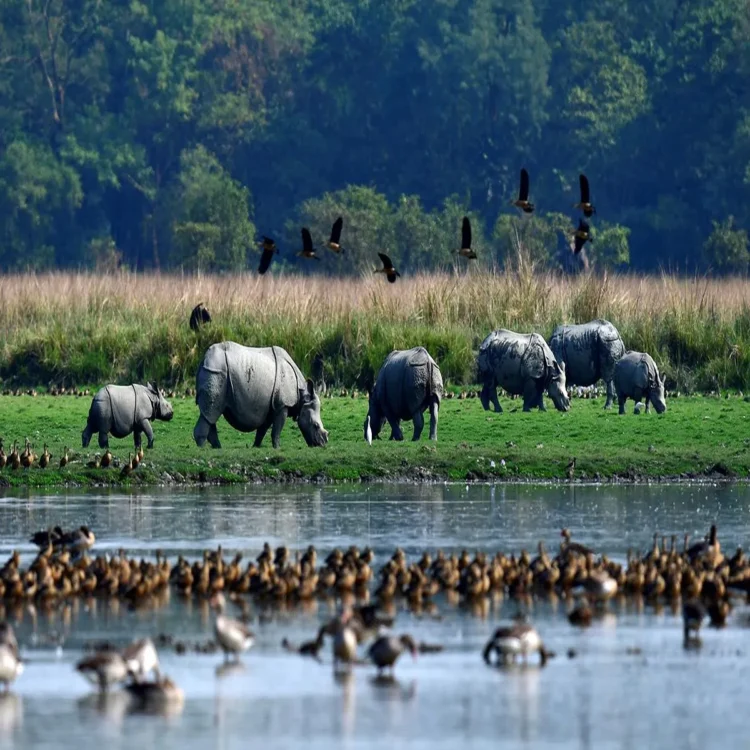
Experts believe that improved hydrological systems will directly benefit wildlife, including the one-horned rhinoceros population for which Pobitora is well known.
Background of the Proposal
The Assam government submitted the proposal following directions from the Supreme Court. The court, in an order dated March 13, 2024, had asked for a review of the sanctuary’s boundaries while hearing a writ petition that dates back to 1995.
The review process involved detailed field assessments and consultations to identify gaps in the earlier boundary design.
Human Settlements and Land Ownership Issues
One of the key reasons for revising the boundaries was the presence of human habitation within the notified sanctuary area. According to officials, nearly 265 landholders occupy about 173 hectares of privately owned land within the existing limits.
There have also been reports of encroachment and recurring disputes between local residents and forest authorities. The earlier boundary demarcation, notified in 1998, did not adequately account for these settlements, leading to ongoing management challenges.
Addressing Environmental Concerns
In addition to human-related issues, environmental factors also played a role in the decision. Blocked water channels and shrinking wetlands have been affecting the habitat quality, particularly for species that rely on aquatic ecosystems.
The revised plan aims to correct these shortcomings by ensuring better alignment of natural water systems within the sanctuary’s boundaries.
Balancing Conservation and Livelihoods
The NBWL has emphasized the importance of maintaining a balance between conservation goals and the livelihoods of people living in and around the sanctuary. By excluding permanent settlements and privately owned lands wherever feasible, authorities aim to reduce conflicts while strengthening habitat protection.
At the same time, the Board has directed the Assam government to prepare a detailed plan for an Ecologically Sensitive Zone (ESZ) around the sanctuary. This plan will regulate development activities and help preserve the surrounding environment.
Legal and Administrative Requirements
Before finalizing the revised boundaries, the state government has been instructed to obtain consent from all affected private landowners. This process must follow the provisions of the Land Acquisition Act of 2013.
Additionally, the ESZ proposal must clearly define permissible and restricted activities to ensure long-term conservation outcomes.
Decision Taken at NBWL Meeting
The approval was granted during the 89th meeting of the NBWL Standing Committee, held on February 28, 2026. The meeting was chaired by Union Environment Minister Bhupendra Yadav, who reviewed the proposal along with other conservation matters.
The decision marks a significant step toward addressing both ecological and social challenges in one of Assam’s important wildlife habitats.