
WestBengalDay – PM Modi’s Bengal Remarks Spark Fresh Political Debate
WestBengalDay – Union Minister Giriraj Singh on Monday defended Prime Minister Narendra Modi’s recent comments regarding West Bengal’s political history, accusing the Congress party of pursuing policies of appeasement after Independence and failing to safeguard the state’s long-term interests. His remarks came amid an ongoing political exchange over Bengal’s historical identity and the significance of its formation.
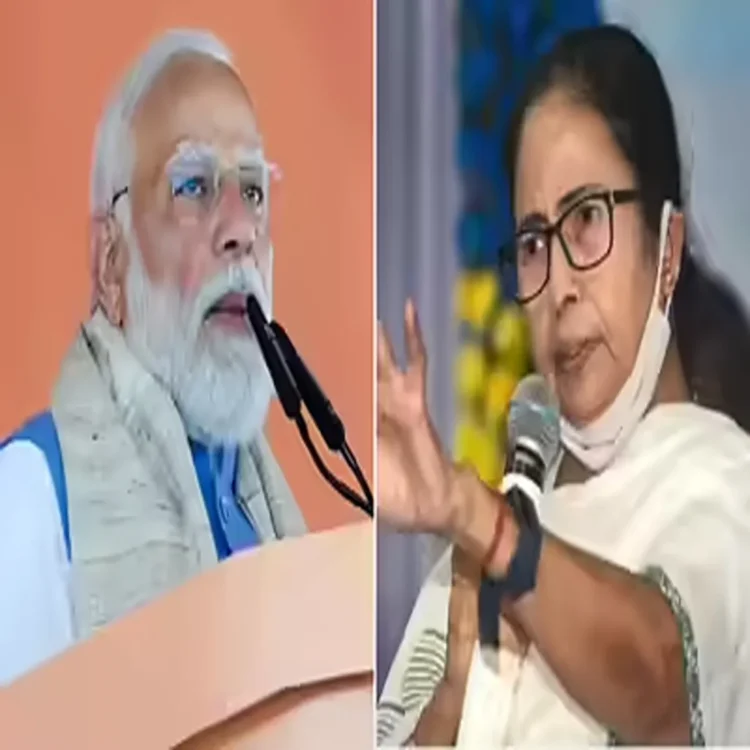
Giriraj Singh Targets Congress Over Historical Decisions
Speaking to reporters, Singh said that the period surrounding Partition had a lasting impact on Bengal and credited Dr. Syama Prasad Mukherjee with playing a crucial role in ensuring that parts of Bengal remained within India. He alleged that the consequences of communal violence witnessed during the final years of British rule continued to affect the region because of decisions taken by Congress governments.
According to Singh, Congress adopted an approach that prioritized appeasement politics and neglected Bengal’s development over the years. He further claimed that the situation worsened during the tenure of the Trinamool Congress, which, he alleged, was marked by corruption and mismanagement. Singh argued that the Bharatiya Janata Party has emerged as a political force offering a new direction to the people of the state.
Remarks on Trinamool Congress Leadership
The Union Minister also commented on reports of alleged financial irregularities involving members of the Trinamool Congress. Referring to Chief Minister Mamata Banerjee, Singh alleged that the image of simplicity projected by the party leadership stood in contrast to what he described as a system affected by corruption. He claimed that investigations and developments in recent years have brought several such issues into public discussion.
PM Modi Highlights Importance of West Bengal Day
The debate follows Prime Minister Narendra Modi’s address at a public gathering in Tarakeswar, located in West Bengal’s Hooghly district, on June 20. During his speech, the Prime Minister emphasized the need to educate younger generations about the historical events that shaped the state and the significance of West Bengal Day.
Modi said that many young people remain unaware of the circumstances surrounding Bengal’s division before Independence. He noted that there were efforts during that period to include the entire region within Pakistan and stated that leaders such as Dr. Syama Prasad Mukherjee strongly opposed those proposals.
Reference to Historical Developments of 1947
During the rally, the Prime Minister highlighted Mukherjee’s role in mobilizing public opinion and supporting resolutions that opposed the inclusion of the whole of Bengal in Pakistan. He said these efforts played a significant part in determining the future political structure of the region.
Modi also argued that the historical significance of West Bengal Day has not received adequate attention over the years. According to him, political considerations led to the gradual fading of public awareness about the events that contributed to the state’s formation.
Recognition of Syama Prasad Mukherjee’s Contribution
The Prime Minister further stated that Dr. Mukherjee’s contribution to India’s political landscape and Bengal’s history was not sufficiently acknowledged in official narratives. He said greater efforts should be made to inform younger generations about the role played by leaders involved in shaping the state during the years leading up to Independence.
Significance of Paschimbanga Divas
Paschimbanga Divas, observed annually on June 20, marks the foundation day of West Bengal. The occasion commemorates the state’s cultural heritage, historical journey, and the legislative developments that led to its creation.
The date traces its importance to June 20, 1947, when the Bengal Legislative Assembly met to decide on the partition of Bengal under the Mountbatten Plan. The vote became a key moment in determining the future boundaries and political identity of the region, making the day an important chapter in the history of modern West Bengal.