
Water Crisis – Delhi Faces Continued Supply Challenges Amid Low Yamuna Levels
Water Crisis – Residents in multiple parts of Delhi are still grappling with water shortages as the Delhi Jal Board (DJB) struggles to restore full production capacity. Officials said on Monday that despite recent rainfall and efforts to secure additional raw water from Haryana, the overall supply situation remains under pressure.
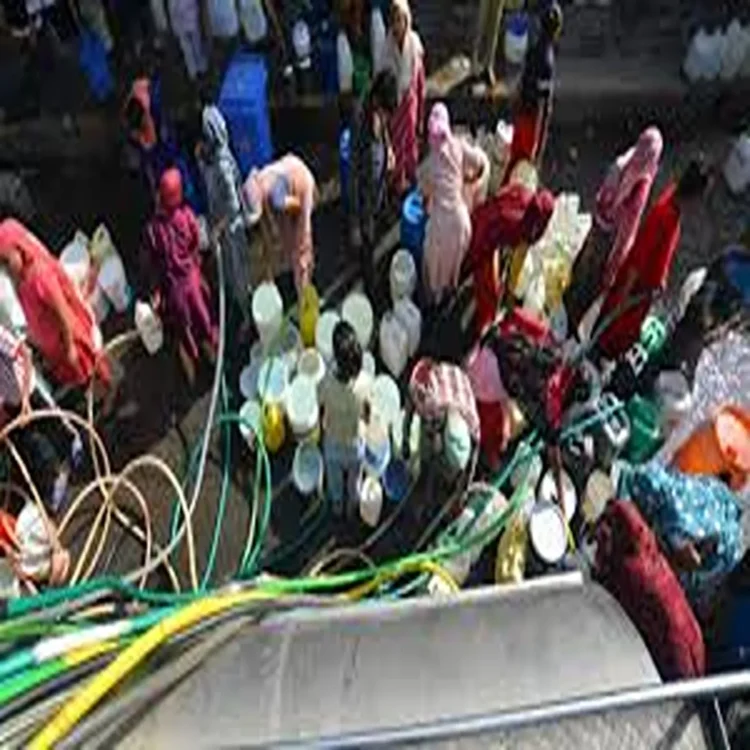
The Delhi Jal Board is currently producing between 950 and 960 million gallons of water per day, which remains below its summer target of 1,000 million gallons per day. Authorities noted that while there has been a slight improvement in water availability, the gap between demand and supply continues to affect distribution across the city.
Reduced Water Output Continues
According to senior DJB officials, a marginal increase has been recorded in the flow of the Yamuna River, but it has not been sufficient to significantly boost water production. Efforts are underway to improve output levels and stabilize supply in affected areas.
For almost a month, two of Delhi’s key water treatment facilities—Wazirabad and Chandrawal—have been operating below their normal capacities. The primary reason behind the reduced production is the inadequate availability of raw water required for treatment and distribution.
Low Yamuna Levels Remain a Major Concern
Officials highlighted that the water level of the Yamuna at Wazirabad remains considerably below the standard requirement. The river level was recorded at approximately 669.5 feet, whereas the normal level needed for efficient operations stands at 674.5 feet.
The lower water level has directly impacted the functioning of treatment plants that depend on the river as a major source of raw water. Authorities indicated that production levels are unlikely to return to normal until the river reaches the required level.
Discussions Underway With Haryana
Government officials confirmed that talks are continuing with the Haryana government regarding the possibility of increasing raw water supply to Delhi. These discussions are aimed at easing pressure on the city’s water infrastructure and helping treatment plants recover lost capacity.
There is, however, some optimism regarding the Chandrawal Water Treatment Plant. Officials stated that conditions at the facility have shown signs of improvement and that production could return to normal levels within the next two to three days if the situation remains stable.
Impact on Treatment Plants
The Wazirabad Water Treatment Plant typically produces around 131 million gallons of water daily, while the Chandrawal facility has an average production capacity of 94 million gallons per day. Due to the shortage of raw water, both plants have experienced a reduction of nearly 25 to 30 percent in their operational capacity.
This decline has significantly affected the overall output of the Delhi Jal Board, contributing to the ongoing supply difficulties experienced across several parts of the capital.
Several Areas Continue to Face Shortages
A number of residential and institutional areas remain impacted by the reduced water supply. Among the affected locations are Civil Lines, Kamla Nagar, Shakti Nagar, Karol Bagh, Paharganj, the NDMC region, Hindu Rao Hospital, parts of the Cantonment area, and nearby localities.
Residents in these areas have reported continued disruptions in daily water availability, prompting concerns as temperatures remain high and demand stays elevated.
No Clear Timeline Yet
While officials maintain that efforts are being made to improve the situation, the Delhi Jal Board has not announced a specific timeline for the complete restoration of normal water supply. The recovery of production levels is expected to depend largely on improvements in Yamuna water levels and the success of ongoing coordination with Haryana authorities