
SupremeCourt – Supreme Court Clarifies Legal Meaning of Obscenity Under IPC Provisions
SupremeCourt – The Supreme Court has ruled that the use of abusive or vulgar language in a public place does not automatically amount to the offence of obscenity under Section 294(b) of the Indian Penal Code (IPC). Delivering the judgment on Friday, a Bench comprising Justice Sanjay Karol and Justice Vipul M. Pancholi explained that criminal liability for obscenity arises only when the legal requirements specified under the law are clearly established. The ruling came while the court partly allowed an appeal filed by a 70-year-old man from Tamil Nadu in connection with a long-running land dispute.
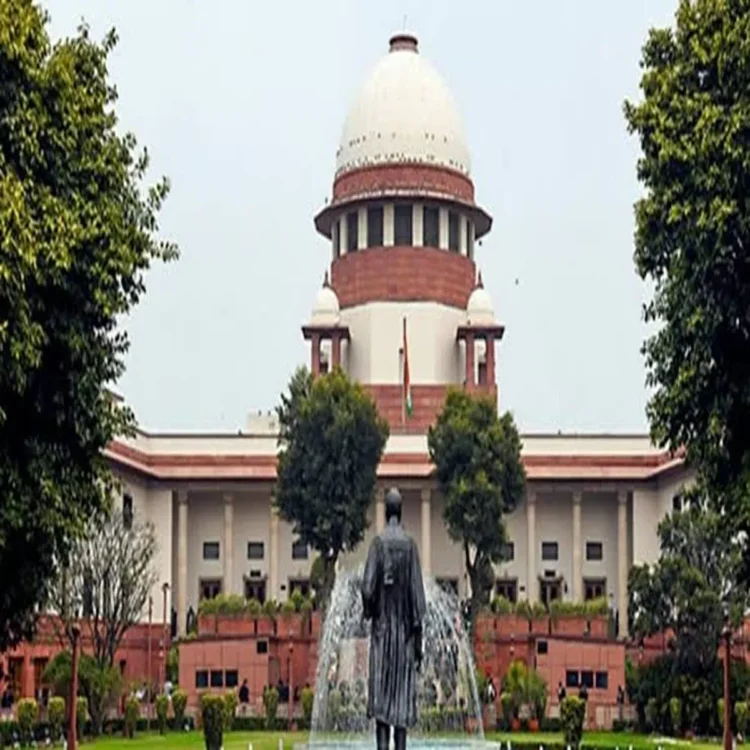
Court Explains the Legal Standard for Obscenity
The Bench observed that the determination of obscenity cannot be based solely on offensive or unpleasant language. According to the judgment, courts must examine whether the words used are lascivious, appeal to prurient interests, and are capable of corrupting or depraving impressionable minds. In addition, the prosecution must demonstrate that the language caused annoyance to people present at or near the location. Without proving these essential ingredients, an offence under Section 294(b) cannot be sustained.
The judges emphasized that rude or uncivil expressions may be socially unacceptable, but such language alone is insufficient to constitute the criminal offence of obscenity.
Distinction Between Obscenity and Offensive Language
Clarifying the scope of the law, the Supreme Court drew a clear distinction between obscenity and other forms of objectionable speech. The judgment stated that vulgarity, abusive remarks, or profanity should not automatically be treated as obscene in the eyes of the law.
The court reiterated that only expressions meeting the legal threshold of obscenity—those with a sexually explicit or morally corrupting character—can attract prosecution under the relevant provision. Simply using swear words or offensive expressions, regardless of how inappropriate they may appear, does not satisfy this legal test.
Background of the Criminal Case
The case originated from an altercation in August 2017 linked to a property dispute between the appellant and the complainant’s family in Tamil Nadu. According to the prosecution, the accused allegedly used abusive language during the confrontation and attacked the complainant with a billhook. The incident reportedly resulted in several injuries, including a fractured nasal bone.
Following the trial, the accused was convicted under multiple provisions of the Indian Penal Code as well as the Scheduled Castes and Scheduled Tribes (Prevention of Atrocities) Act.
High Court’s Earlier Decision
The Madras High Court later reviewed the matter and acquitted the accused of charges under the SC/ST Act. However, it upheld his conviction under Sections 294(b), 326, and 506(ii) of the IPC.
While examining the appeal, the Supreme Court focused on the applicability of Section 294(b). The Bench observed that the prosecution was required to establish not only that the alleged obscene words were spoken in or near a public place, but also that they caused annoyance to others present. The judgment found that these statutory requirements must be satisfied before a conviction can be upheld under the provision.
Sentence Modified Considering Age and Circumstances
Although the Supreme Court did not completely overturn the conviction, it modified the sentence after considering the circumstances of the case. The judges noted that the incident arose from hostility connected to a land dispute and also took into account the appellant’s advanced age and health condition.
The court directed that the sentence be limited to imprisonment until the rising of the court on a date fixed by the concerned court. It also ordered the appellant to pay a fine of ₹50,000 within two months, balancing the seriousness of the incident with the mitigating factors placed before the Bench.