
Strengthening Diplomatic Ties: Poland’s Deputy Prime Minister Advances Strategic Dialogue with India
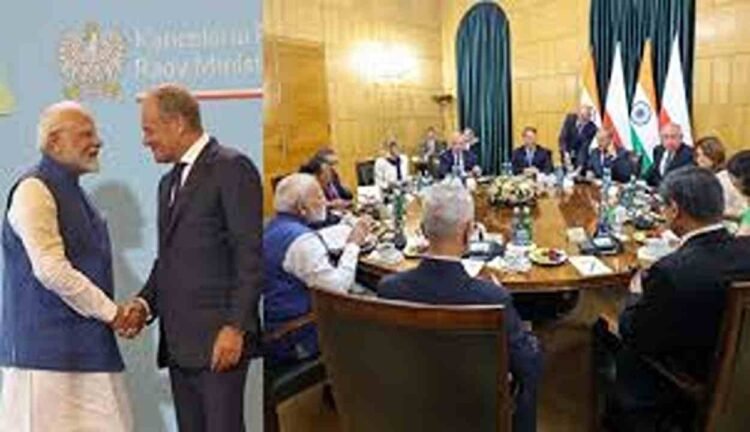
Strengthening Diplomatic Ties: Poland’s Deputy Prime Minister and Foreign Minister, Radoslaw Sikorski, arrived in New Delhi for a three-day official visit aimed at reinforcing and expanding the Strategic Partnership between India and Poland. The visit reflects the growing importance both nations place on diplomatic cooperation, political dialogue, and long-term collaboration in a rapidly changing global environment. His arrival marks another step in strengthening bilateral engagement that has steadily evolved over recent years.
Official Reception and Diplomatic Context
Upon landing in New Delhi, Radoslaw Sikorski was formally received by Additional Secretary Pooja Kapur, highlighting the significance India attaches to this high-level visit. The reception set the tone for a series of engagements focused on mutual interests and shared priorities. Diplomatic visits of this nature play a critical role in building trust, enhancing communication, and ensuring continuity in international relations.
Objectives of the India–Poland Visit
The primary agenda of Sikorski’s visit is the deepening of bilateral relations between India and Poland. Both sides are keen to explore new areas of cooperation beyond traditional diplomatic engagement. These include political consultation, economic collaboration, cultural exchange, and coordination on global and regional issues. The visit also aims to identify practical pathways to translate strategic intent into actionable partnerships that benefit both nations.
High-Level Talks with Indian Leadership
During his stay in New Delhi, the Polish Deputy Prime Minister is scheduled to hold detailed discussions with India’s External Affairs Minister, S Jaishankar. These talks are expected to focus on advancing the India–Poland Strategic Partnership and reviewing progress made so far. Diplomatic dialogue at this level allows both countries to align their perspectives on international developments, regional security, and multilateral cooperation.
Ministry of External Affairs Perspective
India’s Ministry of External Affairs emphasized the importance of the visit through an official statement shared on social media. The ministry highlighted that Sikorski’s engagements in New Delhi are centered on further strengthening the strategic partnership between the two countries. Such official communication underlines India’s commitment to nurturing long-term relations with Poland based on mutual respect and shared democratic values.
Engagement at the Jaipur Literature Festival
Before arriving in the national capital, Sikorski visited Jaipur from January 17 to 18, where he participated in the Jaipur Literature Festival. His presence at the festival demonstrated Poland’s interest in engaging with India not only through formal diplomacy but also through intellectual and cultural platforms. Cultural diplomacy often complements political dialogue by fostering people-to-people connections and deeper mutual understanding.
Discussion on Europe’s Geopolitical Challenges
At the literature festival, Sikorski took part in a session titled “A Continent in Crisis: Russia, Ukraine and the European Story.” During this discussion, he spoke extensively about the impact of the Russia–Ukraine conflict on Europe’s stability. He explained how the war has reshaped the continent’s security landscape and created long-term challenges for European nations.
Insights on Russia–China Relations
Sikorski also shared his views on the evolving relationship between Russia and China. He pointed out that Russia is increasingly compelled to sell oil at lower prices and has become dependent on China for high-quality goods, digital infrastructure, and cyber services. According to him, this dependency reflects shifting power dynamics and strategic imbalances resulting from prolonged conflict and international sanctions.
Concerns Over Security and Defence
Expressing serious concern over the broader implications of the Russia–Ukraine war, Sikorski warned that the conflict extends far beyond a regional dispute. He stressed that it poses a significant challenge to Europe’s overall security structure. Highlighting Poland’s defence priorities, he noted that the country is allocating 4.7 percent of its GDP to defence spending in order to strengthen national and regional security. This commitment, he said, demonstrates Poland’s resolve to remain a reliable contributor to European security.
Humanitarian Impact and Long-Term Consequences
Sikorski drew attention to the severe humanitarian and economic consequences of the war in Ukraine. He spoke about the loss of thousands of lives, widespread destruction of cities, and the hardships faced by civilians enduring extreme winter conditions without electricity or basic services. He also observed that what was initially presented as a short military operation has turned into a prolonged conflict lasting several years, resulting in heavy military and economic losses for Russia and continued suffering for the region.