
ShivSenaUBT – Saamana Editorial Targets Centre Over Youth Protest Response
ShivSenaUBT -The Shiv Sena (Uddhav Balasaheb Thackeray) has sharply criticised the BJP-led Central government, alleging that the recent handling of youth protests in New Delhi reflects growing public dissatisfaction and a widening gap between the administration and citizens.
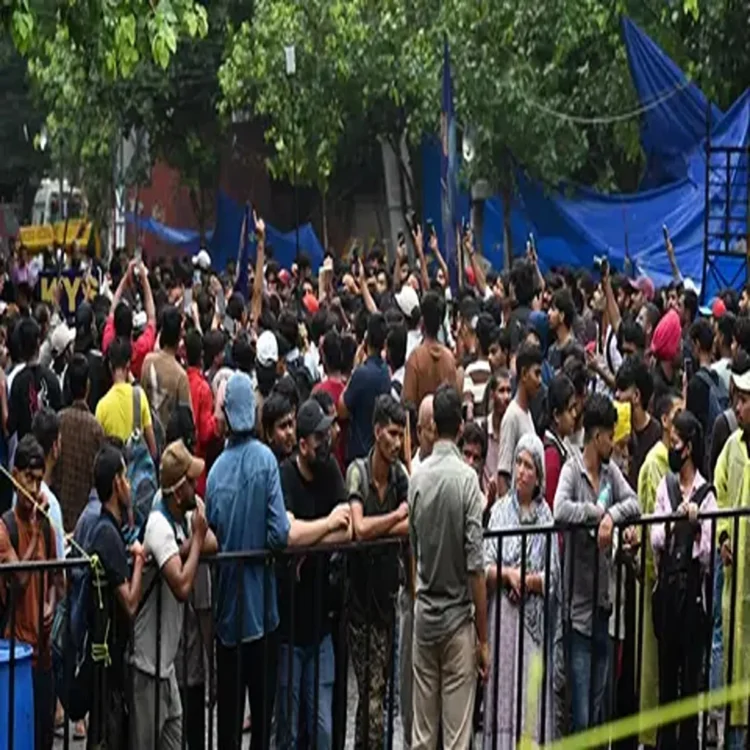
The criticism appeared in the latest editorial of the party’s newspaper Saamana, where the Uddhav Thackeray-led faction accused the Centre of relying on police action instead of engaging with young protesters through meaningful dialogue. The editorial claimed that the response to demonstrations in the national capital highlighted an unwillingness to address concerns raised by those participating in the protests.
Editorial Questions Government’s Response
According to the editorial, the police action against demonstrators symbolised what it described as an excessive use of force. It argued that many protesters remained peaceful despite facing baton charges, portraying their determination as a sign of increasing public resistance. The publication suggested that governments should prioritise communication with aggrieved citizens rather than suppressing demonstrations through enforcement measures.
The article also made critical remarks about Prime Minister Narendra Modi’s leadership, alleging that the administration has become disconnected from the concerns of young people. It maintained that prolonged public dissatisfaction could have political consequences if meaningful engagement with citizens does not take place.
Demand Over Education Minister’s Accountability
The editorial further questioned why Union Education Minister Dharmendra Pradhan has not stepped down amid the ongoing unrest involving students and youth. It argued that the government has avoided taking such action because it fears broader demands for accountability within the Union Cabinet.
According to the publication, addressing public grievances requires greater responsibility from ministers, especially when large sections of society express dissatisfaction. It claimed that calls for resignations could expand if the government fails to respond effectively to issues raised by the public.
References to Environmental and Farmers’ Movements
Beyond the protests in Delhi, the editorial referred to several ongoing public movements across different parts of the country. It mentioned environmental campaigns opposing tree felling in Rishikesh and concerns over forest clearances in Jharkhand and Chhattisgarh.
The publication also highlighted farmer demonstrations in Maharashtra, including protests reported from Nashik, Akola, Solapur, Bhandara and Buldhana. According to the editorial, these movements are linked to land acquisition, infrastructure projects and ring-road development, with affected communities seeking greater consultation before major decisions are implemented.
Concerns Over Democratic Institutions
The Shiv Sena (UBT) editorial also raised concerns about the functioning of democratic institutions. It alleged that constitutional bodies, including the judiciary and the Election Commission, are facing increasing influence from the executive. The publication further criticised the political situation in Maharashtra, referring to legislative proceedings and the continued absence of a formally recognised Leader of the Opposition in the state Assembly.
The editorial argued that healthy democratic systems require independent institutions and constructive debate between the government and opposition. It maintained that institutional balance is essential for maintaining public confidence in governance.
Historical Comparisons and Political Warning
Drawing comparisons with political developments witnessed in countries such as Libya, Bangladesh and Nepal, the editorial said that prolonged breakdowns in communication between governments and citizens have historically contributed to major political unrest. It stressed that dialogue remains an essential element of democratic governance and warned against ignoring public sentiment.
Concluding its remarks, the publication alleged that democratic institutions have increasingly come under the influence of those in power while opposition voices have been weakened. It also claimed that governments which fail to respond to public concerns eventually face strong political challenges when public frustration reaches its limit.