
Security – Government to Launch Three-Year Roadmap to Strengthen India’s Anti-Drug Campaign
Security – The Central Government is set to introduce a comprehensive plan aimed at strengthening India’s response to drug trafficking and substance abuse over the next three years.
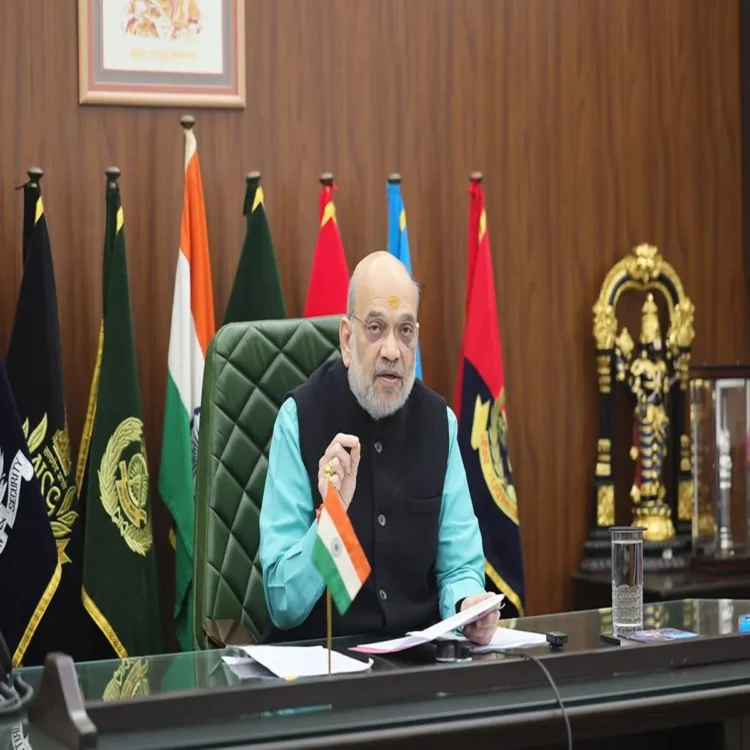
Union Home Minister Amit Shah is scheduled to unveil a new Vision Document on June 26 that will outline the government’s long-term strategy to enhance narcotics control across the country. The announcement will take place during the 10th apex-level meeting of the Narco-Coordination Centre (NCORD), organised by the Narcotics Control Bureau (NCB). The high-level gathering is expected to bring together policymakers, enforcement agencies and state authorities to review ongoing efforts and define future priorities in tackling drug-related crimes.
High-Level Meeting to Strengthen Coordination
The NCORD meeting will be attended by representatives from 44 ministries and government departments, along with 108 officials from state governments and law enforcement agencies involved in narcotics control. According to the Ministry of Home Affairs, the discussions will be conducted through a hybrid format, allowing both physical and virtual participation.
The primary objective of the meeting is to assess the combined efforts of central and state agencies in addressing the growing challenge of drug trafficking and substance abuse. Officials are also expected to discuss ways to improve coordination among different departments to ensure more effective enforcement across the country.
Vision Document to Guide Policy Until 2029
One of the major highlights of the event will be the release of the Vision Document on Narcotics Control (2026–2029). Prepared after consultations with various central ministries, enforcement bodies and other stakeholders, the document is intended to provide a structured roadmap for India’s anti-drug strategy over the next three years.
The proposed framework focuses on three major areas: reducing the demand for drugs, limiting their supply, and minimising the social and health impact caused by substance abuse. The document is expected to serve as a guiding policy for government agencies responsible for implementing anti-drug initiatives.
Focus on Emerging Threats and Youth Protection
The roadmap also addresses new challenges that have emerged in recent years, including the spread of synthetic drugs and the increasing use of darknet platforms for illegal narcotics trade. It recommends a network-based enforcement approach designed to improve intelligence sharing and strengthen action against organised drug trafficking networks.
Apart from enforcement, the strategy places significant emphasis on protecting young people from substance abuse. It proposes expanding awareness programmes, improving access to treatment and rehabilitation facilities, and encouraging stronger cooperation among agencies responsible for prevention, enforcement and recovery.
Defined Responsibilities and Measurable Goals
The Ministry of Home Affairs stated that the Vision Document clearly assigns responsibilities to participating agencies while setting timelines and measurable targets for implementation. It combines enforcement measures with rehabilitation programmes, capacity-building initiatives and public awareness campaigns to create a more comprehensive response against drug abuse.
Officials believe the document will provide an institutional framework for future policymaking while reinforcing the government’s commitment to maintaining a zero-tolerance approach towards drug trafficking, a policy repeatedly highlighted by Prime Minister Narendra Modi.
Annual Report Release and Nationwide Drug Disposal Drive
During the event, Amit Shah will also release the NCB Annual Report 2025 and inaugurate new Narcotics Control Bureau zonal offices in Jammu and Guwahati, aimed at strengthening regional enforcement capabilities.
In addition, a nationwide drug disposal campaign will be carried out as part of a fortnight-long initiative. Central and state law enforcement agencies are expected to destroy nearly 2,09,500 kilograms of seized narcotics, with an estimated value of around ₹6,000 crore, following all prescribed legal procedures.