
Sanjay Lake – Delhi Begins Phased Restoration to Revive Sanjay Lake Ecosystem
Sanjay Lake – Authorities have launched a comprehensive plan to restore one of East Delhi’s most significant urban water bodies while strengthening its surrounding green landscape.
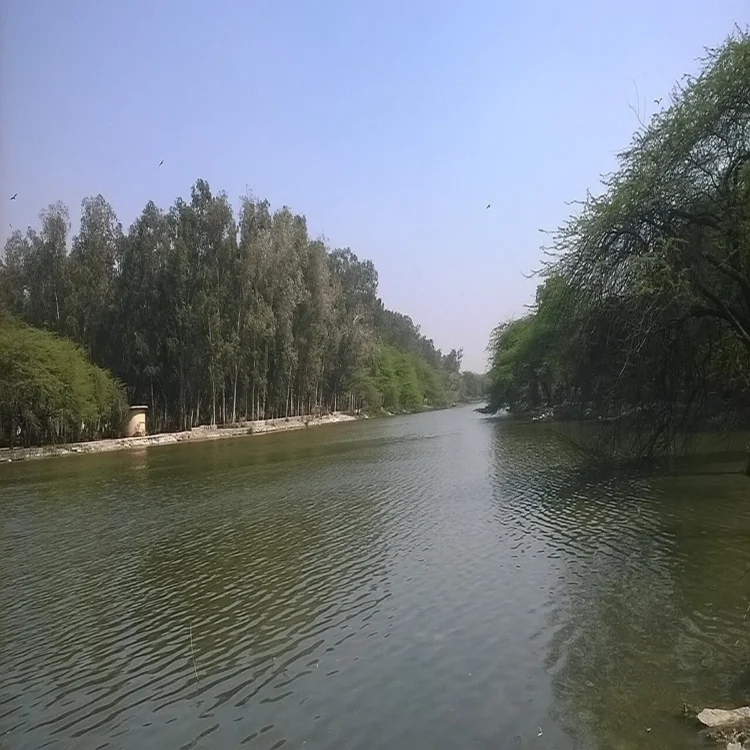
Lieutenant-Governor Taranjit Singh Sandhu has directed the Delhi Development Authority (DDA) to implement a phased restoration programme for Sanjay Lake, a prominent waterbody in east Delhi that recently drew attention after a large number of fish were found dead following interruptions in its water supply. The initiative is aimed at improving the lake’s ecological health while preserving the adjoining forest area that serves as an important environmental asset for the city.
Restoration Plan Reviewed During Site Visit
During an inspection of the lake on Thursday, Sandhu reviewed the ongoing conservation work and received a detailed briefing from DDA officials on the multi-stage strategy prepared for the revival of the 52-acre lake and its surrounding 165-acre protected forest. Sharing details of the visit, he said the project would focus on restoring the waterbody while also expanding biodiversity through the plantation of 5,000 native trees across the area.
The restoration programme follows earlier directions issued by the Lieutenant-Governor after reports highlighted the deteriorating condition of the lake due to reduced water inflow, heavy silt deposits, garbage accumulation, and sewage contamination. Officials have since been instructed to carry out the rejuvenation work on priority.
Water Supply Restoration Given Top Priority
A major concern identified during the review was the disruption in treated water reaching the lake. The Lieutenant-Governor instructed the Delhi Jal Board to complete repairs to the damaged pipeline at the earliest so that treated water from the Dallupura Sewage Treatment Plant can once again flow consistently into the lake.
According to officials, maintaining a stable water level is essential not only for aquatic life but also for ensuring that Sanjay Lake continues to function as a sustainable urban waterbody throughout the year.
Ongoing Measures to Protect the Waterbody
The inspection also covered the progress of maintenance activities already underway. Continuous removal of weeds and algae is being carried out to improve water quality, while embankments are being reinforced with geo-textile technology to minimise soil erosion and control runoff during the monsoon season.
Sandhu directed officials to ensure that these works continue without delays and are executed with close monitoring so that the restoration effort remains on schedule.
Focus on Long-Term Ecological Sustainability
Beyond immediate repair work, the next phase of the project will include channelising stagnant water and installing bio-swales designed to improve groundwater recharge while protecting pedestrian pathways around the lake. These interventions are expected to strengthen the area’s long-term environmental resilience.
The Lieutenant-Governor emphasised that every stage of the restoration project should adhere to the prescribed timelines so that ecological improvements are achieved in a systematic manner.
Native Trees to Strengthen Biodiversity
As part of the broader environmental plan, authorities will undertake large-scale plantation of indigenous tree species to enrich biodiversity around the lake. Around 5,000 native trees are proposed to be planted across the precinct.
The landscape has evolved considerably since the late 1970s, when eucalyptus trees were initially introduced to improve poor soil conditions. With soil quality now significantly better, the area supports a diverse range of vegetation, including Neem, Arjun, Ashoka, Papri, Pilkhan, Chandni, Hibiscus, Hamelia, Kaner, Tecoma and Marorfali, alongside existing eucalyptus plantations.
Situated between the residential neighbourhoods of Kalyanpuri, Trilokpuri and Mayur Vihar Phase II, and located close to National Highway-24, Sanjay Lake remains one of East Delhi’s most recognisable green spaces. Officials believe the restoration initiative will help preserve its ecological value while enhancing its role as a vital urban blue-green asset for the capital.