
Reservation – Supreme Court Reserves Verdict on Tamil Nadu Muslim Quota Case
Reservation – The Supreme Court on Friday reserved its judgment on Tamil Nadu’s challenge to a Madras High Court ruling that denied reservation benefits under the Backward Class (Muslim) category to a person solely because of conversion to Islam.
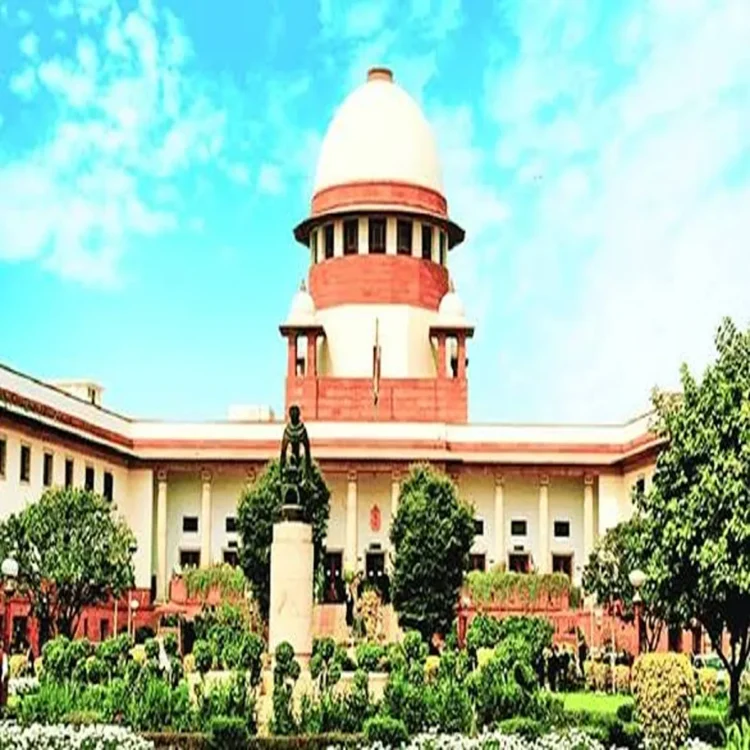
A bench comprising Justices Prashant Kumar Mishra and Shree Chandrashekhar concluded the hearing after considering submissions from the Tamil Nadu government and other parties involved in the case. The court is now expected to pronounce its decision at a later stage.
Tamil Nadu Defends Its Reservation Policy
Senior advocate Mukul Rohatgi, representing the Tamil Nadu government, argued that the state’s March 9, 2024 government order was intended to protect reservation benefits for communities that are already recognised as socially and educationally backward.
According to the state’s argument, conversion to Islam should not automatically result in the loss of reservation benefits when the individual belongs to a community that falls within the recognised backward categories. The government maintained that its policy was aimed at ensuring that socially and educationally disadvantaged people were not excluded from reservation merely because they changed their religion.
Case Originated From Community Certificate Dispute
The legal dispute began with a petition filed by Sameer Ahamed, who converted from Hinduism to Islam in 2015. His conversion was subsequently recorded through a Gazette notification in 2016.
After his conversion, Ahamed married according to Islamic customs and applied for a certificate identifying him as belonging to the Muslim Lebbai community. He sought the certificate to claim reservation benefits available to eligible members of the Backward Class (Muslim) category.
The application was rejected by the concerned tahsildar. Ahamed then approached the Madras High Court, challenging the decision and seeking recognition of his community status for reservation purposes.
Madras High Court Struck Down 2024 Government Order
The Supreme Court proceedings stem from the Madras High Court’s June 25, 2026 judgment, in which the court struck down Government Order No. 31 issued by the Tamil Nadu government in March 2024.
The government order had provided that individuals from Backward Classes, Most Backward Classes, Denotified Communities or Scheduled Castes who converted to Islam could, subject to the applicable conditions, be treated as members of the BC (Muslim) category for reservation purposes.
It also provided for the issuance of community certificates identifying eligible converts with one of the seven notified Muslim communities or sects covered by the relevant reservation framework.
Court Examines Role of Social Backwardness
The central legal question before the Supreme Court is whether conversion to Islam, by itself, can make an individual eligible for reservation under the BC (Muslim) category.
The Madras High Court had held that religious conversion alone could not establish eligibility. Its view was that reservation must be linked to recognised social and educational backwardness rather than religion by itself.
Tamil Nadu has challenged that interpretation before the Supreme Court. The state contends that its reservation framework takes into account the backward status of communities and does not intend to make religion alone the basis for granting quota benefits.
Verdict Could Have Wider Implications
The Supreme Court’s forthcoming decision is expected to settle the legal position on reservation claims made by individuals who convert to Islam and seek recognition under the BC (Muslim) category.
The ruling could also provide guidance on how similar reservation policies should be interpreted in cases involving religious conversion and community status. For now, the judgment has been reserved, leaving the legal position unchanged until the Supreme Court delivers its final ruling.