
Public Examinations Amendment Bill – Parliament Clears New Law to Strengthen Exam Security Across India
Public Examinations Amendment Bill –Parliament has approved the Public Examinations Amendment Bill, 2026, introducing a new legal framework aimed at preventing paper leaks and improving the integrity of public examinations across the country.
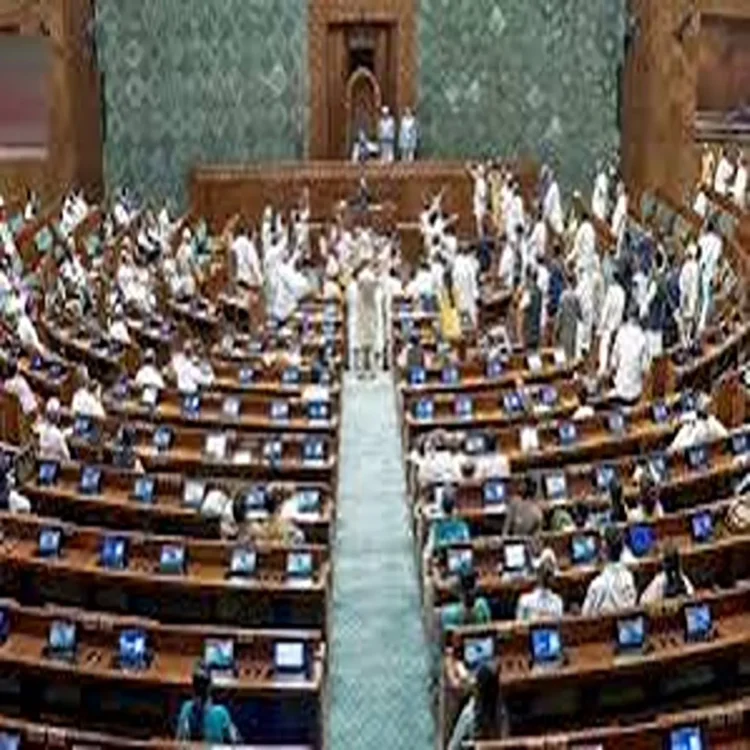
BJP MP Raghav Chadha welcomed the passage of the Public Examinations Amendment Bill, 2026, describing it as India’s first comprehensive legal framework designed to tackle examination paper leaks. Speaking in Parliament and later sharing his views on X, Chadha said the legislation reflects the concerns of students who have long demanded a fair and transparent examination system. He stated that the new law is intended to safeguard merit and ensure that years of preparation are not undermined by illegal activities.
Focus on Student Interests
In his remarks, Chadha said honest students deserve equal opportunities and that paper leaks can have a lasting impact on candidates’ academic and professional futures. According to him, the new framework seeks to strengthen confidence in public examinations by placing greater emphasis on accountability and security. He added that the legislation represents a response to concerns repeatedly raised by students across the country.
Criticism of Congress Over Past Incidents
During the parliamentary debate, Chadha criticised the Congress, alleging that previous governments had failed to address repeated incidents of examination paper leaks. Referring to Karnataka, he claimed that the Secondary School Leaving Certificate (SSLC) examination paper was leaked in January 2026 and was allegedly sold online for a nominal amount.
He also referred to the Himachal Pradesh State Selection Commission recruitment examination, alleging that a paper leak occurred during the Congress government’s tenure. Chadha argued that such incidents demonstrated the need for stronger legal safeguards to protect the credibility of recruitment and academic examinations.
Reference to 2016 Karnataka Examination Leak
The BJP MP also recalled the 2016 Karnataka Pre-University College chemistry examination paper leak to highlight what he described as systemic shortcomings. He said the original examination had to be cancelled after the question paper was leaked, and the re-examination also faced a similar breach when its paper reportedly circulated on WhatsApp before the test began. According to Chadha, the repeated cancellations created uncertainty and hardship for students preparing for crucial board examinations.
Allegations Regarding Political Accountability
Chadha further referred to an investigation conducted by the Karnataka State CID in connection with the 2016 case. He alleged that three individuals were arrested, including the personal assistant of then Medical Education Minister Dr. Sharan Patil. According to Chadha, the investigation found that examination papers were allegedly leaked for significant financial gains.
He also questioned the response of the minister at the time, claiming that responsibility was denied despite the involvement of a staff member attached to the minister’s office. Chadha argued that public officials should uphold higher standards of accountability in matters affecting students and examination systems.
UPA Period Also Mentioned in Debate
Expanding his criticism, Chadha said multiple examination paper leak cases were reported during the United Progressive Alliance (UPA) government between 2004 and 2014. He cited examples including the AIIMS Post Graduate Medical Entrance Examination in 2006, the Railway Recruitment Board examination in 2009, the All India Engineering Entrance Examination in 2011, and the SSC Combined Graduate Level Examination in 2013.
Concluding his speech, Chadha questioned whether previous administrations had introduced comprehensive legal reforms to improve examination security. He maintained that the newly passed Public Examinations Amendment Bill, 2026, marks a significant policy step aimed at protecting the integrity of public examinations and restoring confidence among students and job aspirants.