
Politics – Heated Lok Sabha Debate Over Women’s Reservation Proposal
Politics – The Lok Sabha witnessed a tense exchange on Thursday as political parties clashed over the scope and structure of the proposed women’s reservation framework.
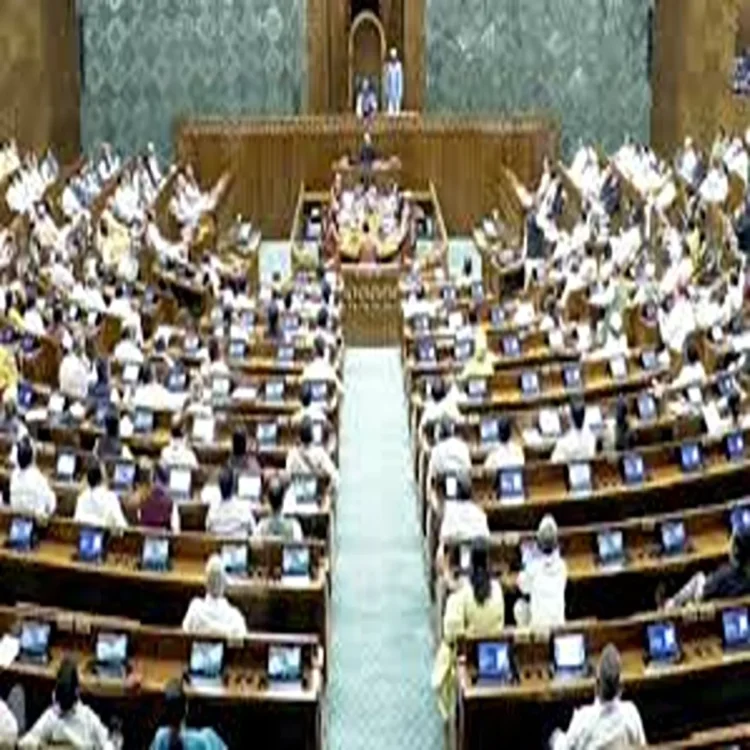
The debate unfolded during discussions on the Constitution (131st Amendment) Bill, which aims to introduce 33 percent reservation for women in legislatures after the process of delimitation. Members of the Samajwadi Party (SP) raised strong objections, arguing that the proposed framework does not adequately address representation for specific communities.
Opposition Raises Concerns Over Inclusion
SP MP Dharmendra Yadav voiced his party’s opposition to the Bill, stating that the proposal fails to include provisions for women from Other Backward Classes (OBCs) and the Muslim community. He warned that without these inclusions, the party would not support the legislation.
Yadav also expressed concerns about linking women’s reservation with delimitation, suggesting that such a move could alter electoral boundaries in ways that may not align with constitutional principles. He argued that the approach could weaken the broader intent of equitable representation and called for the withdrawal of the Bill.
Questions on Government’s Record
During the discussion, SP chief Akhilesh Yadav questioned the ruling alliance’s track record on promoting women in leadership roles. He pointed out that despite governing multiple states, there are relatively few women serving as chief ministers.
He further emphasized the need for a caste-based census before implementing reservation policies, stating that accurate data is essential to ensure fair representation. According to him, without such data, the benefits of reservation may not reach the intended sections of society.
Government Responds Firmly
Responding to the opposition’s demands, Home Minister Amit Shah clarified the government’s position on both the census and reservation policies. He assured the House that a caste census would be conducted as part of the broader population enumeration process.
Shah explained that while the current phase involves counting households, caste data would be included when individual citizens are enumerated. He rejected claims that the government was avoiding the issue and reaffirmed that the process would be comprehensive.
Stand on Religion-Based Reservation
Addressing the demand for reservation based on religion, Shah made it clear that such provisions would not be considered. He stated that granting reservation on religious grounds would be inconsistent with constitutional principles.
According to him, the government remains committed to ensuring equality within the framework of the Constitution and would not introduce policies that contradict its provisions. His remarks marked a firm rejection of proposals seeking quotas for Muslim women within the reservation system.
Broader Political Implications
The exchange highlights ongoing differences between the government and opposition parties over how reservation policies should be structured. While there is general agreement on increasing women’s representation, disagreements persist over the criteria and implementation methods.
The debate also underscores the significance of delimitation and census data in shaping future political representation. As discussions continue, the outcome of the Bill is likely to have long-term implications for electoral politics and social equity.
The developments reflect a broader national conversation on balancing inclusivity with constitutional boundaries, a challenge that continues to shape legislative debates across the country.