
Conservation – India Expands Global Role in Protecting Big Cats and Biodiversity
Conservation – India has strengthened its position as one of the world’s leading nations in wildlife conservation, particularly through long-term efforts to protect and restore populations of major big cat species. Union Environment, Forest and Climate Change Minister Bhupender Yadav highlighted the country’s achievements and outlined future priorities during a recent discussion on conservation, technology, wildlife health, and funding strategies.
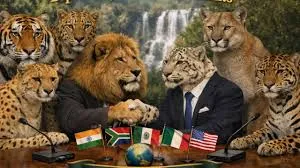
International Alliance Strengthens Big Cat Protection
According to the minister, the International Big Cat Alliance (IBCA), launched under the leadership of Prime Minister Narendra Modi, aims to create stronger global cooperation for safeguarding some of the world’s most iconic wild species. The alliance focuses on seven major big cats — tiger, lion, leopard, snow leopard, cheetah, jaguar, and puma.
Designed as an intergovernmental platform, the alliance seeks to encourage collaboration among countries that share responsibility for protecting these species. The broader objective is to ensure healthy ecosystems where wildlife and human communities can coexist sustainably.
Global Cooperation at the Core of the Initiative
The IBCA framework is built around several key priorities, including scientific research, exchange of knowledge, habitat conservation, capacity building, public awareness, and financial support for conservation projects. The initiative also aims to connect biodiversity protection with climate resilience, ecosystem recovery, and sustainable development goals.
India’s experience in tiger conservation, Asiatic lion protection, snow leopard monitoring, and the reintroduction of cheetahs has provided valuable lessons that can be shared internationally. Through the alliance, India is promoting cooperation among countries across Asia, Africa, and the Americas while supporting conservation efforts through expertise, training, and technological assistance.
Growing Membership Across Continents
The alliance has attracted participation from a broad range of countries. Currently, 25 nations are members, including countries from Asia, Africa, and the Americas. In addition, several observer countries are associated with the initiative, reflecting growing international interest in coordinated wildlife conservation efforts.
Technology Plays a Larger Role in Conservation
Modern technology has become an essential component of wildlife management in India. Conservation authorities now rely on advanced tools such as satellite tracking, camera trap networks, drones, artificial intelligence-based analysis, geospatial mapping systems, and smart patrolling platforms.
These technologies help authorities monitor animal populations, identify threats, improve habitat management, and respond quickly to conservation challenges. However, officials acknowledge that technological systems operating in remote landscapes may occasionally face practical difficulties, including connectivity issues and environmental limitations.
To address such challenges, India follows a diversified monitoring strategy rather than depending on a single technological solution. Multiple scientific institutions and government agencies work together to ensure transparency, accuracy, and accountability in the use of these systems.
Focus on Indigenous Innovation
The government is also encouraging the development of locally designed conservation technologies in line with the broader vision of self-reliance. Authorities believe technology should complement, rather than replace, strong institutions, scientific expertise, and field-based conservation work.
Community participation remains an important element of this approach, helping ensure that conservation measures remain effective at the ground level.
Progress Toward a National Wildlife Health Framework
Addressing concerns about wildlife diseases that can spread across borders, the minister said India is moving toward a more integrated approach to wildlife health management. Work is currently underway on a National Wildlife Health Policy aimed at improving disease surveillance, diagnostic capabilities, emergency preparedness, and scientific research.
The proposed framework is being developed through collaboration among wildlife experts, veterinary institutions, public health agencies, and conservation bodies. Existing initiatives such as the National One Health Mission and specialised wildlife health centres already provide support for disease monitoring and response.
Officials believe a comprehensive policy will strengthen the country’s ability to tackle future wildlife health risks while improving coordination among different sectors.
Expanding Financial Support for Conservation
The government continues to strengthen conservation funding through programmes such as Project Tiger, Project Elephant, habitat restoration schemes, and species-specific protection initiatives. Alongside public investment, efforts are being made to attract greater participation from businesses, charitable organisations, conservation groups, and international partners.
Authorities are also exploring innovative funding models, including corporate social responsibility contributions, landscape-based investments, and climate-linked financial mechanisms. Conservation projects are increasingly being connected with ecotourism, sustainable livelihoods, and green employment opportunities.
The minister emphasized that long-term success in protecting biodiversity will depend on broad public participation. He said conservation requires cooperation from communities, industry leaders, young people, scientific institutions, and international partners working toward a shared environmental goal.