
Politics – Delhi High Court Row Triggers Fresh Political Clash
Politics – A day after the Delhi High Court rejected a plea by former Chief Minister Arvind Kejriwal seeking the recusal of Justice Swarna Kanta Sharma, the issue quickly escalated into a sharp political confrontation on Tuesday. The court’s decision has drawn strong reactions, particularly from leaders of the Bharatiya Janata Party (BJP), who have accused the Aam Aadmi Party (AAP) of attempting to influence judicial proceedings.
BJP Criticises Alleged Pressure Tactics
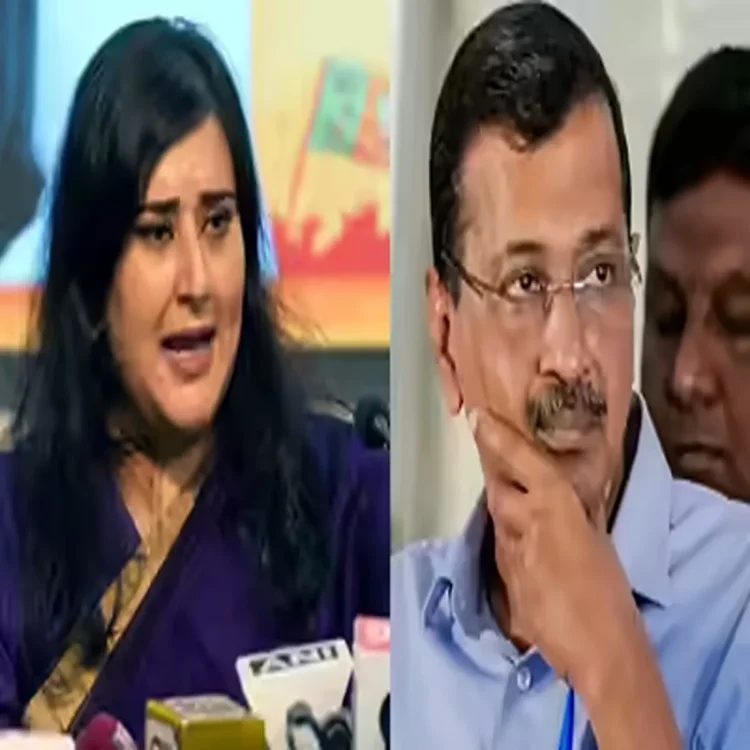
Speaking at a press briefing in the national capital, BJP leader Bansuri Swaraj said the High Court’s ruling reinforces the independence of the judiciary. She alleged that the plea for recusal was part of a broader effort by AAP to shape public perception and create pressure on the court.
According to Swaraj, the issue extended beyond a simple request for a change of judge. She claimed it reflected an attempt to control the narrative around the case. She further accused Kejriwal of targeting a member of the judiciary, calling the move inappropriate and unacceptable in a democratic system.
Court Observations Highlight Judicial Integrity
Referring to the High Court’s observations, Swaraj noted that the bench had emphasised its commitment to deciding matters without being influenced by external pressures. The court reportedly underlined that judicial proceedings must remain grounded in facts and legal reasoning rather than public narratives or speculation.
The remarks from the court stressed that a courtroom is not a space for shaping perceptions but for establishing truth through evidence. It also pointed out that a judge’s credibility cannot be undermined by unverified claims or insinuations, reinforcing the importance of maintaining institutional respect.
Background of the Legal Dispute
The controversy stems from objections raised by Kejriwal regarding Justice Sharma presiding over a Central Bureau of Investigation (CBI) matter linked to the alleged liquor policy case. The plea sought the judge’s recusal, arguing concerns over impartiality.
However, the High Court dismissed the request, allowing the proceedings to continue under the same bench. This decision has now become a focal point of political debate, with both sides presenting contrasting interpretations of the development.
Contempt Petition Adds New Dimension
In a parallel development, a petition was filed before the Delhi High Court seeking contempt of court action against Kejriwal, certain AAP leaders, and some journalists. The petition alleges that recordings of court proceedings related to the recusal hearing were shared on social media platforms.
The plea argues that such dissemination of court proceedings may violate legal norms and undermine the sanctity of the judicial process. The court is yet to take a decision on whether to initiate contempt proceedings in this matter.
Political Tensions Likely to Continue
The developments have added another layer of tension between the BJP and AAP, with both parties using the issue to reinforce their respective positions. While the BJP has framed the court’s decision as a victory for judicial independence, AAP has not yet fully outlined its next steps following the dismissal of the plea.
Legal experts suggest that the matter could have wider implications, particularly concerning the boundaries between political discourse and judicial processes. As the case progresses, attention is likely to remain focused on both the legal proceedings and the accompanying political rhetoric.
The situation continues to evolve, with further hearings and potential legal actions expected in the coming days