
Politics – Congress Urges All-Party Talks on Women’s Reservation Plan
Politics – The Congress party on Tuesday called on the central government to organise an all-party meeting to chart a clear path for implementing the women’s reservation law within the current strength of the Lok Sabha, starting from 2029.
Demand for broader consultation
The demand comes shortly after the government’s attempt to pass the Constitution (131st Amendment) Bill failed in the Lok Sabha earlier this month. The proposed legislation sought to increase the number of seats in the lower house from 543 to 816 to facilitate the rollout of the women’s quota. However, the bill did not secure the required two-thirds majority. Out of 528 members present and voting, 298 supported the proposal, while 230 opposed it.
Congress leaders argue that the setback offers an opportunity for consensus-driven decision-making rather than unilateral legislative moves. They maintain that meaningful dialogue among all political parties is essential to ensure a smooth and fair implementation of the reservation policy.
Criticism of government approach
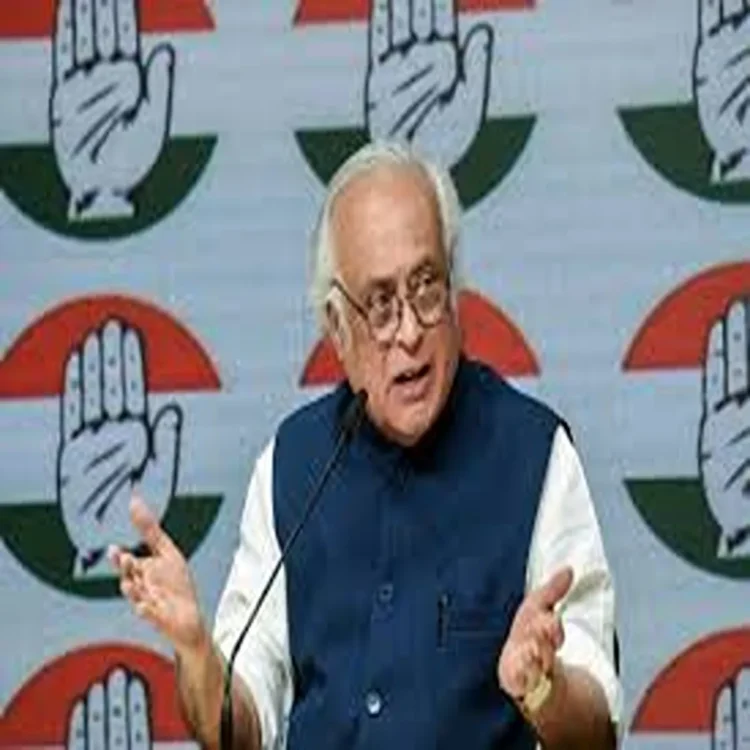
Senior Congress leader Jairam Ramesh criticised the government’s handling of the issue, stating that the focus should now shift from political calculations to practical solutions. He suggested that the Prime Minister should reconsider the earlier strategy and engage constructively with opposition parties.
In a message shared publicly, Ramesh remarked that the time had come for corrective action following what he described as an unsuccessful attempt to push through changes linked to constituency delimitation. According to him, the opposition’s unified stance played a key role in blocking the proposal.
Call for immediate roadmap
Ramesh emphasised that the Nari Shakti Vandan Adhiniyam, 2023, which provides for 33 percent reservation for women in legislatures, should be implemented without waiting for an expansion of seats. He noted that the law was formally notified only recently and urged the government to move quickly toward execution.
He proposed that an all-party meeting could help identify practical ways to introduce the reservation within the existing Lok Sabha framework. According to the Congress, such an approach is not only feasible but also necessary to ensure timely benefits ahead of the 2029 general elections.
Debate over delimitation and intent
The opposition has repeatedly alleged that the government’s push to increase the number of seats was linked more to political considerations than to women’s empowerment. Congress leaders claim that delimitation — the redrawing of constituency boundaries — was being advanced under the cover of the reservation debate.
They argue that women’s representation was not the central issue during earlier parliamentary discussions, and that the focus had shifted toward structural changes that could influence electoral outcomes.
Proposal for legislative action
In addition to calling for consultations, the Congress has urged the government to introduce a fresh bill, possibly during the upcoming monsoon session of Parliament, to implement the women’s quota within the current seat structure. The party believes that this would avoid delays and ensure that the reservation becomes operational in time for future elections.
The original proposal to expand seats was tied to a delimitation exercise based on the 2011 Census. It also included plans to increase the number of seats in state assemblies and Union Territories to accommodate the 33 percent reservation for women.
Way forward remains uncertain
With the amendment bill failing to pass, the future course of action remains unclear. While the government has not yet indicated its next steps, the opposition continues to push for a collaborative approach.
Political observers note that achieving consensus on such a significant reform will require balancing constitutional requirements, electoral considerations, and broader political agreement. The coming months are likely to see further debate as parties work toward a solution that aligns with both legislative procedures and public expectations.