
Parliament – Women’s Reservation Bill Fails to Clear Lok Sabha Vote
Parliament – The proposed constitutional amendment aimed at introducing reservation for women in legislatures and expanding the strength of the Lok Sabha did not pass in the Lower House on Friday, as the government failed to secure the required majority. The bill, which needed a two-thirds majority, fell short despite garnering significant support during voting.
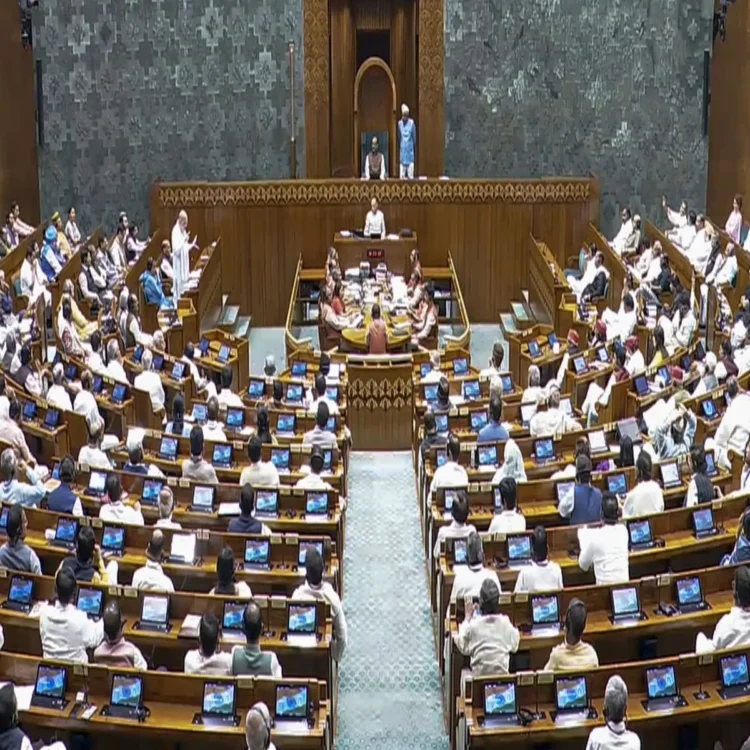
Voting Outcome Falls Short of Required Majority
A total of 528 Members of Parliament took part in the voting process. For the Constitution (131st Amendment) Bill, 2026 to be approved, at least 352 votes were necessary. However, the proposal received 298 votes in favour, while 230 MPs voted against it. As a result, the bill could not move forward in the legislative process.
Following this outcome, two associated proposals—including one concerning the redrawing of constituencies and an increase in the number of Lok Sabha seats—were not presented for voting.
Extended Debate Highlights Key Concerns
The discussion on the bill extended late into Thursday night and resumed on Friday, reflecting the significance of the proposal. The government strongly advocated for a 33 percent reservation for women in both the Lok Sabha and state legislative assemblies, describing it as a step toward improving representation.
During the debate, concerns were raised by several opposition members, particularly regarding the possible effects of seat redistribution on southern states. These apprehensions formed a key part of the discussion and influenced the broader political response.
Government Assurances on Regional Balance
Prime Minister Narendra Modi addressed these concerns directly in the House. He assured members that any future increase in Lok Sabha seats would not disadvantage southern states. According to him, the expansion would be carried out in a manner that maintains fairness across regions.
Union Home Minister Amit Shah also supported this position, stating that the representation of southern states would either remain unchanged or see a marginal increase if the total number of seats rises from the current 543 to around 816.
Political Divide Over the Proposal
The debate underscored a clear divide between the government and opposition parties. Leaders from the ruling side accused opposition groups, including the Congress, of obstructing the bill and delaying the implementation of women’s reservation. They argued that such resistance could have political consequences in the future.
On the other hand, opposition members maintained that their concerns were rooted in issues of representation and fairness, particularly in relation to the proposed delimitation process.
Key Features of the Proposed Amendment
The rejected bill aimed to accelerate the implementation of provisions related to women’s reservation, which are part of the broader legislative framework under the Nari Shakti Vandan Adhiniyam. It proposed enabling delimitation without waiting for a fresh Census, a move intended to fast-track the rollout of the reservation policy.
Additionally, the amendment suggested increasing the strength of the Lok Sabha to as many as 850 seats. This expansion was seen as necessary to accommodate the proposed reservation while maintaining balanced representation across states.
Bill Withdrawn After Vote
After the results were announced, Union Minister Kiren Rijiju formally withdrew the bill. The Lok Sabha was subsequently adjourned until 11 am on Saturday.
The outcome of the vote marks a significant moment in the ongoing discussion around women’s representation in Indian legislatures. While the proposal did not pass, the debate has highlighted key issues that are likely to remain central in future policy discussions.