
Parliament – Women’s Reservation Bill Fails After Falling Short of Majority
Parliament – A proposed constitutional amendment seeking to introduce 33 percent reservation for women in the Lok Sabha and state assemblies, along with an increase in the strength of the lower house, failed to secure passage in Parliament on Friday. The bill received 298 votes in favour and 230 against, falling well short of the required two-thirds majority of 352 votes in the 528-member voting turnout.
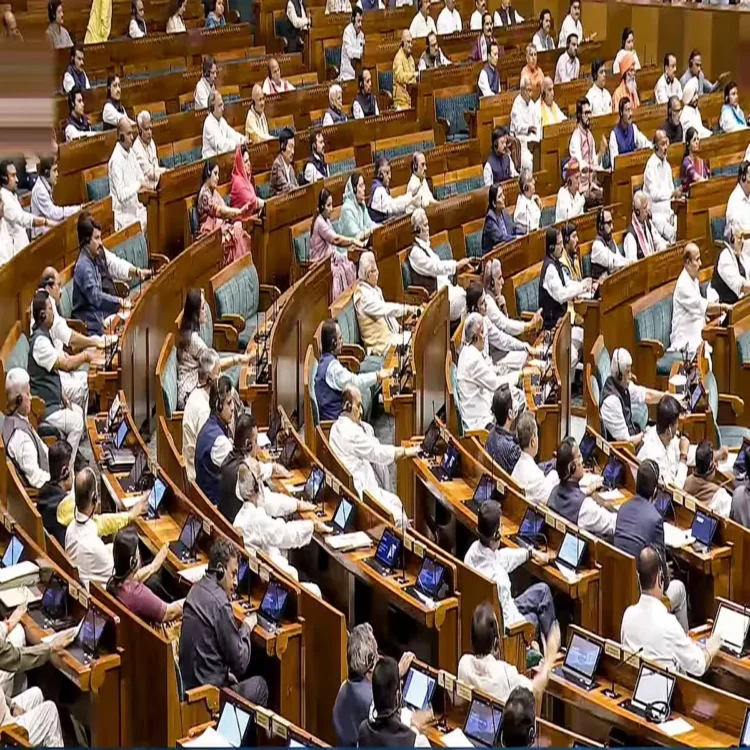
Voting Outcome and Legislative Requirements
The failure of the bill was primarily due to its inability to meet the constitutional threshold needed for amendments. Although it garnered a simple majority, the gap between the votes secured and the required two-thirds majority proved decisive. The proposal had aimed to implement women’s reservation in legislatures by 2029, alongside a restructuring of parliamentary representation.
Southern Leaders Claim Political Victory
Tamil Nadu Chief Minister M K Stalin reacted strongly, stating that the southern states had collectively asserted their position. In a social media post, he described the outcome as a victory for federal balance and democratic values. Leaders of his party celebrated the result publicly, distributing sweets and marking the occasion with festivities.
Stalin also linked the issue to representation, arguing that delimitation should strengthen national unity rather than disrupt regional balance. He suggested that electoral decisions in the state would reflect broader resistance to what he termed central overreach.
Opposition Credits Unity for Defeat
Congress president Mallikarjun Kharge said the opposition’s collective stand played a decisive role in blocking what he described as a problematic proposal. According to him, the bill masked a broader agenda related to constituency delimitation.
Leaders from Left parties echoed similar concerns. CPI(M) general secretary MA Baby argued that the government’s intentions were exposed during the debate and that opposition coordination prevented changes that could alter political representation across regions.
BJP Leaders Criticise Opposition Stand
Several leaders from the ruling alliance expressed disappointment over the bill’s defeat. Assam Chief Minister Himanta Biswa Sarma termed the day significant and accused opposition parties of taking a position against women’s empowerment.
Maharashtra Deputy Chief Minister Eknath Shinde described the outcome as unfortunate and criticised the opposition for opposing what he viewed as a progressive reform. Similarly, Chief Minister Devendra Fadnavis said the voting exposed inconsistencies in the opposition’s public stance on women’s rights.
Mixed Reactions Across States
Leaders from different states expressed varied reactions. Sikkim Chief Minister Prem Singh Tamang said the failure of the bill was disappointing, particularly given expectations among women across the country.
From West Bengal, Trinamool Congress leader Abhishek Banerjee stated that the developments highlighted discomfort within the ruling alliance and urged immediate steps toward implementing women’s reservation.
In Andhra Pradesh, Chief Minister N Chandrababu Naidu criticised the opposition for blocking what he described as a historic reform, while former Chief Minister Y S Jagan Mohan Reddy argued that the outcome failed to deliver fairness either to women or to southern states.
Broader Debate on Delimitation and Representation
The debate around the bill extended beyond women’s reservation to include concerns about delimitation and its impact on regional representation. Some opposition leaders argued that linking the two issues created uncertainty about the future distribution of parliamentary seats.
Meanwhile, leaders from Odisha and Telangana described the outcome as a significant political moment, with some calling it a defence of democratic principles and others placing responsibility for the failure on the ruling party’s approach.
Political Implications Going Forward
The defeat of the bill is expected to remain a key issue in upcoming political debates and elections. With both sides presenting sharply contrasting narratives, the question of women’s representation and electoral reform is likely to stay at the centre of national discourse in the coming months.