
NehruTribute – Nation Remembers Jawaharlal Nehru on His Death Anniversary
NehruTribute – Prime Minister Narendra Modi on Wednesday paid tribute to India’s first Prime Minister, Pandit Jawaharlal Nehru, on the occasion of his death anniversary. Remembering the veteran leader and freedom fighter, the prime minister shared a brief message on social media platform X, honoring Nehru’s contribution to the nation.
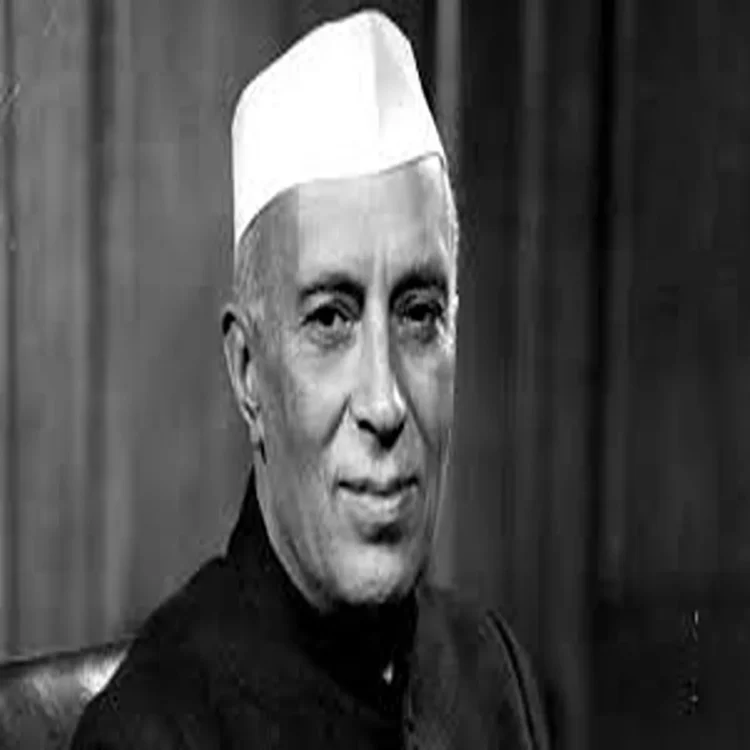
Early Life and Education
Jawaharlal Nehru was born on November 14, 1889, in Allahabad, now known as Prayagraj. He belonged to a prominent family and received his early education at home under private tutors. At the age of 15, he travelled to England for further studies.
He studied at Harrow School before joining the University of Cambridge, where he completed a degree in Natural Sciences. Later, he pursued legal studies at the Inner Temple in London and qualified as a barrister before returning to India in 1912.
Entry Into India’s Freedom Movement
Soon after his return, Nehru became actively associated with political activities and the growing movement against British rule. During his student years abroad, he closely observed anti-colonial struggles taking place in different countries, especially the Irish independence movement, which strongly influenced his political thinking.
In the same year of his return to India, he attended the Congress session held in Bankipore as a delegate, marking the beginning of his long association with the Indian National Congress.
Growing Role in Congress Politics
Nehru’s influence within the Congress party increased steadily during the 1920s. In 1923, he was appointed general secretary of the All India Congress Committee. He later traveled across Europe and also visited the Soviet Union, gaining exposure to international political developments.
He represented the Congress at the Congress of Oppressed Nationalities in Brussels and later attended events linked to the anniversary of the Russian Revolution in Moscow in 1927.
At the Madras Congress session, Nehru strongly backed the demand for complete independence from British rule. During protests against the Simon Commission in Lucknow in 1928, he suffered injuries in a police baton charge.
That same year, he became part of discussions on constitutional reforms and supported the Nehru Report prepared under the leadership of his father, Motilal Nehru. He also helped establish the Independence for India League, which advocated full freedom from colonial rule.
Leadership During the Freedom Struggle
A major turning point came in 1929 when Nehru was elected president of the Lahore session of the Indian National Congress. Under his leadership, the Congress formally declared complete independence as its ultimate objective.
Between 1930 and 1935, he spent several periods in prison for participating in major movements, including the Salt Satyagraha. During one of his jail terms in Almora, he completed his autobiography in 1935.
Following his release, Nehru traveled to Europe, including Switzerland, where he visited his ailing wife. He later visited Spain during its civil war and also traveled to China before the outbreak of the Second World War.
Quit India Movement and Imprisonment
In 1940, Nehru was arrested for participating in protests against India’s forced involvement in World War II. Although released in 1941, he was again detained after moving the historic Quit India Resolution in Bombay in August 1942.
He was imprisoned at Ahmednagar Fort along with several senior Congress leaders. This became the longest jail term of his political life. Altogether, Nehru was imprisoned nine times during India’s struggle for independence.
After his release in 1945, he played an important role in organising legal support for officers of the Indian National Army facing trial under British authorities.
India’s First Prime Minister
Nehru later became one of the leading architects of independent India and served as the country’s first Prime Minister after Independence in 1947. He remained a central figure in Indian politics for many years and also served multiple terms as Congress president.
Pandit Jawaharlal Nehru passed away on May 27, 1964, after suffering a heart attack. His death was formally announced in Parliament later that day.
Because of his close bond with children, his birth anniversary on November 14 continues to be celebrated across India every year as Children’s Day.