
LPGSupply – Delhi Boosts Commercial Cylinder Allocation for Key Sectors
LPGSupply – The Delhi government has significantly increased the allocation of commercial LPG cylinders following fresh directions issued by the Ministry of Petroleum and Natural Gas. The revised supply now stands at 50 percent of the city’s average daily consumption, a notable jump from the earlier 20 percent cap. In numerical terms, this translates to an increase from around 1,800 cylinders per day to approximately 4,500 cylinders, offering immediate relief to multiple sectors dependent on steady fuel availability.
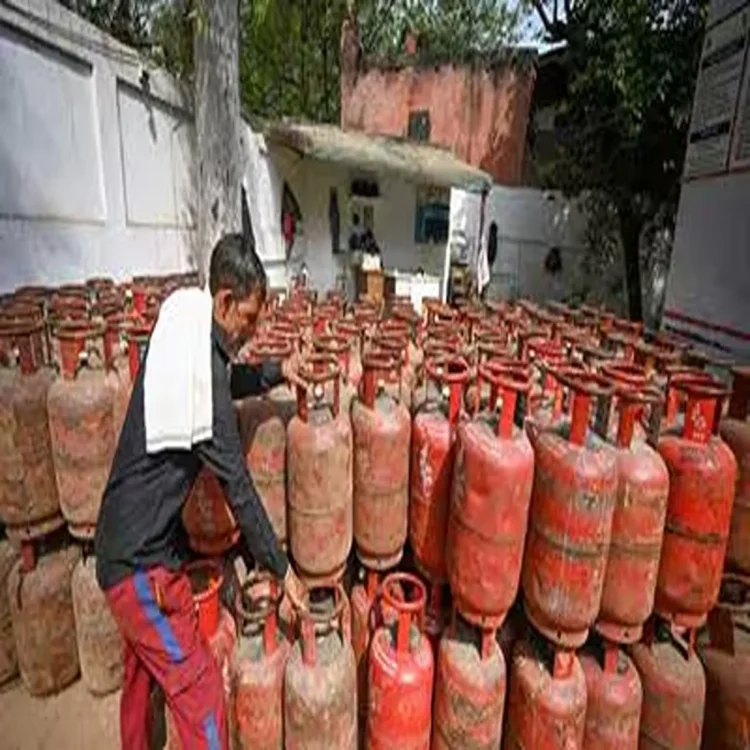
Expanded Supply to Support Essential Urban Services
The decision has been implemented with immediate effect and is aimed at ensuring uninterrupted access to LPG for essential services and high-demand segments. Authorities have confirmed that the additional supply will benefit a wide range of users, including healthcare institutions, government facilities, hospitality businesses, industrial units, and migrant workers residing in the capital.
Officials say the move comes in response to rising demand patterns in the city, where commercial LPG plays a critical role in daily operations across sectors. By expanding supply, the administration aims to prevent disruptions that could affect both economic activity and essential public services.
Government Highlights Coordinated Policy Effort
Delhi’s Food and Supplies Minister, Manjinder Singh Sirsa, acknowledged the central government’s role in facilitating the increase. He noted that the timely intervention would help maintain stability in LPG availability across the city. According to him, residents and businesses reliant on commercial LPG are unlikely to face shortages under the revised framework.
The announcement also reflects coordinated policymaking between the central and state governments, particularly in managing urban energy requirements. Officials emphasized that such measures are necessary to keep pace with the capital’s dynamic consumption needs.
Distribution Structured Across Priority Categories
To ensure efficient allocation, the government has introduced a structured distribution model that divides the supply into seven priority categories. Essential services and government institutions have been allocated 225 cylinders each, ensuring that critical operations continue without interruption.
The hospitality sector, which includes hotels, restaurants, and dairy units, has received the largest share with 3,375 cylinders. This allocation recognizes the sector’s heavy reliance on commercial LPG for daily functioning and its role in supporting both employment and consumer services.
Other categories such as catering services, sports facilities, and miscellaneous users have been assigned 225 cylinders each. Industrial units, while included in the plan, have been allocated a comparatively smaller share of 45 cylinders, reflecting a more limited dependence on LPG relative to other sectors.
Focus on Migrant Worker Welfare
A notable component of the revised policy is the inclusion of migrant labourers as a dedicated category. Authorities have allocated the equivalent of 684 cylinders to support this group, acknowledging their reliance on affordable cooking fuel. The move is seen as part of broader efforts to ensure equitable access to essential resources for vulnerable populations within the city.
Officials indicated that this targeted allocation would help improve living conditions for migrant workers, many of whom depend on consistent LPG supply for daily cooking needs.
Step Toward Stabilizing Urban Energy Demand
The increase in commercial LPG allocation is being viewed as a proactive measure to stabilize supply chains in a rapidly growing urban environment. With demand expected to remain high across sectors, the revised policy aims to reduce pressure on distribution systems and minimize the risk of shortages.
Authorities have also signaled that the situation will continue to be monitored, and further adjustments may be made if required. For now, the enhanced allocation is expected to provide immediate support to businesses and essential services across Delhi.