
LabourCodes – Congress Criticises Centre Over Full Rollout of Labour Reforms
LabourCodes – The Congress party on Monday launched a sharp criticism of the Central government after the final rules for implementing all four labour codes were officially notified. The opposition described the move as one of the most significant changes to workers’ protections since Independence and accused the government of weakening labour rights in favour of large corporations.
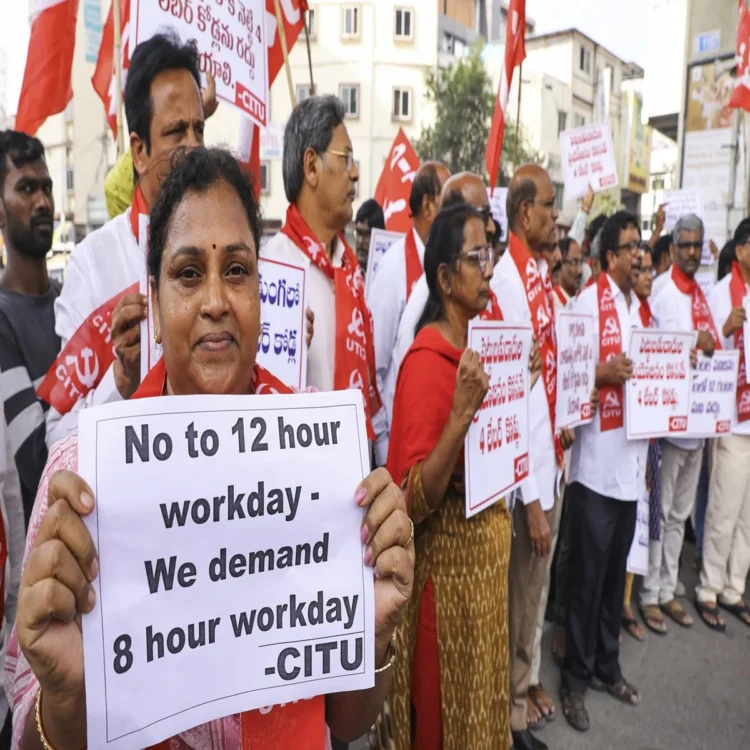
Congress Raises Concerns Over Labour Reforms
Congress president Mallikarjun Kharge alleged that the Union government deliberately waited until the completion of assembly elections before issuing the notifications related to the labour codes on May 8 and 9, 2026. In a public statement, he claimed the timing reflected an attempt to avoid political scrutiny during the election period.
Kharge argued that the newly implemented framework could increase job insecurity for millions of workers across the country. According to him, the labour codes may encourage short-term hiring practices, contract-based employment, and reduce opportunities for trade union activities in several sectors.
Opposition Targets Lack of Consultation
The Congress leader also criticised the government for introducing and enforcing the labour reforms without wider consultation with labour organisations and worker representatives. He pointed out that the Indian Labour Conference, a key platform traditionally used for discussions between the government, employers, and workers, has reportedly not been convened since 2015.
The opposition party maintained that the reforms primarily benefit large industrial groups while reducing long-standing protections available to employees. Congress leaders described the labour codes as a major policy shift that could alter employer-employee relations across organised and unorganised sectors.
Congress Highlights Its Worker Welfare Agenda
Reaffirming the party’s position on labour rights, Kharge said the Congress remains committed to what it calls its “Shramik Nyay” programme focused on worker welfare and social security.
Under this agenda, the party has proposed expanding the Mahatma Gandhi National Rural Employment Guarantee Act to urban regions while supporting a national minimum wage of Rs 400 per day, including for MGNREGA workers. The Congress also reiterated its support for a proposed Right to Health law aimed at offering universal health coverage up to Rs 25 lakh.
The party further promised stronger social security measures for unorganised workers, including insurance coverage for accidents and life protection. It also pledged to oppose excessive contractual hiring in core government operations and review changes made to existing labour laws under the current administration.
Government Completes Implementation Process
The Centre, meanwhile, has completed the long-pending implementation of the four labour codes after more than five years of legislative and administrative work. Government officials confirmed that the final rules have now been published in the official gazette, formally completing the process required for nationwide enforcement.
The four labour codes include the Code on Wages, 2019, the Industrial Relations Code, 2020, the Code on Social Security, 2020, and the Occupational Safety, Health and Working Conditions Code, 2020. These laws officially came into effect on November 21, 2025.
According to the government, the purpose of the reforms is to modernise India’s labour system by merging 29 separate labour laws into a more streamlined and contemporary legal structure. Officials have stated that the changes are intended to simplify compliance, improve wage protection, and expand social security coverage for workers across sectors.
Debate Over Worker Protections Continues
The implementation of the labour codes has remained a politically sensitive issue for several years, drawing mixed reactions from trade unions, business groups, and political parties. Supporters of the reforms argue that a simplified labour structure can improve ease of doing business and attract investment, while critics fear the measures may weaken worker safeguards and reduce employment stability.
With the rules now officially notified, discussions around labour rights, industrial growth, and social security are expected to remain central to the national political debate in the coming months.