
Judiciary – Kejriwal Declines Participation After Court Rejects Recusal Request
Judiciary – In a significant development linked to the Delhi excise policy case, Aam Aadmi Party leader Arvind Kejriwal has informed the Delhi High Court of his decision to withdraw from further participation in ongoing proceedings.
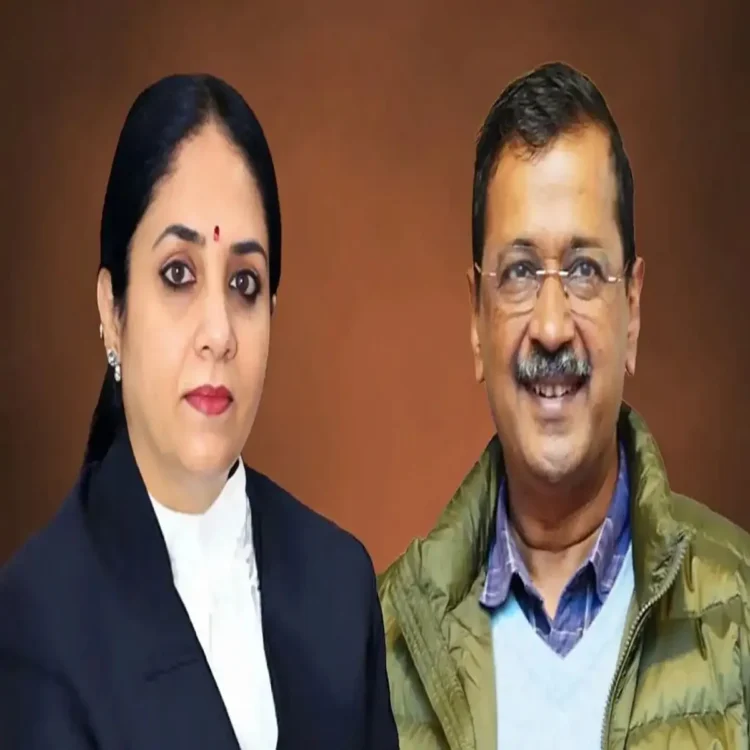
Letter Sent to High Court Judge
In a detailed communication addressed to Justice Swarana Kanta Sharma, Kejriwal conveyed his position with what he described as deep respect for the judiciary. He clarified that his decision should not be seen as defiance but rather as a matter guided by personal conviction. While reiterating his continued faith in the judicial system, he expressed reservations about fairness in the current proceedings.
Court Rejects Recusal Plea
The development follows the High Court’s recent order dismissing Kejriwal’s request seeking the judge’s recusal. The Court ruled that the claims raised did not meet the legal standard required to establish a reasonable apprehension of bias. It stated that the arguments were largely speculative and lacked substantive backing.
In its observations, the Court emphasized that judicial proceedings must remain grounded in evidence rather than perception. It warned that entertaining such pleas without strong justification could weaken public confidence in the judicial process and create problematic precedents.
Judicial Independence Highlighted
The bench also clarified that judges cannot be asked to step aside solely on perceived bias when no direct conflict of interest is demonstrated. It underlined that assessments of a judge’s conduct or competence fall within the purview of higher courts, not litigants. Additionally, participation in professional forums or public engagements was deemed insufficient grounds to question impartiality.
Concerns Raised by Kejriwal
In his letter, Kejriwal revisited issues he had earlier presented in his recusal application. He referred to what he described as associations between the judge and certain legal organisations. He also raised questions about potential conflicts stemming from her family members’ professional roles, particularly their association as counsel with the Union Government.
He further mentioned procedural aspects involving the assignment of cases to panel lawyers, suggesting that such factors could create a perception of partiality, especially in a politically sensitive matter.
Reaction to Court’s Language
Kejriwal also expressed concern over the language used in the High Court’s order dismissing his plea. He stated that the description of his application as an “attack” on the judiciary had deepened his apprehensions. According to him, this has made it difficult to believe that the case could now be heard without preconceived impressions.
Decision Framed as Principled Stand
Drawing from the philosophy of Mahatma Gandhi, Kejriwal described his move as a peaceful and principled decision. He indicated that after exhausting legal remedies and reflecting on the Court’s response, he chose to step back from participation while remaining prepared to face any legal consequences.
He maintained that his decision was not intended as a challenge to authority but as an expression of conscience, undertaken without hostility.
Emphasis on Public Perception of Justice
A central point in his letter was the idea that justice must not only be delivered but must also appear fair to the public. Kejriwal argued that certain circumstances surrounding the case could lead to doubts about impartiality, particularly given its political context.
He also cited past instances where judges opted for recusal to avoid any perception of bias, suggesting that such actions have historically reinforced trust in the judicial system.
What Lies Ahead
Kejriwal concluded by stating that he would not appear before the current bench, either personally or through legal representation, in this matter. He acknowledged that this could adversely affect his legal position but said he was willing to accept the consequences. At the same time, he clarified that this stance is limited to the present case and does not extend to other proceedings before the same judge.
He also indicated the possibility of challenging the recusal decision before the Supreme Court. The case itself arises from the Delhi Excise Policy 2021-22, where investigative agencies have contested earlier relief granted to him and others.
With the recusal plea rejected and Kejriwal opting out of participation, the High Court is expected to continue proceedings in accordance with established legal procedures. The situation highlights the ongoing debate between perceived bias and the judiciary’s insistence on evidence-based claims in matters of recusal