
Judiciary – CJI Recuses Himself From Hearing Election Panel Law Challenge
Judiciary – The Chief Justice of India stepped aside on Friday from a set of petitions questioning the legality of a 2023 law that altered the process for appointing election commissioners, citing a potential conflict of interest.
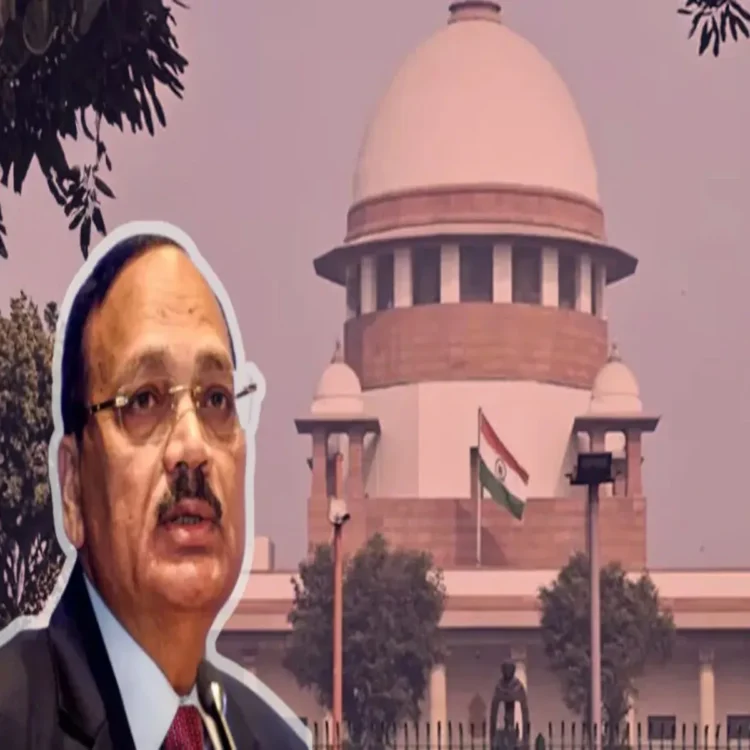
The matter came up before the Supreme Court as part of a series of public interest petitions challenging specific provisions of the Chief Election Commissioner and Other Election Commissioners (Appointment, Conditions of Service and Term of Office) Act, 2023. While addressing the court, the Chief Justice stated that it would be more appropriate for the case to be heard by a bench where no judge was in line to assume the top judicial office in the future.
Reason Behind the Recusal
Explaining his decision, the Chief Justice noted that his involvement in the case could raise questions about impartiality. Since the issue concerns the appointment process of election commissioners—a system previously linked to the office of the Chief Justice—he observed that continuing on the bench might invite criticism or allegations of bias.
He emphasized that judicial transparency and public trust are paramount, and even the perception of a conflict should be avoided. The court indicated that the matter would now be reassigned to another bench for further hearing.
Background of the 2023 Law
The legislation under challenge was enacted in December 2023. It came shortly after a significant Supreme Court ruling earlier that year, which had directed that election commissioners be appointed by a committee comprising the Prime Minister, the Leader of the Opposition in the Lok Sabha, and the Chief Justice of India.
At the time, the court had clarified that this arrangement would remain in place only until Parliament enacted a law to formalize the appointment process. The 2023 Act followed this directive but introduced notable changes to the composition of the selection panel.
Changes Introduced by the New Act
Under the current law, the Chief Justice is no longer part of the appointment committee. Instead, the panel now consists of the Prime Minister, a Union Cabinet minister nominated by the Prime Minister, and the Leader of the Opposition in the Lok Sabha.
Petitioners have argued that this change undermines the independence of the Election Commission by removing judicial oversight from the selection process. They contend that the earlier inclusion of the Chief Justice served as a safeguard against executive dominance.
Legal Concerns Raised in Petitions
The petitions before the court question whether the revised composition of the selection committee aligns with constitutional principles. Critics of the law argue that the absence of a judicial member may tilt the balance of power in favor of the executive branch, potentially affecting the neutrality of the Election Commission.
On the other hand, the government has defended the law, stating that Parliament has the authority to define the appointment process and that the new framework ensures administrative efficiency.
What Lies Ahead
With the Chief Justice stepping aside, the case is expected to be reassigned soon. Legal experts anticipate that the matter will receive detailed scrutiny, given its implications for electoral governance and institutional independence.
The outcome of this case could have a lasting impact on how election commissioners are appointed in India, shaping the framework that governs one of the country’s most critical democratic institutions.