
Infrastructure – Parliament Clears Bill Naming Amaravati as Andhra’s Sole Capital
Infrastructure – The Lok Sabha on Wednesday approved a significant amendment to the Andhra Pradesh Reorganisation Act, formally recognising Amaravati as the single and permanent capital of the state. The bill received support from both the ruling National Democratic Alliance and the opposition Congress, reflecting rare bipartisan agreement on a key administrative issue.
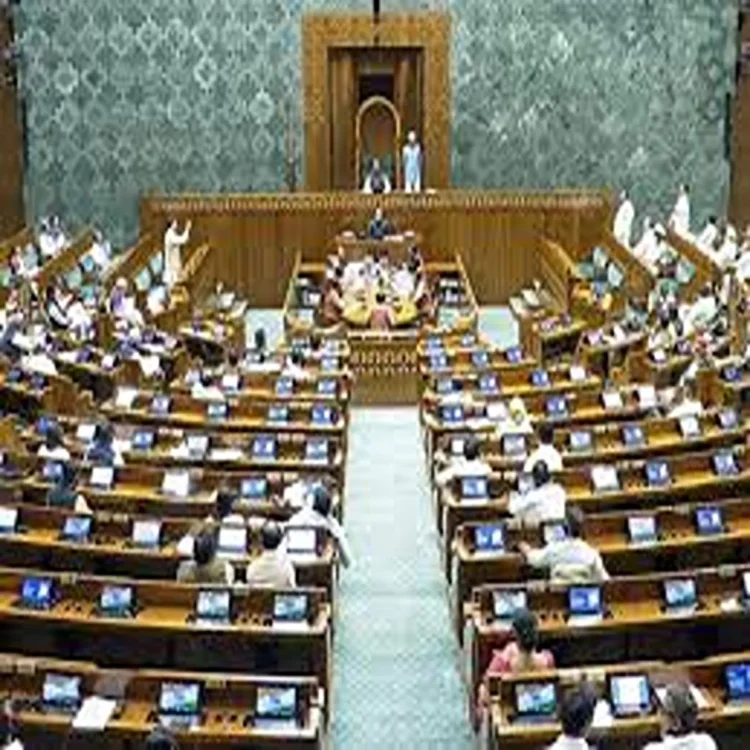
Bill Passed with Broad Political Backing
The legislation was cleared through a voice vote after nearly two hours of discussion. With its passage, Amaravati is set to be designated as the exclusive capital with retrospective effect from June 2, 2024, once it becomes law. The move aligns with the long-standing position of Chief Minister N Chandrababu Naidu, whose party plays a crucial role in the ruling coalition at the Centre.
Union Minister of State for Home Nityanand Rai expressed gratitude to members across party lines for endorsing the proposal. He noted that the bill gives legal backing to a resolution earlier passed by the Andhra Pradesh Legislative Assembly, which had urged the Centre to formally recognise Amaravati as the state capital.
Congress Backs Move, Raises Demand for Special Status
Opening the debate, Congress leader Manickam Tagore stated that his party supports the bill but reiterated its demand for special category status for Andhra Pradesh, a promise made during the state’s bifurcation. He emphasised the need for balanced development across cities, suggesting that Amaravati should grow alongside urban centres like Visakhapatnam, Tirupati, and Kurnool.
Tagore highlighted that while Amaravati’s designation as capital is important, broader economic and infrastructure growth across the state remains equally vital.
YSRCP Voices Concerns, Stages Walkout
Despite the wide support, the YSR Congress Party opposed the bill and staged a walkout during the proceedings. Party MP PV Midhun Reddy raised concerns about the treatment of farmers who had contributed land for the Amaravati project.
He pointed out that around 34,000 acres were acquired with assurances of developed plots, housing benefits, and educational support for affected families. According to him, these commitments have not yet been fulfilled. He urged the government to provide a clear timeline and incorporate safeguards for farmers into the legislation.
Reddy also questioned the financial feasibility of developing a large-scale capital city, asking how the state plans to mobilise the required resources.
Government and Allies Defend Proposal
Members of the ruling alliance defended the bill, arguing that a single, well-defined capital would provide administrative clarity and stability. BJP leader C M Ramesh described the legislation as a historic step, noting that it is uncommon for Parliament to pass a law explicitly designating a state capital.
He criticised the previous proposal of having three capitals in Andhra Pradesh, calling it impractical. According to him, a unified capital will help streamline governance and attract investment, ultimately contributing to the state’s growth.
Union Minister Chandra Sekhar Pemmasani also appealed for unanimous support, stating that the decision would end prolonged uncertainty over the capital issue.
Legislative Background and Legal Changes
The amendment follows a resolution passed by the Andhra Pradesh Legislative Assembly on March 28, requesting changes to the Andhra Pradesh Reorganisation Act of 2014. The current bill modifies Section 5 of the Act to explicitly include Amaravati as the state capital.
By providing statutory clarity, the government aims to eliminate ambiguity surrounding the capital’s status and ensure consistency in administrative planning. The retrospective effect from June 2024 further reinforces the decision’s legal standing.
Looking Ahead
With Parliament’s approval, the focus is expected to shift towards implementation, including infrastructure development and addressing concerns raised by stakeholders, particularly farmers. The decision marks a key moment in Andhra Pradesh’s post-bifurcation journey, potentially shaping its administrative and economic trajectory in the coming years.