
India–European : Union Free Trade Agreement Nears a Defining Moment
India–European: New Delhi is preparing for a diplomatically and economically significant phase as India and the European Union move closer to finalising a long-awaited Free Trade Agreement during the upcoming 16th India–EU Summit. The meeting is scheduled for January 27 and coincides with India’s 77th Republic Day celebrations, giving the engagement added symbolic and strategic importance. With senior leadership from both sides present, expectations are high that years of negotiations may finally result in a landmark economic partnership.
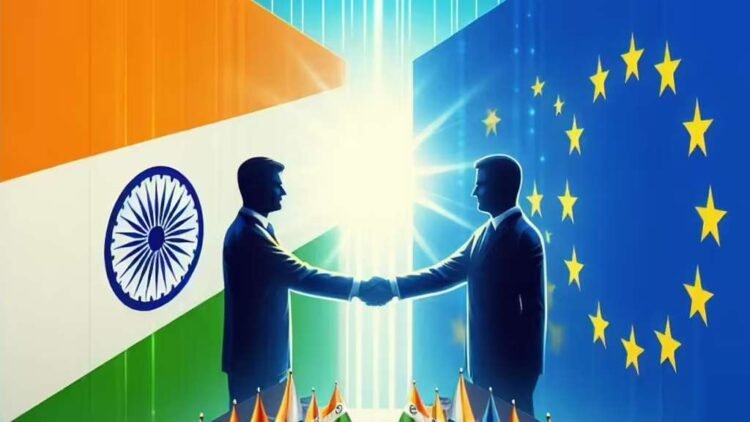
Strategic Importance of the India–EU Summit
The India–EU Summit has emerged as one of the most important platforms for dialogue between New Delhi and Brussels. This year’s summit carries special weight because it brings together political symbolism and economic decision-making. The presence of the European Union’s top leadership as chief guests at Republic Day underlines the growing relevance of India in Europe’s global outlook and highlights the depth of the bilateral relationship.
Beyond ceremonial engagements, the summit agenda focuses on advancing cooperation across trade, investment, technology, sustainability, and geopolitical coordination. The timing is particularly important as both partners seek to diversify economic relationships and strengthen supply chains amid global uncertainty.
Background of the Free Trade Agreement Negotiations
At the centre of the summit discussions is the India–EU Free Trade Agreement, officially referred to as the Broad-based Trade and Investment Agreement. Negotiations for this pact began in 2007 but faced repeated delays due to differences over tariffs, regulatory standards, services, and market access. After remaining stalled for several years, talks were revived in 2022 as global economic realities shifted and both sides reassessed strategic priorities.
Since the relaunch, negotiations have progressed steadily. By early 2025, a significant number of chapters had already been concluded, reflecting a renewed political will to bridge long-standing differences. Recent high-level engagements, including ministerial visits and technical discussions, have accelerated the pace of talks and narrowed the gap on unresolved issues.
Progress Made and Remaining Challenges
According to official sources, most chapters of the agreement have now been closed, leaving only a few complex areas under discussion. These include specific industrial market access concerns and regulatory issues that require careful balancing of domestic interests. One area of continued sensitivity relates to environmental trade measures, particularly Europe’s carbon-related regulations, which India views as potentially disruptive to exports.
A notable development in the current round of negotiations is the decision to keep sensitive agricultural matters outside the scope of the agreement. This approach has helped reduce political resistance and created room for compromise, making the prospect of an early conclusion more realistic.
Economic Impact and Sectoral Opportunities
If concluded, the Free Trade Agreement is expected to significantly expand bilateral trade and investment flows. The European Union is already one of India’s largest trading partners, and a comprehensive trade pact would further integrate both economies. Key sectors likely to benefit include manufacturing, digital technology, clean energy, pharmaceuticals, and professional services.
The agreement is also expected to support supply chain resilience by encouraging diversification and reducing dependence on limited markets. For India, enhanced access to European markets could boost exports and attract long-term investment. For the European Union, the deal represents a strategic entry point into one of the world’s fastest-growing major economies.
Broader Political and Strategic Context
India and the European Union have been strategic partners since 2004, and their relationship has evolved beyond trade to include cooperation on global governance, security, climate action, and innovation. Over the past few years, engagement has intensified, reflecting shared concerns about geopolitical stability, technological competitiveness, and sustainable growth.
The endorsement of a new strategic agenda by European institutions in 2025 further strengthened the framework for cooperation. This agenda places emphasis on prosperity, sustainability, advanced technologies, defence collaboration, and global connectivity, aligning closely with India’s long-term development goals.
A Potential Turning Point in Bilateral Relations
The possibility of announcing the Free Trade Agreement during the summit is being viewed as a potential turning point in India–EU relations. Such an announcement would signal the successful conclusion of nearly two decades of negotiations and demonstrate the ability of both partners to translate strategic alignment into tangible economic outcomes.
As global trade patterns continue to evolve, a comprehensive India–EU trade pact would not only benefit both economies but also send a broader message about commitment to open, rules-based economic cooperation. The summit, therefore, stands as more than a diplomatic event; it represents an opportunity to reshape one of the most important economic partnerships of the coming decade.