
Heatwave – Delhi Zoo Security Staff Face Challenges Amid Scorching Summer Conditions
Heatwave – As intense summer temperatures continue to grip the national capital, security personnel stationed at Delhi’s National Zoological Park are facing difficult working conditions while carrying out their daily responsibilities. Spending several hours outdoors under direct sunlight, many guards remain on constant watch across the large zoo campus, often with limited opportunities to take breaks. Their situation has raised concerns about the well-being of frontline staff responsible for ensuring visitor safety and maintaining order within the premises.
Staffing Levels Raise Operational Questions
During a recent visit to the zoo, only a small number of security personnel were visible across various sections of the facility. Certain visitor areas appeared to be operating without any immediate security presence for extended periods. A female security guard, Savitri, explained that the zoo employs roughly 110 to 115 security workers in total. According to her, around 30 to 40 guards are typically assigned to a single shift.
One such area lacking supervision was near the hippopotamus enclosure, where visitors continued to move freely despite the absence of security staff. Following concerns raised with zoo officials, additional personnel were later deployed to monitor the location.
Dispute Over Wages and Working Conditions
Most of the security workforce at the zoo is hired through contractual arrangements. Zoo Director Dr. Sanjit Kumar stated that guards receive daily wages ranging from approximately ₹800 to ₹850. However, several workers challenged this claim, saying their actual earnings are considerably lower.
According to some guards, their daily pay remains below ₹650 despite working shifts that frequently extend between eight and nine hours. The differing accounts have highlighted concerns regarding compensation and transparency in employment conditions for contractual workers.
Facilities Available, Officials Say
Responding to questions regarding employee welfare during the ongoing heatwave, Dr. Kumar said that security personnel work eight-hour shifts and are provided with a 30-minute break. He added that designated rest areas equipped with fans and coolers are available for staff members.
The zoo administration has also arranged drinking water supplies and oral rehydration solution (ORS) packets to help employees manage dehydration risks associated with prolonged exposure to high temperatures. Officials maintain that these measures are intended to support staff health throughout the summer season.
Guards Report Limited Access to Relief Measures
While the administration outlined several support facilities, some guards described a different experience on the ground. Jitendra, a member of the security staff, claimed that ORS packets are not distributed regularly and estimated that they are made available only once or twice each week during the hottest months.
Another guard, Arshad, pointed to practical difficulties faced by personnel assigned to patrol different parts of the zoo. He explained that guards often cannot leave their designated locations unattended, making it difficult to access lockers, rest areas, or cooling facilities during active duty hours. As a result, many workers spend long periods outdoors without being able to take full advantage of the amenities mentioned by officials.
Contrast With Animal Cooling Arrangements
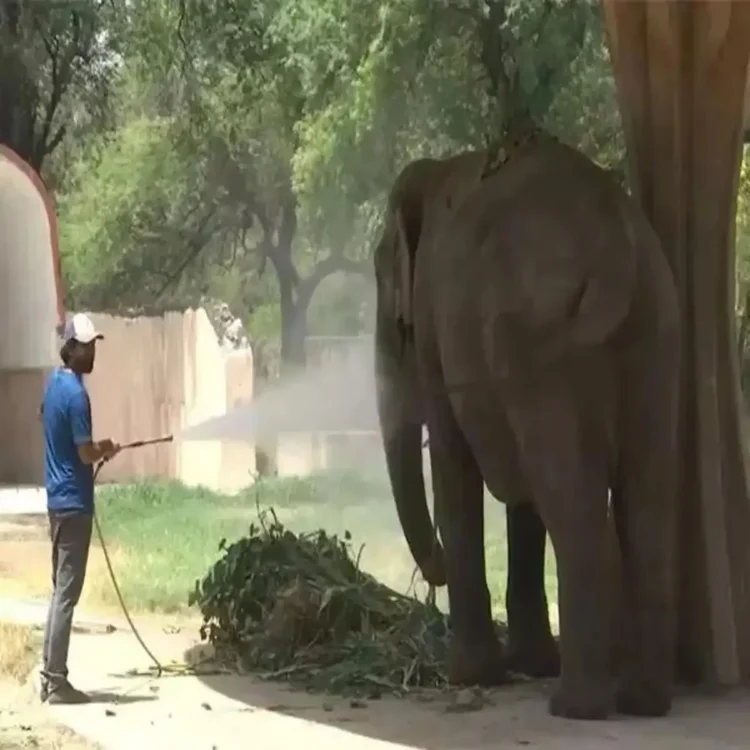
To protect animals from the severe heat, the zoo has introduced a range of cooling measures across enclosures. These include water ponds, sprinklers, misting systems, and cooling equipment designed to help animals remain comfortable during extreme weather conditions.
While such initiatives demonstrate the zoo’s efforts to safeguard animal welfare, the experiences shared by several security personnel have drawn attention to the challenges faced by human staff working under the same harsh environmental conditions. Their accounts have sparked discussion about whether additional support and more accessible relief measures may be needed for workers tasked with maintaining the smooth operation of the facility during the summer heat.