
Government Formation: A Critical Political Moment for Manipur as Central Leadership Reviews
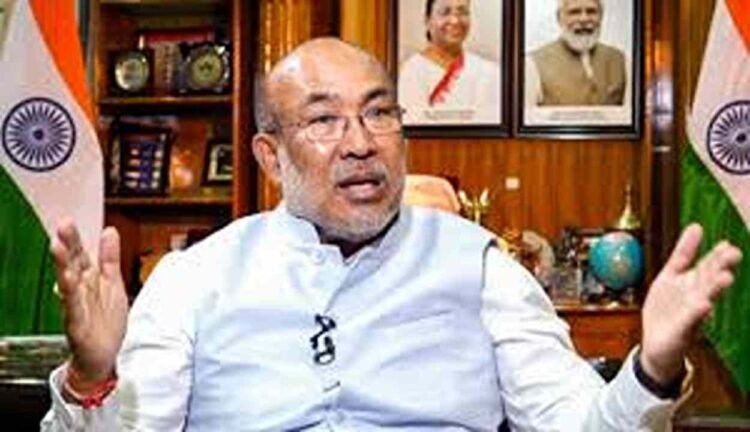
Government Formation: Amid ongoing political speculation, a significant development has emerged from northeastern India as senior leaders engage in discussions that may determine the immediate future of Manipur’s governance. Former chief minister N Biren Singh has arrived in New Delhi, indicating renewed momentum around the possibility of restoring an elected government in the state after a prolonged period of central administration.
Background of the Current Political Situation
Manipur has been under President’s Rule since mid-February 2025, following the resignation of then chief minister N Biren Singh. His resignation came just ahead of a scheduled no-confidence motion in the state assembly, creating a leadership vacuum at a time when the region was already dealing with the aftermath of prolonged ethnic tensions. The imposition of President’s Rule was seen as a stabilizing measure, allowing the Centre to directly administer the state while law and order gradually improved.
Visit to New Delhi and Political Signals
Singh’s arrival in the national capital has attracted attention due to the timing and the nature of his visit. Speaking briefly to reporters before leaving Imphal, he suggested that the Centre would take action very soon, a statement that has been widely interpreted as a hint toward imminent political decisions. According to party sources, the visit was initiated at the request of the central leadership, reinforcing the perception that discussions are entering a decisive phase.
Engagement with Central Authorities
During his stay, Singh is expected to meet senior officials from the Ministry of Home Affairs. The ministry has been closely monitoring Manipur’s security and political environment since the outbreak of ethnic violence. Any recommendation regarding the continuation or withdrawal of President’s Rule typically follows an assessment by the ministry, making these meetings particularly significant from a governance and constitutional perspective.
Role of the BJP Central Leadership
The visit is also politically important for the Bharatiya Janata Party, which leads the government at the Centre. Singh has been accompanied by the party’s state unit president, A Sharda Devi, indicating a coordinated effort to present Manipur’s case before the national leadership. Internal party consultations are expected to evaluate whether the numbers and political conditions are favorable for forming a stable elected government.
Possible Meeting with the Union Home Minister
Sources within the party suggest that Singh may also meet Amit Shah during this visit. As the Union Home Minister, Shah plays a central role in decisions related to internal security and the imposition or revocation of President’s Rule. A meeting at this level would underscore the seriousness of the deliberations and could accelerate the decision-making process.
Improved Security Environment in the State
One of the key factors influencing current discussions is the relative calm that has prevailed in Manipur in recent months. There have been no major incidents of violence for a considerable period, leading to a growing perception that the conditions which initially justified President’s Rule may no longer exist. This improvement has strengthened arguments in favor of restoring an elected government to ensure democratic representation and long-term political stability.
Legislative Developments and MLA Consultations
Last month, the BJP’s central leadership convened a meeting with party legislators from Manipur, including representatives from diverse communities. This meeting was widely viewed as a preparatory step toward government formation. However, it also highlighted the complexities involved, as certain groups have expressed specific conditions for participating in any future government, reflecting lingering trust deficits and political sensitivities.
Community Expectations and Political Challenges
The Kuki-Zo community, in particular, has articulated clear expectations regarding governance and security guarantees before extending support to a new administration. These demands add another layer of negotiation for the Centre and the party leadership, who must balance inclusivity with administrative feasibility. How these concerns are addressed will likely influence the durability and legitimacy of any new government in the state.
Outlook for Governance and Stability
As discussions continue in New Delhi, the political future of Manipur appears to be approaching a turning point. The Centre’s decision, whether to extend President’s Rule or facilitate the formation of an elected government, will have lasting implications for peace, development, and democratic confidence in the region. For now, all eyes remain on the outcomes of these high-level meetings and the signals they send about the Centre’s next move.