
Governance – Kerala Government Unveils Welfare Agenda in First Policy Address
Governance – The first policy address of the newly formed UDF government in the Kerala Legislative Assembly outlined an ambitious roadmap focused on welfare measures, education, financial reforms, and public services. Delivered by Governor Rajendra Arlekar, the address placed significant emphasis on the government’s flagship Indira Guarantee programme, which brings together five major commitments made during the election campaign.
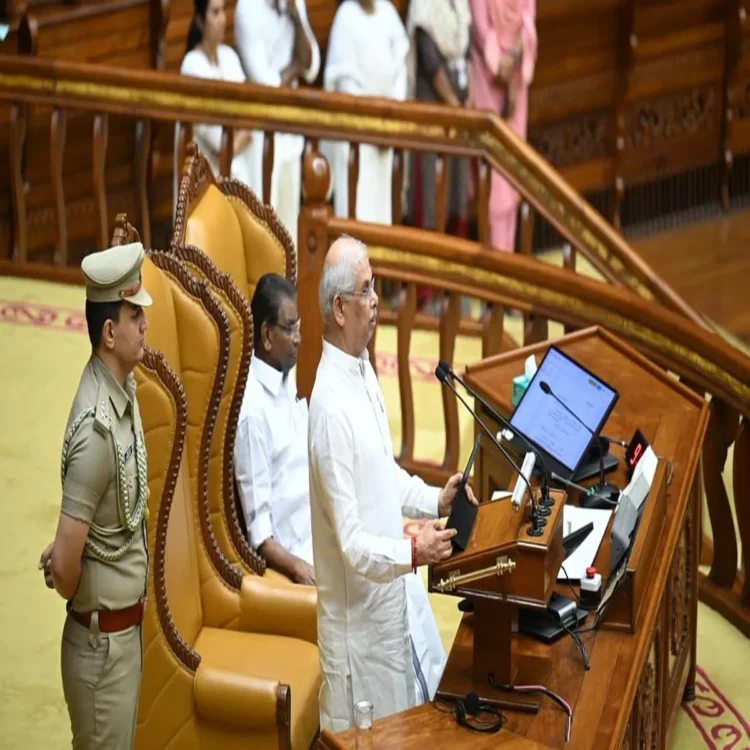
The proceedings began with a brief instrumental rendition of Vande Mataram performed by members of the Kerala Police. The shortened version of the national song was played before the national anthem, differing from the Raj Bhavan’s earlier preference for a complete recital.
Focus on Indira Guarantee Promises
A major portion of the policy statement highlighted the government’s welfare commitments under the Indira Guarantee initiative. Among the key announcements, women will be entitled to permanent free travel on KSRTC buses throughout the state. Financial assistance of Rs 1,000 per month will be provided to girl students to support their educational needs.
The government also announced an increase in social security pensions, raising the monthly amount to Rs 3,000. In the healthcare sector, a family insurance programme named after former Chief Minister Oommen Chandy will offer annual coverage of up to Rs 25 lakh. Additionally, young entrepreneurs will be eligible for interest-free loans of up to Rs 5 lakh to encourage business development and self-employment opportunities.
Dedicated Department for Senior Citizens
The Governor stated that Kerala has established a separate Department for the Welfare of the Elderly, describing it as the first initiative of its kind in the country. The department is expected to focus on policies and services aimed at improving the quality of life for senior citizens and addressing their growing needs.
Measures to Strengthen Cooperative Banking
Restoring confidence in the cooperative banking sector emerged as another important priority in the government’s policy framework. According to the address, efforts will be undertaken to ensure the timely return of matured deposits. The administration also plans to revise the existing Deposit Guarantee Scheme and introduce stricter financial oversight in institutions facing operational challenges.
The government indicated that strong action would be taken against individuals found responsible for financial irregularities. These steps are intended to improve transparency and rebuild public trust in cooperative financial institutions.
Technology-Driven Excise Reforms
The policy address also outlined a comprehensive restructuring of the Excise Department. The proposed reforms aim to modernize enforcement mechanisms through advanced technology and intelligence-based operations.
Digital monitoring systems will be introduced to identify and disrupt illegal drug networks. The government plans to combine surveillance measures with awareness and behavioural intervention programmes targeting students in schools and colleges. The objective is to address substance abuse through both enforcement and preventive strategies.
Expansion of Educational Infrastructure
Education featured prominently in the government’s development plans. The administration announced that additional Plus-One seats will be created to accommodate growing student demand and improve access to higher secondary education across the state.
Tourism and Pilgrimage Development Plans
The government also revealed plans to establish a Malabar Temple Pilgrim Circuit to promote religious tourism. Alongside this initiative, selected temples will be included in a programme designed to encourage environmentally responsible and accident-free pilgrimages. Authorities believe the project will enhance visitor experiences while preserving local heritage and ecological balance.
The policy address presented a broad vision that combines welfare expansion, institutional reforms, educational improvements, and technology-driven governance, setting the direction for the government’s priorities in the coming years.