
Governance – Debate Intensifies Over Sonam Wangchuk Detention and Release
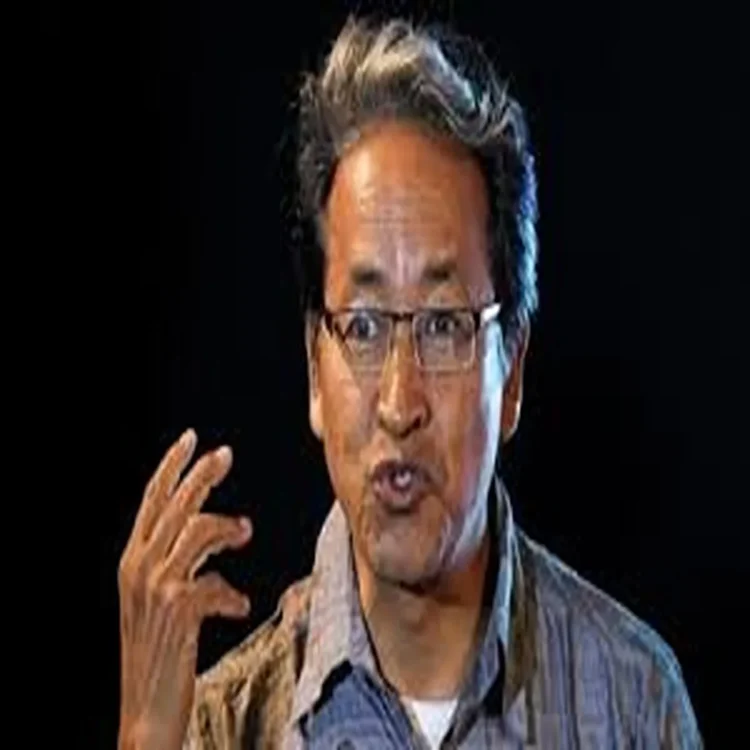
Governance – The recent release of Ladakhi innovator and environmental campaigner Sonam Wangchuk has reignited political debate, with opposition leaders questioning the government’s handling of his detention under the National Security Act. The issue has once again drawn attention to unresolved demands related to governance and constitutional safeguards in the Leh-Ladakh region.
Political Reaction to Detention
Shiv Sena (UBT) leader Priyanka Chaturvedi strongly criticised the authorities for invoking a stringent law against Wangchuk, describing the move as unjustified. She argued that Wangchuk has consistently raised concerns about environmental protection and regional development, and his detention sent the wrong message.
According to her, his activism has been rooted in peaceful advocacy rather than any form of unrest. She also pointed out that Wangchuk had earlier expressed support for the government’s decision to revoke Article 370, suggesting that his current stance reflects deeper concerns that may not have been adequately addressed.
Call for Addressing Regional Demands
Chaturvedi emphasised the need for the government to engage constructively with the demands emerging from Ladakh. She reiterated that the push for statehood in Jammu and Kashmir and greater attention to Ladakh’s administrative concerns should be taken seriously.
Her remarks highlighted a broader sentiment among several political voices that ongoing issues in the region require dialogue rather than confrontation. The focus, she said, should remain on fulfilling assurances made during earlier policy changes.
Background of the Case
Sonam Wangchuk, aged 59, was released from Jodhpur Central Jail after spending nearly six months in custody. His detention had been ordered under the National Security Act, a law that allows preventive detention in certain circumstances.
Authorities had earlier claimed that protests linked to his campaign for statehood and constitutional safeguards under the Sixth Schedule contributed to unrest in Leh. The reported disturbances resulted in casualties and injuries, which formed part of the justification for the action taken against him.
However, the detention was challenged legally, and the government withdrew the order shortly before the Supreme Court was set to examine the case.
Wangchuk’s Response After Release
Following his release, Wangchuk described the development as a personal relief but expressed concern about the larger issues he represents. He noted that his freedom would hold little significance if the concerns of Ladakh’s residents remain unresolved.
He called for a balanced and inclusive solution, stressing that any meaningful outcome should benefit all stakeholders in the region. His remarks underlined the importance of addressing long-standing demands rather than focusing solely on individual cases.
Significance of Sixth Schedule Demand
A central aspect of Wangchuk’s advocacy has been the inclusion of Ladakh under the Sixth Schedule of the Constitution. This provision offers protections related to tribal rights, land ownership, and cultural preservation.
Supporters of this demand argue that such safeguards are essential to protect the region’s unique identity and fragile environment. They believe that without constitutional backing, Ladakh could face challenges related to unchecked development and demographic changes.
Renewed Focus on Ladakh’s Future
Wangchuk’s release has brought renewed attention to governance issues in Leh-Ladakh. Political leaders, activists, and civil society groups have reiterated the need for sustained dialogue and policy clarity.
There is a growing consensus that addressing the region’s aspirations requires a careful balance between development, environmental protection, and local representation. As discussions continue, the focus remains on ensuring that the concerns of Ladakh’s residents are acknowledged and addressed through constructive engagement.