
Forest Conservation – Andhra Pradesh Speeds Up Great Green Wall Plantation Drive Across Coastal Belt
Forest Conservation –The Andhra Pradesh government has stepped up efforts to fast-track the Great Green Wall project, with Deputy Chief Minister and Forests and Environment Minister Konidela Pawan Kalyan directing officials to complete the plantation targets for the 2026-27 financial year within the next two months. He instructed the Forest Department to take full advantage of the ongoing favourable weather conditions to ensure timely implementation of the programme aimed at strengthening the State’s ecological security.
Review Focuses on Plantation Progress
During a review meeting with senior Forest Department officials, Pawan Kalyan examined the status of the project across different forest divisions. The discussions covered plantation progress, the number of saplings already planted, division-wise achievements and the targets fixed for expanding mangrove forests during the current financial year. Officials also presented updates on ongoing activities and future implementation plans designed to improve green cover in coastal regions.
Andhra Pradesh Earns National Recognition
The Deputy Chief Minister appreciated the Forest Department for its contribution in helping Andhra Pradesh secure the second position in the country for mangrove expansion over the past two years. He described the achievement as an important milestone for the State and said it reflected the government’s commitment to environmental conservation and sustainable development.
Great Green Wall Identified as a Flagship Programme
According to Pawan Kalyan, the TDP-led NDA government considers the Great Green Wall one of its flagship environmental initiatives. The project has been designed to safeguard Andhra Pradesh’s 1,053-kilometre coastline from coastal erosion, the growing impact of climate change and increasingly frequent extreme weather events.
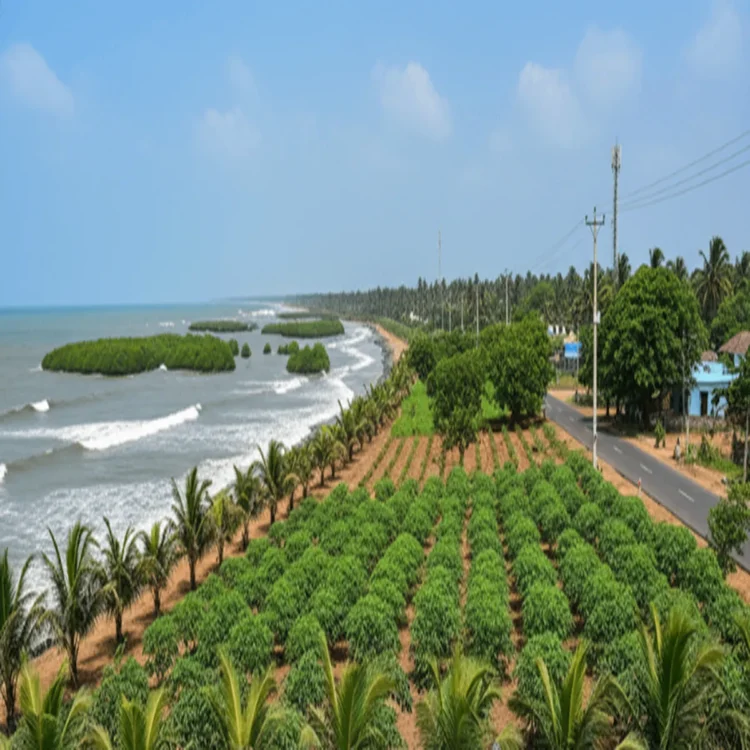
He said the government is creating a five-kilometre-wide green belt along the coastline and has prepared an action plan to expand plantations over nearly 8,888 hectares during the current financial year. The initiative is expected to improve coastal resilience while supporting biodiversity and long-term ecological balance.
Additional Saplings to Strengthen Green Cover
The Minister also recalled that coastal districts had received an additional allocation of 70 lakh saplings under the VB-G RAM G scheme. These plantations are expected to further strengthen the Great Green Wall initiative and improve the survival rate of vegetation across vulnerable coastal stretches.
He added that nearly 5,000 hectares have been identified for palm plantations this year. Seed collection and plantation work will be carried out during August and September, taking advantage of seasonal conditions suitable for growth.
Palm Plantations to Act as Natural Wind Barriers
Pawan Kalyan said palm plantations along canals, tanks and coastal areas would function as effective wind barriers, reducing the impact of strong coastal winds and helping protect nearby agricultural lands and settlements. He encouraged greater participation from local communities in expanding palm forests and promoting social forestry initiatives.
Officials informed the meeting that around 2,500 hectares have already been identified for planting the newly allocated saplings under various plantation programmes.
Mangrove Restoration Remains a Key Priority
Highlighting the State’s progress in mangrove conservation, the Deputy Chief Minister noted that Andhra Pradesh expanded mangrove cover by around 740 hectares during 2024-25 and by nearly 1,930 hectares in 2025-26. These efforts contributed significantly to the State’s national ranking in mangrove afforestation.
He directed officials to take up restoration work across 305 hectares under the MISHTI-II programme during November and December. The programme is expected to strengthen fragile coastal ecosystems while improving natural protection against storms and tidal surges.
Three-Layer Coastal Protection Strategy
Pawan Kalyan explained that the Great Green Wall project follows a three-tier coastal protection model. The first layer consists of restored mangroves and shelter belts along the shoreline. The second includes community buffer zones supported by village forests, while the third focuses on social forestry and agroforestry practices to create sustainable green landscapes.
He instructed officials to plan plantations according to local ecological conditions and maintain continuous field-level monitoring. He also emphasised close coordination among all concerned departments through the Andhra Pradesh Greening and Climate Change Mitigation Society to ensure the project’s effective implementation.