
Faith – Chhattisgarh High Court Upholds Right to Hold Prayers at Home
Faith – The Chhattisgarh High Court has stated that individuals are free to organise prayer meetings within their homes without seeking prior approval from authorities, reinforcing the scope of personal religious freedom.
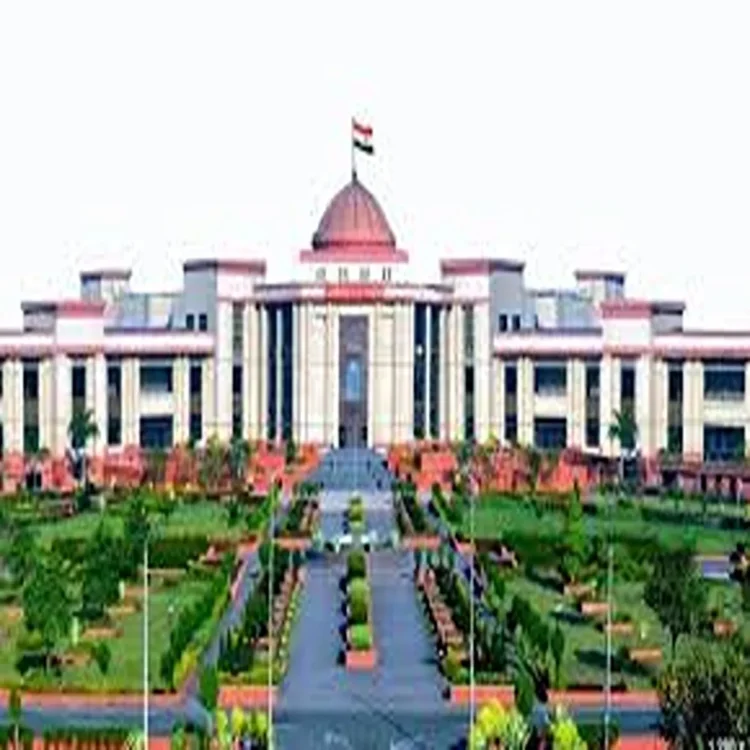
Court clarifies legal position on private prayer gatherings
In a significant decision delivered on Wednesday, the Chhattisgarh High Court observed that there is no existing law in the state that prevents citizens from conducting prayer meetings inside their own homes. The ruling highlights that personal religious practices carried out within private premises do not require official permission, as long as they remain within the bounds of law.
The Court made it clear that private residences fall under personal liberty, and organising spiritual gatherings there cannot be restricted without a valid legal basis.
Petition filed after repeated police notices
The matter came before the Court through a writ petition filed by two residents of Godhna village in the Janjgir-Champa district. The petitioners, who are related and co-owners of a residential property, had constructed a hall on the upper floor of their house. For several years, they had been hosting weekly prayer meetings attended by members of the Christian community.
However, between October 2025 and February 2026, local police issued multiple notices to them under provisions of the Bharatiya Nagarik Suraksha Sanhita, 2023. These notices directed them to stop holding such gatherings, citing the absence of prior permission.
According to the petitioners, the repeated notices amounted to unnecessary interference in their personal lives. They also stated that a No Objection Certificate earlier granted by the village panchayat had been withdrawn, allegedly due to external influence.
State argues need for prior approval
During the hearing, the state’s counsel opposed the plea and defended the police action. It was argued that the petitioners had past criminal records and that holding gatherings without official approval could justify police intervention.
The state maintained that prior permission should be mandatory for such assemblies, suggesting that it helps authorities maintain order and prevent potential disputes.
Court rejects requirement of permission
Justice Naresh Kumar Chandravanshi, who presided over the case, did not accept the state’s position. The Court held that no law mandates prior approval for conducting prayer meetings inside a private residence.
The judgment emphasised that individuals have the right to practise their faith peacefully within their homes. It further stated that such activities cannot be curtailed merely on administrative grounds or assumptions.
Limits on police intervention outlined
While protecting the petitioners’ rights, the Court also outlined the boundaries of lawful intervention. It noted that authorities are empowered to act if there are genuine concerns related to noise pollution or public order. However, such powers cannot be misused to intrude upon personal freedoms.
The Court stressed that routine or vague enquiries cannot be used as a pretext to harass individuals or restrict their civil liberties.
Police notices set aside by the Court
As part of its decision, the High Court invalidated the police notices issued on three separate dates between October 2025 and February 2026. These notices were deemed unjustified in the absence of any legal requirement for prior permission.
At the same time, the Court chose not to intervene in the Gram Panchayat’s decision to withdraw the No Objection Certificate. Nevertheless, it clarified that the absence of such a certificate does not affect an individual’s right to hold private prayer meetings.
Broader implications of the ruling
The judgment is expected to have wider implications for similar cases involving religious gatherings in private spaces. By reaffirming the principle of personal liberty, the Court has drawn a clear line between lawful authority and unnecessary interference.
Legal observers note that the ruling reinforces constitutional protections related to freedom of religion and privacy, while also maintaining a balance with public order considerations.